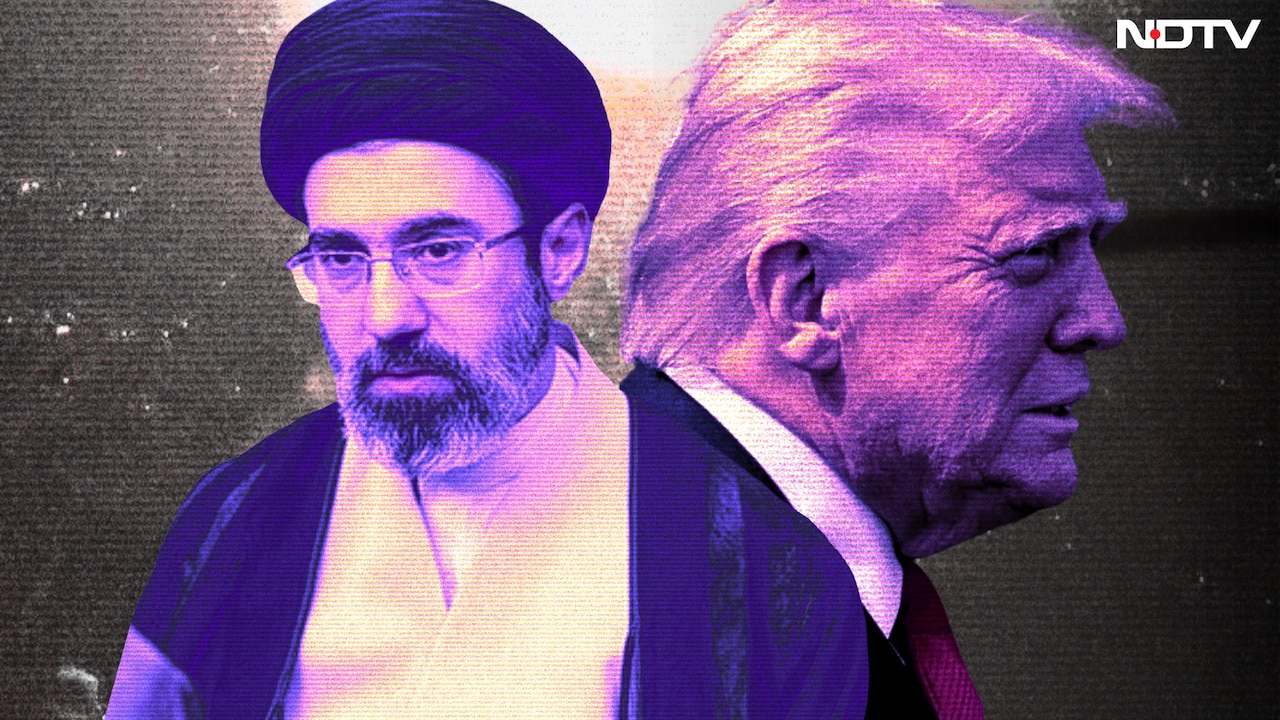
Mainstream foreign policy analysts love a good top-down narrative. When a US President claims Iran’s Supreme Leader has personally greenlit a diplomatic breakthrough, the media rushes to print headlines about historic handshakes and impending regional stability. It is a comforting story. It suggests international relations operate like a corporate merger where two CEOs sign a line and force compliance down the chain of command.
It is also completely wrong.
Believing that a nod from the Ayatollah means a deal is secure misreads how power actually circulates in Tehran. Western observers treat the Iranian regime as a monolith, assuming the Supreme Leader exercises absolute, frictionless control over every bureaucratic lever. Having spent years tracking sanctions evasion networks and cross-border capital flows in the Middle East, I can tell you the reality on the ground is chaotic, factional, and defined by internal economic survival, not theological consensus.
When Washington celebrates a verbal signal from Iran's highest office, it isn't witnessing the start of a new geopolitical era. It is falling for a classic piece of diplomatic theater designed to buy time, secure sanctions relief, and appease internal hardliners simultaneously.
The Myth of the Monolithic Regime
The conventional media coverage of US-Iran negotiations relies on a flawed premise: if the Supreme Leader says yes, the deal is done. This logic ignores the deep, institutionalized rivalries that define the Islamic Republic.
Iran does not possess a singular political will. Power is fractured between the conventional presidency, the regular military, the Islamic Revolutionary Guard Corps (IRGC), and a massive network of religious foundations known as bonyads. The Supreme Leader does not rule by decree; he functions as a balancing judge between these competing factions.
Imagine a corporate board where the chairman cannot fire the regional directors, and those directors control their own private security forces and black-market supply chains. That is the Iranian state.
- The IRGC Factor: The IRGC controls vast swathes of the Iranian domestic economy, from construction to telecommunications. They benefit directly from a resistance economy. Sanctions create black markets, and black markets generate immense profit margins for those who control the borders. A diplomatic deal that normalizes trade threatens their economic hegemony.
- The Bonyad Wealth: These multi-billion-dollar charitable trusts answer only to the Supreme Leader, bypassing parliamentary oversight. They operate entirely outside standard economic frameworks, making them immune to traditional diplomatic carrots and sticks.
- Factional Sabotage: History shows that even when the executive branch in Tehran wants a deal, rival factions will actively undermine it through proxy actions or ballistic missile tests to shift the political winds.
When American politicians declare a deal is close because the top guy approved it, they fail to ask a fundamental question: does the top guy actually have the leverage to enforce compliance on the factions that control the money and the missiles?
Why Supreme Leader Approval is a Tactical Weapon, Not a Strategic Commitment
In Iranian diplomacy, an endorsement from the Supreme Leader is rarely a final destination. It is a tactical shield.
By signaling tentative approval, the Supreme Leader gives Iranian negotiators the domestic political cover required to sit across from American officials without being branded as traitors by hardliners. It creates a win-win scenario for Tehran. If the negotiations extract massive concessions—such as immediate sanctions relief or the unfreezing of billions in overseas assets—the regime claims victory. If the talks collapse, the Supreme Leader can pivot instantly, blaming American bad faith and reinforcing the domestic narrative that the West is inherently untrustworthy.
This calculated ambiguity is a deliberate strategy. In the world of high-stakes negotiation, the party that can walk away without losing face holds all the leverage. While Washington ties its political capital to the success of a treaty, Tehran views the treaty as just one tool among many to manage its internal crises.
Tracking the Money, Not the Rhetoric
If you want to know if Iran is actually preparing to honor an international agreement, stop reading press releases from the State Department and stop analyzing the Supreme Leader’s speeches. Look at the capital flows.
True diplomatic shifts leave footprints in the banking system, shipping registries, and commodity markets. Before any major accord delivers real results, specific economic indicators move first.
| Indicator | Diplomatic Narrative | On-the-Ground Reality |
|---|---|---|
| Crude Oil Shipments | Headlines claim exports will normalize under strict Western monitoring mechanisms. | Dark fleet tankers switch flags and turn off transponders to maintain illicit sales to East Asia, hedging against deal collapse. |
| Regional Proxy Funding | Western officials assume a deal will lead to a reduction in funding for regional militia networks. | Capital transfers via traditional hawala networks to regional proxies remain steady or increase, decoupling geopolitical posture from economic treaties. |
| Domestic Currency Rates | The rial rallies on the open market based on optimism surrounding the announcement of a deal. | Major institutional players in Tehran quietly convert local currency to hard assets, signaling zero long-term faith in the agreement. |
When you analyze these variables, a stark pattern emerges. The financial architecture supporting Iran’s parallel economy rarely changes during major diplomatic announcements. The infrastructure used to bypass international scrutiny remains fully operational. That tells you everything you need to know about the long-term intent behind the rhetoric.
The Flawed Questions Driving Western Strategy
The public debate around US-Iran relations is broken because observers continually ask the wrong questions. The media focuses on: "Will Iran sign the deal?" and "Can we trust the Supreme Leader's word?"
These questions assume the goal of diplomacy is to reach a static state of peace. But international politics with a revolutionary state is not a conflict to be resolved; it is a condition to be managed.
The real question we should ask is: What internal economic or political pressure forced the regime to signal flexibility at this exact moment?
Every time Tehran approaches the negotiating table, it is usually facing a convergence of domestic vulnerabilities: runaway inflation, water scarcity crises, or widespread civil unrest. Signaling an openness to a deal is an effective valve to release that domestic pressure. It gives the population hope of economic relief, temporarily stabilizing the internal situation without requiring the regime to make structural changes to its foreign policy or security apparatus.
The Cost of the Counter-Intuitive Approach
Taking a realistic, transactional view of Iranian diplomacy requires abandoning the dream of a grand bargain that permanently fixes regional dynamics. It means accepting that any agreement will be temporary, fragile, and constantly violated around the edges by various factions within Tehran.
The downside to this cynical approach is that it makes long-term strategic planning incredibly difficult for businesses and regional allies. It offers no neat conclusions, no historic photo opportunities, and no domestic political victories for Western leaders. It requires constant, grinding intelligence work, aggressive sanctions enforcement even during active talks, and a willingness to walk away the moment the parallel economy shows the regime is acting in bad faith.
But continuing to believe that a verbal sign-off from the Supreme Leader guarantees stability is a luxury we can no longer afford. It treats a sophisticated, multi-layered regional power like a simple dictatorship, leaving Washington perpetually surprised when the next crisis hits.
Stop looking at the signature on the paper. Watch the factions, follow the dark fleet, and measure the real cash flows. Everything else is just noise designed to keep the media occupied while the real game continues behind closed doors.


