Traditional documentary cinema is built on an inherent, structural lie. Directors pretend the camera is an invisible, objective observer, hiding the reality that the mere presence of a lens alters how people speak, move, and present their vulnerabilities.
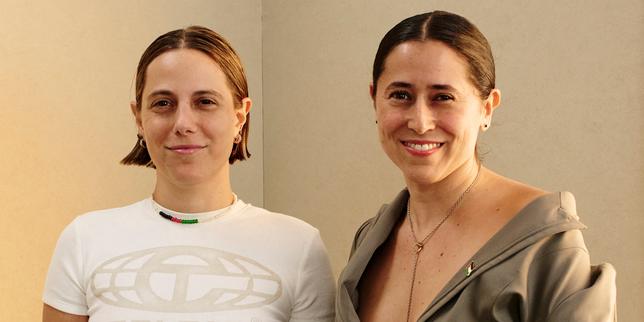
When directors Meriem Bennani and Orian Barki set out to explore the hyper-specific, messy realities of a queer Moroccan expat navigating the emotional chasm between New York City and Casablanca, they encountered this exact artistic wall. Their solution was not to strip away the fiction, but to lean completely into it.
The resulting feature film, Bouchra, shatters the conventional boundaries of autobiographical cinema. By aggressively blending 3D animation with real, unscripted audio recordings of personal conversations, the filmmaking duo has bypassed the standard traps of the immigrant narrative. They prove that in modern cinema, the most direct path to raw, unfiltered human truth requires abandoning literal reality altogether.
The Trap of the Immigrant Drama
Independent cinema is saturated with a very specific, tired genre. Call it the cultural displacement trauma piece. These films typically rely on predictable structures: a protagonist caught between two worlds, tense family dinners, predictable arguments about tradition, and a melancholic realization that home is no longer home.
The problem with this formula is not that the conflict isn't real. The problem is that the live-action medium forces these complex internal struggles into overt, dramatic set pieces that feel engineered for Western film festival juries. Characters are made to speak in expository paragraphs rather than the fractured, messy shorthand of real relationships.
Bennani and Barki recognized this creative dead end early in their development process. They initially conceived the film as a standard fiction piece. However, the scripted dialogue lacked the jagged edges of lived experience.
To break the mold, they did something radical. They threw out the scripted lines and began using actual, recorded conversations between Bennani and her own mother.
Yet, simply pairing this raw audio with live-action footage would have turned the project into a standard, talking-head documentary. The magic—and the subversion—happens because those voices are placed into the mouths of stylized, animated avatars.
Why Animation Reveals What Live Action Hides
Animation is frequently misunderstood by mainstream critics as a tool for escapism or fantasy. In the hands of Bennani and Barki, it functions as an emotional shield that allows the subjects to be utterly exposed.
When a human face is captured on camera discussing sexuality, familial disappointment, or the quiet agony of cultural isolation, the viewer immediately switches into a mode of voyeurism. We judge the actor's performance or analyze the real person's physical tics. We look at them.
By utilizing animation, Bouchra forces the audience to look through the character.
- The Voice as Anchor: The audio remains completely unvarnished. The hesitation in a mother’s voice, the sighs, the involuntary shifts in tone—all the micro-expressions of human speech are preserved.
- The Avatar as Catalyst: Because the visual layer is explicitly artificial, it strips away the self-consciousness of the performer. The audience is not distracted by the aesthetics of realism, allowing the pure psychological weight of the dialogue to land with brutal precision.
- The Erasure of Geography: The film cuts between the frantic pace of New York and the domestic spaces of Casablanca. In a live-action film, this requires massive shifts in lighting, film stock, and production design. Animation flattens these physical distances, mirroring the internal psychological state of an expat for whom both cities exist simultaneously in the mind.
The Co-Authorship of Memory
The creative chemistry between the two directors is the engine behind this formal experimentation. Having previously collaborated on the acclaimed pandemic-era web series 2 Lizards, Bennani and Barki have spent years refining a conversational, highly improvised narrative rhythm.
This is not a singular artist shouting their truth into the void. It is a dialogue.
Barki, a documentary filmmaker from Tel Aviv, brings a rigorous eye for observational detail and structural pacing. Bennani, a multidisciplinary artist from Rabat, injects the project with surrealism and a deep understanding of digital aesthetics.
Their collaboration ensures that Bouchra never devolves into self-indulgence. The film functions as an active re-evaluation of memory. Because the directors voice the main characters themselves—playing fictionalized versions of their own friendship group—the entire project becomes a hall of mirrors. It is an autobiography constructed via a committee of two.
Rejecting the White Hegemonic Gaze
There is a distinct political choice embedded in the formal architecture of this film. For decades, queer cinema originating from the Global South or Middle East has been expected to adhere to a specific narrative arc: the liberation narrative.
Western audiences expect these films to depict a flight from an oppressive, traditional homeland toward an enlightened, secular Western metropolis. It is a comforting, self-congratulatory framework for European and American viewers.
Bouchra flatly refuses to play this game.
The film explicitly positions its narrative from the interior perspective of a Moroccan lesbian, completely unconcerned with explaining her culture, her syntax, or her identity to an outsider. The dialogue glides seamlessly between Arabic, French, and English without pausing to translate the cultural nuances for a monolingual viewer.
The film argues that coming out is not a singular, triumphant event that occurs when you step off a plane at JFK Airport. It is a continuous, exhausting, and circular process of negotiation with your history, your family, and yourself. The mother in the film is not a caricature of religious conservatism; she is a complex human being whose love for her daughter exists alongside her inability to fully comprehend her lifestyle.
The Messy Future of Non-Fiction Cinema
Purists will undoubtedly argue that a film so heavily reliant on digital animation cannot claim the title of autofiction or documentary. They are missing the point.
The digital age has fundamentally altered our relationship with reality. We spend our days communicating through screens, translating our personalities into text, emojis, and curated digital personas. To demand that a film about modern identity rely solely on the visual grammar of 1970s direct-cinema is an act of artistic nostalgia.
Bouchra is a triumphant, erratic, and deeply moving testament to the fact that reality is something we construct, not just something we record. By choosing to animate their own lives, Bennani and Barki haven't hidden from the truth. They have finally found a way to document it without the camera getting in the way.