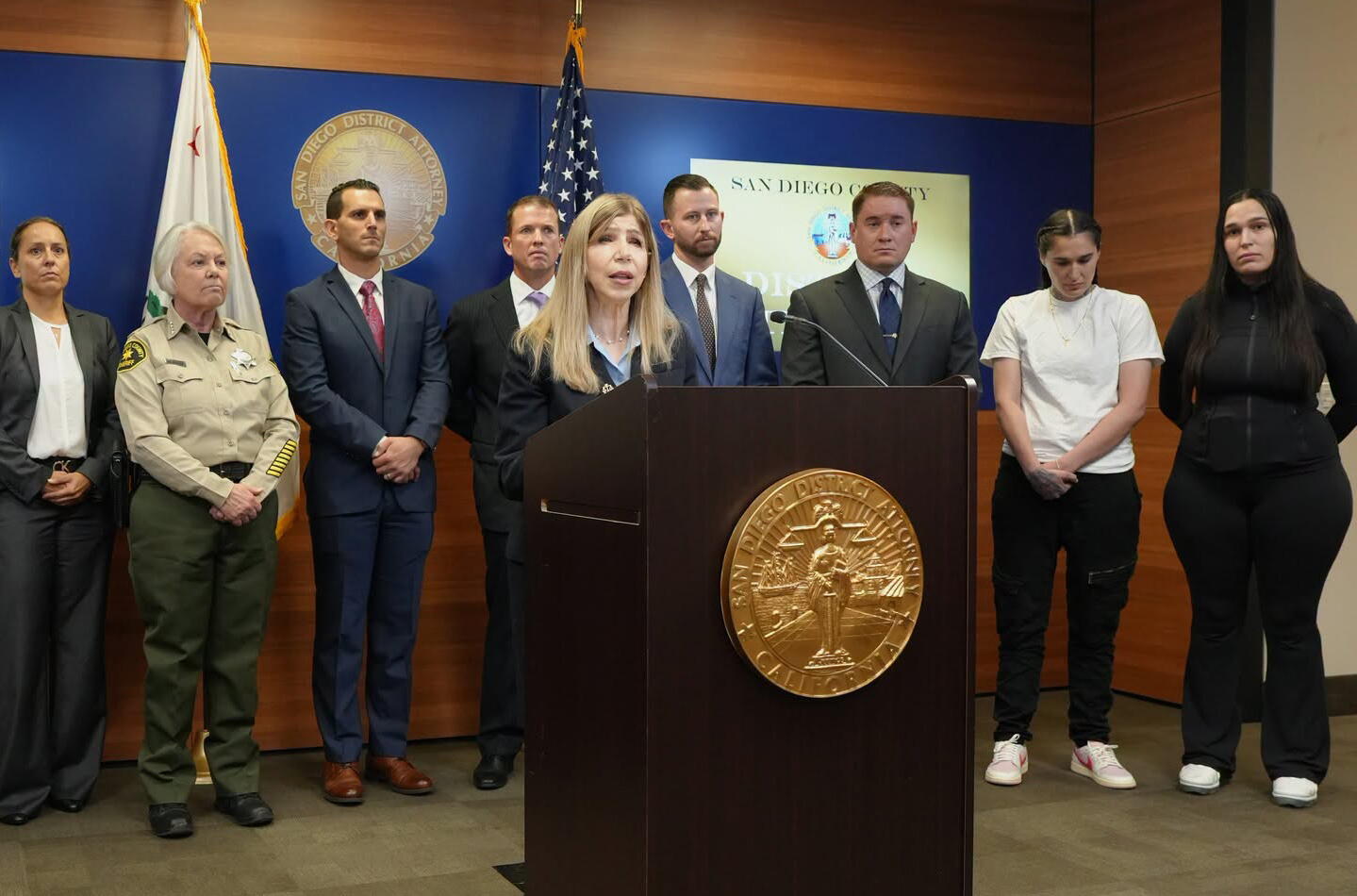
Most people read a headline about lethal fentanyl poisoning and identity theft and reach for the same comforting story. A monster. A synthetic opioid. A stolen persona. Done.
That story is lazy. Worse, it blinds us to the actual mechanics of fraud, lethality, and institutional failure.
When prosecutors allege that a Southern California man fatally poisoned the woman who raised him with fentanyl in order to take over her identity, standard crime coverage treats the murder as the main event and the identity scheme as a bizarre, opportunistic twist. Look closer. Killing someone to steal their identity is one of the most inefficient, high-friction ways to commit fraud ever devised. A corpse creates paper trails. A sudden death triggers medical examiners, death certificates, estate lawyers, and family inquiries. If you want a clean synthetic or stolen identity, murder is terrible trade execution.
Yet fatal poisonings tied to financial or identity motives keep surfacing in criminal dockets, often involving victims who trusted the perpetrator implicitly. Treating these cases merely as sensational true-crime outliers misses how trust exploitation, illicit opioid potency, and weak identity verification intersect in the real world.
Why The "Cold Criminal Mastermind" Myth Fails
Standard reporting loves neat motives. If a victim dies of fentanyl toxicity and a suspect ends up with access to her accounts, mail, or personal records, the narrative snaps shut: he planned a poisoning to pull off an identity heist.
That assumption confuses outcome with calculus.
Identity fraud thrives on quiet continuity. Fraudsters typically want accounts to stay open, bills to go unchallenged, credit lines to expand, and alerts to stay off the victim's radar. Killing the person whose name, Social Security number, and banking relationships you are trying to exploit introduces immediate volatility. Even if a perpetrator tries to impersonate the deceased or divert mail before authorities catch on, a death investigation shrinks the window of silence dramatically.
In criminal investigations involving fentanyl, lethality itself is rarely precision-engineered. Illicit fentanyl and its analogues carry extreme potency in microgram quantities, meaning illicitly pressed pills or powders vary wildly in concentration. A perpetrator who underestimates how fast respiratory depression sets in—or who misjudges a victim's physiological vulnerability—can turn a scheme aimed at control, incapacitation, or financial access into a homicide charge overnight.
I have spent years analyzing fraud vectors, financial crime controls, and high-stakes risk architectures across banking and enterprise security. I have watched organizations spend fortunes building biometric onboarding and device fingerprinting while leaving basic human-in-the-loop processes wide open. When criminals exploit intimate relationships, the weakest link is rarely a firewall. It is proximity, household access, and emotional authority.
The Nuance Standard Crime Coverage Misses
To understand cases like an alleged fentanyl poisoning aimed at identity takeover, we have to separate three distinct concepts that casual commentary mashes together: identity theft, account takeover, and domestic trust exploitation.
- Identity theft occurs when someone obtains personally identifiable information (PII)—such as a name, date of birth, Social Security number, or government ID—to commit fraud or impersonate another person.
- Account takeover happens when an unauthorized actor gains access to existing financial, email, or government accounts, often by bypassing authentication or intercepting recovery channels.
- Intimate trust exploitation arises when an offender uses shared living space, caregiving roles, or family history to harvest documents, intercept correspondence, and answer security questions that outsiders could never guess.
When a caregiver or relative lives with a victim, the mechanics look nothing like a shadowy hacker buying credentials on a dark web forum. The offender already knows the victim's childhood details, mother's maiden name, past addresses, and routine. They have physical access to birth certificates, tax filings, medical records, mail, and smartphones.
Imagine a scenario where an adult living in a shared residence wants to drain savings, open credit lines, or redirect benefits without immediately triggering bank security flags. If they slip a sedative or illicit opioid intending to make the person groggy or compliant—or simply fail to care whether a lethal dose is administered—the biological margin for error is razor thin. Fentanyl does not negotiate with bad math. Once an overdose occurs, the fraud scheme collides head-on with forensic toxicology and homicide detectives.
What People Actually Ask (And Why The Premise Is Off)
Why would anyone kill someone just to steal their identity?
Usually, they do not start with a rational cost-benefit spreadsheet comparing dark web identity kits against homicide. When murder overlaps with identity theft, either the financial or personal control motive preceded a reckless or fatal act, or the perpetrator panicked after a poisoning and tried to salvage money or access from the aftermath. Framing it as a calculated "murder for ID" can overstate criminal competence while understating recklessness and opportunism.
How hard is it to steal a deceased person's identity?
In the short run, scammers sometimes try to exploit the lag between a death and when banks, credit bureaus, and government agencies update their master files. In the long run, it is a losing bet. Death records eventually propagate across databases, estate executors scrutinize transactions, and forensic audits trace money movements back to devices, IP addresses, and household members.
Does stronger cybersecurity stop this kind of crime?
No. Two-factor authentication on a banking app does very little when someone holds the physical SIM card, knows the passcode, opens the physical mail, or has legal or household proximity to the account holder. Digital security solves remote digital threats; it cannot single-handedly police household coercion or physical access.
What Heavy Hitters In Fraud And Risk Actually Emphasize
Veteran fraud investigators and risk researchers—people like Avivah Litan, who has spent decades analyzing identity fraud and financial crime defense, or security researchers like Krebs on Security who document how identity abuse plays out in practice—consistently point to a hard truth: identity systems were never built with strong cryptographic proof of life or ongoing relationship verification.
Once an identity is established in financial and administrative systems, institutions rely heavily on static attributes and historical trust. If someone already possesses the physical documents and answers the knowledge-based checks, systems often treat the session as legitimate until an anomaly becomes glaring.
Add illicit fentanyl to that equation and the stakes shift from financial loss to irreversible harm. Public health agencies and law enforcement task forces have repeatedly warned that counterfeit pills and illicit powders containing fentanyl pose severe overdose risks even to people with prior opioid exposure, and catastrophic risks to opioid-naive individuals. A single miscalculation turns an alleged fraud or control attempt into a capital-level tragedy.
Where My Contrarian Take Can Go Wrong
Being contrarian for its own sake is cheap. Any contrarian thesis carries real blind spots, and pretending otherwise destroys credibility.
First, arguing that murder is an "inefficient" way to steal an identity can sound clinical when a human life is lost. Efficiency is an analytical lens for understanding criminal incentives; it is not an excuse that minimizes the severity of the allegation or the grief of families affected by fatal poisonings.
Second, some offenders genuinely do act with cold, calculated malice, viewing another person's life as disposable the moment a financial payoff or escape from debt seems within reach. Assuming every perpetrator stumbled into lethality by accident would be just as naive as assuming every perpetrator is a criminal mastermind.
Third, focusing heavily on system gaps should never shift blame onto victims. People who open their homes, care for relatives, or trust family members are practicing normal human decency—not committing a security flaw.
What Actually Works Instead Of Hand-Wringing
If you care about protecting vulnerable adults, seniors, or dependents—or designing fraud defenses that survive contact with reality—skip the generic advice to "check your credit score once a year" and take sharper steps.
- Lock credit files proactively across all major bureaus. A credit freeze stops new credit accounts from being opened in a person's name even if an attacker has their Social Security number and address. Monitoring only tells you after damage starts; freezing blocks the door.
- Audit physical mail and device custody, not just passwords. Watch for unexplained changes of address, missing bank statements, unfamiliar mail arriving in the person's name, or unauthorized control over phones and tablets.
- Separate caregiving from sole financial control. Where possible, build dual oversight or clear accounting on sensitive accounts so no single person has unchecked authority and zero visibility.
- Treat any unexplained drowsiness, confusion, or respiratory slowdown in a household as an urgent medical emergency. Never assume someone is "just sleeping it off" or having an ordinary reaction. Call emergency services immediately and carry or know where naloxone is kept if opioid exposure is a possibility.
Crime headlines will keep chasing shock value because shock sells clicks. Real protection starts when you stop admiring the villain's supposed cleverness and start closing the quiet gaps where trust meets recklessness.