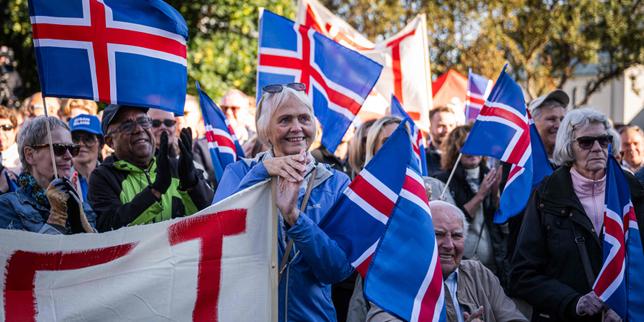
The political graveyard of European integration is littered with abandoned applications, frozen referendums, and diplomatic shelf-ware. Yet, the case of Iceland stands apart for its sheer persistence of refusal. Reykjavik has officially slammed the door shut on European Union membership once and for all, ending a decades-long bureaucratic waltz that periodically flared up whenever the North Atlantic island nation faced economic trauma.
Iceland EU membership talks are officially dead, buried under a combination of fierce fisheries nationalism, absolute protection of agricultural subsidies, and a deep-seated suspicion of continental monetary oversight. To understand why a wealthy, highly progressive Nordic democracy chooses perpetual isolation over the world's largest single market, one must look past the standard talking points about the Eurozone and examine the raw economics of the North Atlantic.
The Sovereignty Anchor of Fish and Water
Every political calculation in Reykjavik eventually circles back to the ocean. Fisheries generate a massive portion of Iceland's export revenues, serving as the literal lifeblood of coastal communities from Akureyri down to the fishing villages of the Westfjords. Under the European Union framework, the Common Fisheries Policy (CFP) distributes fishing quotas across member states based on historic catch shares and relative stability. For Iceland, joining the bloc would mean surrendering absolute authority over its exclusive economic zone to bureaucrats sitting hundreds of miles away in Brussels.
No Icelandic politician of any stripe can survive the political fallout of giving up sovereign control over cod and mackerel stocks. The memory of the Cod Wars against the United Kingdom in the twentieth century remains a defining touchstone of national independence. Surrendering those waters to a collective European quota system is viewed not merely as a bad economic trade, but as an existential surrender of national sovereignty.
Beyond the fishing grounds lies another resource flashpoint. Iceland's vast hydroelectric and geothermal energy reserves power a massive aluminum smelting and heavy industrial sector, alongside a booming data center industry. Brussels mandates unbundled energy markets and open resource access policies that clash fundamentally with Iceland’s state-backed energy monopolies and municipal ownership models.
The Currency Dilemma After the Crash
The modern history of Iceland's flirtation with Brussels is a child of crisis. When the Icelandic banking system collapsed in late 2008, wiping out the country's three major private banks and plunging the krona into a catastrophic tailspin, panic drove public opinion toward the European Union. In 2009, a center-left government formally submitted an application for accession, driven by the desperate need for monetary stability and the anchor of the euro.
Then reality set in. As the emergency stabilization measures took hold and tourism exploded alongside a rebound in marine exports, the urgency evaporated. The krona, volatile and small though it may be, provides Iceland with an independent monetary valve. During external shocks, the currency absorbs the blow through depreciation, protecting domestic employment rather than forcing internal devaluation through rigid austerity mandates.
Adopting the euro would mean locking into a monetary policy designed for the industrial heartlands of Germany and France, completely detached from the macroeconomic realities of a micro-economy driven by fish, aluminum, and seasonal tourism. The public realized that the cure might prove far more destructive than the disease. Negotiations stalled, successive governments quietly shelved the accession file, and the official withdrawal of the application cemented a permanent status quo.
The EEA Compromise That Satisfies Everyone
Why join a club when you already have VIP access to the lounge without paying annual dues? Iceland, alongside Norway and Liechtenstein, participates in the European Single Market through the European Economic Area (EEA) agreement and the Schengen Area.
This hybrid arrangement grants Icelandic citizens the right to live, study, and work across the entire European Union. Icelandic businesses export goods into the single market with minimal tariff friction. Capital flows freely across borders. At the same time, Reykjavik retains complete exemption from the Common Fisheries Policy, complete control over its agricultural tariffs, and independence from the European Central Bank.
Critics call this model "fax democracy," noting that Iceland must transpose European directives and regulations into domestic law without having a direct vote at the table in Brussels. Yet, for practical Icelanders, this arrangement represents a optimal trade-off. They accept the rules of trade to gain market access while retaining absolute autonomy over the levers that matter most to their cultural and economic survival.
The Geopolitical Fallout in the North Atlantic
Closing the door on the European Union does not mean Iceland is turning inward. On the contrary, the country occupies a critical strategic choke point in the North Atlantic between Greenland, the British Isles, and the Arctic Circle. As geopolitical competition heats up across polar shipping lanes and underwater communication cables, Reykjavik finds its security value skyrocketing.
Defense policy remains anchored firmly through its NATO membership and a bilateral defense agreement with the United States, even though Iceland maintains no standing army of its own. When security concerns arise, Washington and London are the primary partners of engagement, bypassing continental European defense frameworks entirely.
The political establishment in Reykjavik has drawn a hard boundary. Economic integration is welcome up to the water's edge, but political union is a bridge too far. As long as the North Atlantic yields billions in fish exports and the geothermal plants hum away under volcanic ash, Iceland will remain an outsider by choice, navigating the global economy on its own terms.