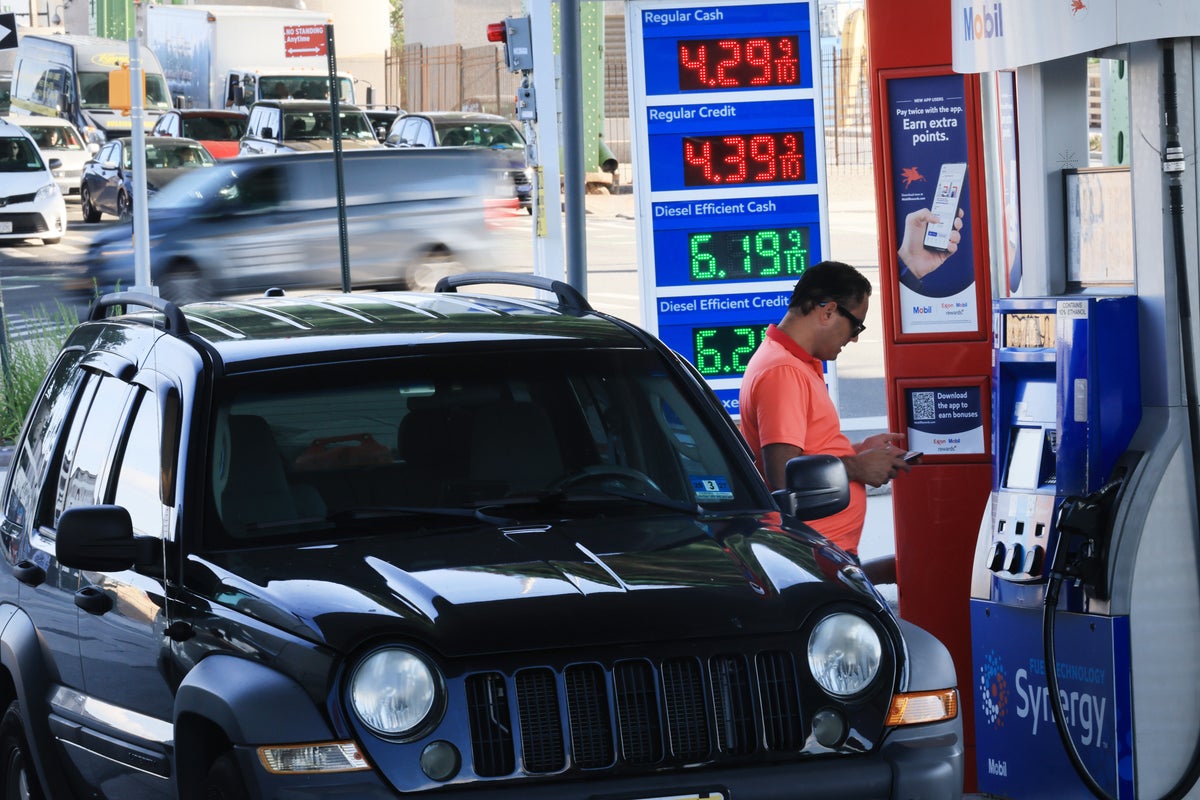
American households are currently absorbing an unprecedented financial blow totaling roughly one hundred billion dollars in inflated energy expenses, driven directly by the protracted shadow war involving Iran, regional proxies, and the subsequent disruption of global crude supply chains. Every time a consumer fills a tank at the local station or opens a monthly utility statement, they are paying a hidden geopolitical tax. This invisible levy is fueled by maritime chokepoint blockades, insurance risk spikes for supertankers, and the scrambling of domestic refineries trying to secure sweet crude amidst tightening sanctions.
Understanding how a regional conflict in the Middle East translates into a heavy financial burden for suburban homeowners requires looking past standard political talking points. The mechanics are rooted in physical infrastructure, shipping logistics, and commodity futures pricing. When the Strait of Hormuz faces persistent threat levels, tankers avoid the passage or pay astronomical risk premiums. Those costs cascade instantly down the supply chain.
The Anatomy of a Crude Shock
Oil markets do not wait for actual physical damage to occur before reacting. They trade on fear, uncertainty, and forward-looking risk assessments. When tensions escalate between Tehran and Western coalition forces, futures traders immediately reprice Brent and West Texas Intermediate benchmarks.
A barrel of oil is globally priced. Even though domestic shale production has transformed the United States into a massive producer, American refiners still buy and sell within an interconnected international market. If a barrel of crude rises by ten dollars due to Middle Eastern supply fears, the cost to refine gasoline, diesel, and jet fuel climbs simultaneously across the board.
- Refineries must re-tool or source heavier, more expensive alternative crudes when traditional Middle Eastern flows face disruption.
- Shipping insurance rates for vessels navigating the Persian Gulf skyrocket overnight, adding dollars to every single barrel transported.
- Domestic natural gas producers ramp up liquefied natural gas exports to offset European shortages caused by concurrent geopolitical rifts, driving up heating and electricity bills at home.
This creates a dual-pressure environment. Consumers get squeezed at the gasoline pump while simultaneously facing higher electricity bills because natural gas power plants dictate wholesale power pricing across most of the American power grid.
The Grid Connection and Power Generation Costs
Electricity generation remains deeply intertwined with fossil fuel markets, a fact that policy planners often gloss over during green energy transitions. Natural gas accounts for roughly forty percent of all utility-scale electricity generation in the United States.
When international energy shocks drive up the spot price of natural gas, power generation costs spike immediately. Utilities pass these fuel adjustment charges directly to residential and commercial ratepayers. Regulators often approve these rate hikes with minimal friction because utilities have a legal obligation to secure fuel at market rates to keep the lights on.
A homeowner in Ohio or Florida might assume their electricity bill is insulated from conflicts happening thousands of miles away in the Persian Gulf. That assumption is mathematically false. The marginal fuel source setting the hourly price on regional transmission organizations is almost always a natural gas turbine. When the fuel powering that turbine doubles in cost due to global market panics, the retail price per kilowatt-hour climbs right along with it.
Note: Energy markets function as a complex hydrological system. Pinch the pipe anywhere, and the pressure immediately spikes at every single faucet downstream.
Refining Bottlenecks and Domestic Margin Inflation
Crude oil does not power a car. Refined gasoline does. The United States has experienced a structural contraction in overall refining capacity over the last decade, driven by environmental regulations, aging infrastructure, and corporate decisions to convert certain facilities into biofuel plants.
When international crude supply lines face threats from Iranian naval maneuvers or regional drone strikes, remaining domestic refineries operate under intense pressure. They hold immense pricing power. The crack spread, which measures the profit margin a refinery makes from cracking crude oil into gasoline and heating oil, widens significantly during geopolitical crises.
Refiners argue they are simply covering skyrocketing operational overhead and compliance costs. Consumers see record profit margins reported by major energy conglomerates while their own credit card balances creep upward to cover weekly commuting expenses.
The Political Fallback and Strategic Reserves
Washington responds to these crises by deploying traditional tactical levers, none of which offer a permanent fix. Releasing millions of barrels from the Strategic Petroleum Reserve provides a temporary psychological salve for futures markets, but it does nothing to alter the underlying security architecture of the Persian Gulf.
The Strategic Petroleum Reserve was designed for catastrophic supply disruptions, not as a perpetual stabilization tool for volatile geopolitical skirmishes. Draining the reserve leaves the nation vulnerable to deeper, more systemic emergencies down the road. Meanwhile, domestic drillers are often hesitant to invest massive capital expenditure into new extraction projects based on temporary price spikes, knowing that a sudden diplomatic breakthrough could collapse crude prices just as quickly as they rose.
Inflationary Ripple Effects Across the Consumer Economy
Energy is the fundamental input cost for every single physical good produced, transported, and sold in America. You cannot manufacture steel, harvest corn, or ship a pallet of shoes across the country without consuming vast quantities of diesel and electricity.
When energy costs jump by one hundred billion dollars annually, that capital is ruthlessly extracted from discretionary consumer spending. Families redirect money away from retail, dining, and home improvements to pay utility companies and gas stations.
- Grocery prices tick upward as refrigerated transport fleets pay more for diesel fuel at truck stops.
- Airfares surge as airlines pass skyrocketing jet fuel expenses directly to holiday travelers and business commuters.
- Municipal governments face higher operating budgets for public transit and sanitation fleets, eventually leading to local tax increases.
This is the true mechanism of the energy tax. It is regressive, hitting lower- and middle-income households hardest because a much larger percentage of their disposable income goes directly toward keeping their homes warm and getting to work.
Structural Vulnerabilities Exposed
The recurring shock of Middle Eastern conflict reveals deep fragilities in how the modern globalized economy handles resource dependency. Decades of globalization optimized supply chains for cost efficiency rather than structural resilience. Just-in-time delivery models for fuel and commodities leave zero margin for error when military flashpoints flare up along critical maritime highways.
Alternative energy infrastructure continues to expand, but the transition speed does not match the immediate velocity of geopolitical shocks. Wind turbines and solar farms take years to permit, finance, and construct. A naval blockade or a drone strike on a processing facility happens in a single afternoon, instantly altering the economic reality for millions of ratepayers who have no immediate alternative to plugging into the existing grid or filling up a combustion engine.
The structural reality remains stark. Until domestic energy systems achieve true insulation through localized storage, diversified generation, and hardened infrastructure, every overseas tremor will continue to send a costly tremor straight into the American pocketbook.

/cdn.vox-cdn.com/uploads/chorus_image/image/70016302/sc77sw.0.jpg)