The rain in Mbandaka does not fall. It drops like lead weights, heavy and relentless, turning the red equatorial earth into a thick, inescapable paste. When the downpour stops, the heat returns instantly, cooking the moisture off the ground in a thick, shimmering steam. In that steam, you can smell everything. Charcoal smoke. Wet river fish. The sharp, metallic tang of fear.
For a long time, the world looked at the Democratic Republic of Congo through a lens of cold geometry. We drew maps with red circles. We tracked statistics on digital dashboards in Geneva. We spoke about the Ebola virus as if it were an abstract math problem, a sequence of transmission chains and reproductive numbers.
But a virus does not live on a spreadsheet. It lives in the throat of a grandmother who suddenly cannot swallow. It lives in the terrifyingly quiet eyes of a local doctor who realizes his gloves are running dangerously thin.
The latest emergency measures announced out of Kinshasa are framed in the language of bureaucracy. Health ministries deploy containment teams. They establish quarantine perimeters. They release emergency funds. To read the official communiqués, you would think stopping an outbreak is as simple as flipping a switch or moving chess pieces across a board.
The reality on the ground is a chaotic, heart-pounding race against an invisible clock.
The Invisible Threshold
To understand how an outbreak actually unfolds, we have to look past the official press releases and stand on the dirt floor of a makeshift isolation ward. Let us follow a hypothetical composite figure based on the real patterns of this crisis. We will call her Alphonsine.
Alphonsine is thirty-two. She sells yellow plantains at a small market stall near the Congo River. Two weeks ago, her brother came home from the forested logging camps up north with a deep, bone-rattling fever. She did what any sister would do. She wiped his brow with a damp cloth. She held his hand when the tremors started. She washed his clothes by the riverbank.
She did not know that within those microscopic droplets of sweat and blood, a filovirus was silently replicating, using her brother’s own cellular machinery to build millions of copies of itself.
http://googleusercontent.com/image_content/192
When her brother died, the family gathered. In the local tradition, honoring the dead means washing the body, preparing it for the ancestors with deep physical intimacy. This is where the virus plays its cruelest trick. Ebola turns love into a delivery mechanism. The more fiercely you care for your dying relative, the more vulnerable you become.
By the time the central government declares an emergency, Alphonsine is already feeling the first subtle scratch in the back of her throat.
It starts like a common malaria chill. A dull ache behind the eyes. A sudden, unexplained exhaustion that makes your knees buckle. You tell yourself it is just the heat. You tell yourself you worked too hard at the market. You lie to yourself because the alternative is too terrifying to voice aloud.
The Friction of Trust
When the white trucks of the health workers arrive, they do not bring immediate comfort. They bring disruption.
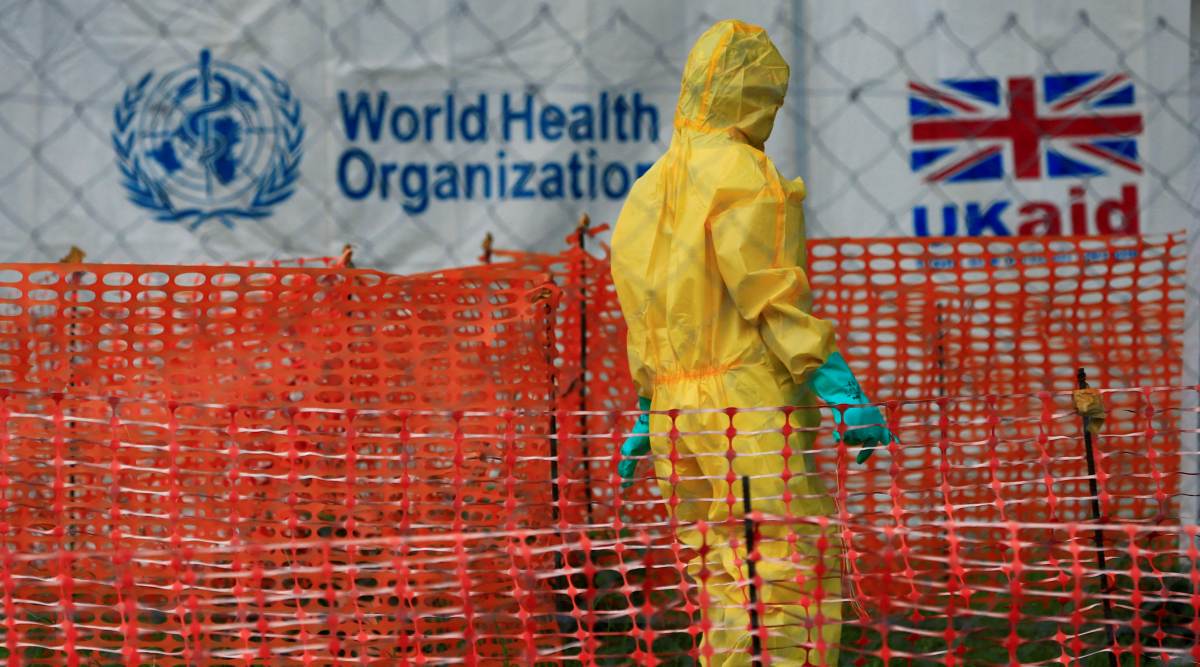
Imagine living in a community where the government has been historically distant, where basic infrastructure is broken, and where suddenly, strangers arrive wearing thick, white Tyvek suits and opaque goggles. They look like spacemen. They speak through respirators, their voices muffled and mechanical. They take your loved ones away behind plastic tarps. Sometimes, those loved ones never come back, buried in body bags without the traditional honors that keep a family’s spiritual world intact.
This is the psychological friction that containment measures never account for. An emergency decree cannot instantly manufacture trust where none existed before.
Health workers face a wall of skepticism. Rumors travel faster than the virus itself. People whisper that the isolation centers are where people go to die, or worse, that the disease was invented by foreigners to collect blood. If we ignore these whispers as mere ignorance, we miss the entire point. They are the natural defense mechanism of a traumatized population trying to maintain control over their own bodies and families.
Medical anthropology tells us that a needle is only as effective as the hand that holds it. You can have a highly effective vaccine, developed in record time by global laboratories, but if a mother hides her feverish child in the forest because she fears the vaccination team, the science is useless.
The battle against Ebola is fought in the minds of the local population long before it is won in the bloodstream.
The Mechanics of Containment
What does an emergency response actually look like when the cameras turn away?
First, there is contact tracing. This is detective work of the most grueling kind. Teams must find every single person who crossed paths with an infected individual over the past twenty-one days. They must walk miles through dense forest paths, track down motorbike taxi drivers who moved through crowded markets, and convince frightened neighbors to remember exactly who sat next to them at a meal.
Then comes the logistical nightmare of the cold chain. The modern vaccines that offer a shield against this killer require storage at ultra-low temperatures. Think about that challenge. We are talking about keeping vials at minus eighty degrees Celsius in a region where the electrical grid is a luxury, where roads turn to rivers of mud during the wet season, and where generators rely on fuel that must be shipped upriver on slow, wooden barges.
Health workers must carry these specialized cooling boxes on the backs of motorbikes, balancing over rotting log bridges, praying the ice holds until they reach the next remote village.
It is a monumentally fragile system. One broken fan belt, one delayed fuel delivery, or one sudden burst of militia violence can ruin a batch of vaccines, leaving an entire valley unprotected.
The True Cost of Separation
We often talk about the mortality rate of Ebola, which routinely hovers around fifty percent, sometimes climbing higher depending on the specific strain and the speed of intervention. But the statistics do not capture the profound isolation of the survival experience.
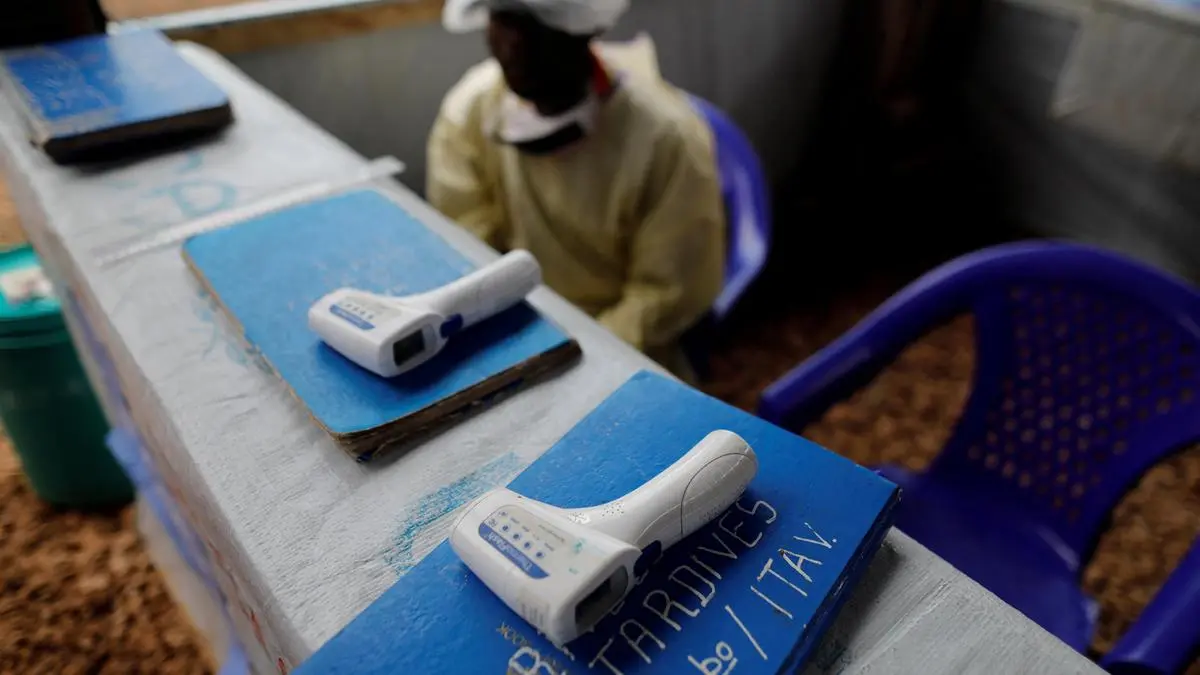
Inside the Ebola Treatment Unit, the world shrinks to the boundaries of a plastic fence. If you are a patient, you are surrounded by people whose faces you cannot see. You learn to recognize your doctors by the color of their boots or the name scribbled in permanent marker across their chests. The human touch, the simple act of a bare hand pressing against a forehead to offer comfort, is entirely stripped away.
Consider what happens next for those who manage to walk out of those tents alive.
Survival is not a clean victory. Survivors face a lingering twilight of chronic health problems: severe joint pain, blinding headaches, and uveitis, an inflammation of the eye that can lead to blindness. The virus can hide in pockets of the body long after the blood is clear, a silent hitchhiker waiting for a moment of weakness.
The social scar is often worse than the physical one. A survivor returns to their village only to find their belongings have been burned by cautious neighbors. Their market stall is avoided. Their friends cross the street when they walk by. They carry the stigma of the hot zone like an invisible mark of Cain.
The Shared Horizon
It is easy for someone sitting in a comfortable apartment in London, New York, or Tokyo to view a headline about the Democratic Republic of Congo as a distant tragedy, an unfortunate event happening to other people in a place they will never visit.
That view is a dangerous delusion.
The Congo River is a superhighway. It connects remote forest villages directly to Kinshasa, a mega-city of over seventeen million people. From Kinshasa, an infected individual can board a flight and be in Brussels, Paris, or Johannesburg within hours. The modern world has eliminated distance. We are all connected by the air we breathe and the flights we share. An outbreak anywhere is an outbreak everywhere.
Investing in emergency measures in Mbandaka is not an act of charity. It is a matter of global self-preservation.
When we fund local clinics, when we supply personal protective equipment, and when we support Congolese scientists who are among the most experienced virus hunters on earth, we are building the front-line trenches for the entire human race.
The emergency measures taken today are not just about containing a virus within a specific geographic zone. They are about validating our collective humanity. They are about ensuring that the next time a young woman like Alphonsine feels a fever coming on, she does not run into the forest to hide. She walks toward a clinic because she knows she will be treated with dignity, protected by science, and held by a system that values her life as much as our own.
The rain continues to fall over the river, washing the red dirt into the gray water. In the dark, the containment teams keep moving, their flashlights cutting small, fragile beams through the dense equatorial night. They do not look back. They cannot afford to stop.