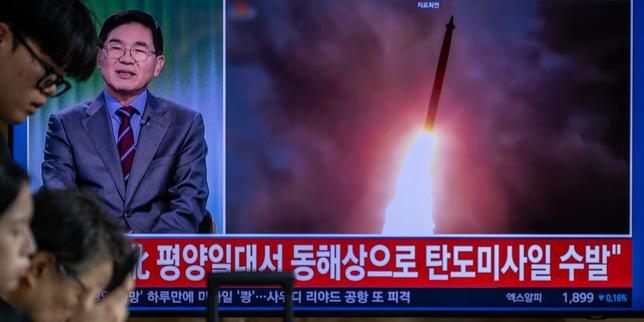
Standard wire reporting treats the detention of a foreign correspondent as a bilateral diplomatic spat—a denial from Tokyo, a counter-accusation from Moscow, and a brief reference to the Kuril Islands dispute. That framing misses the operational mechanism at work. When Russian security services detained Hokkaido Shimbun correspondent Yuki Imai in Yuzhno-Sakhalinsk and transferred him to Lefortovo Prison in Moscow on espionage allegations, the event functioned less as a conventional counterintelligence breakthrough than as an asymmetric leverage play embedded in an ongoing territorial and security standoff.
To analyze this episode rigorously requires separating verifiable facts from educated hypotheses, mapping the structural incentives behind Moscow's accusation and Tokyo's denial, and evaluating the strategic choices available to Japanese policymakers and media organizations operating in the Russian Far East.
Deconstructing Standard Wire Logic and Its Blind Spots
Conventional news coverage of such detentions relies on a predictable sequence: state security announces an arrest for collecting defense-related information, the detainee's home government issues a flat denial and a diplomatic protest, and the story is filed under strained bilateral relations. While accurate at the surface level, this narrative treats diplomatic statements as self-contained facts rather than strategic moves in a repeated game.
Three structural blind spots weaken standard coverage of the arrest on Sakhalin Island:
- Conflation of legal charges with operational reality: In authoritarian legal environments where pretrial detention can be extended and espionage statutes carry severe penalties—up to 20 years in prison in this case—an indictment is an instrument of state control rather than neutral adjudication. Treating the accusation as either proven fact or pure theatricality without examining evidentiary incentives obscures why Yuzhno-Sakhalinsk was chosen as the arrest venue.
- Isolation of the incident from parallel friction: Standard summaries mention the Kuril Islands (known in Japan as the Northern Territories) as background color, missing how localized reporting on mobilization, military personnel, or regional infrastructure intersects with Moscow's sensitivity over demographics and force projection in the Far East.
- Asymmetric risk pricing: A Japanese regional newspaper bureau operates with journalistic norms and institutional risk tolerances that differ sharply from those of a national intelligence service. Yet state counter-narratives deliberately blur the boundary between open-source or interview-based reporting and covert tasking.
Known Facts Versus Educated Hypotheses
Rigorous geopolitical analysis depends on keeping verified public facts distinct from analytical inference. Because consular access has been restricted and judicial proceedings take place behind closed doors, intelligence assessments rely heavily on observable behavior and institutional patterns rather than direct access to case files.
Verified Public Facts
The core public facts establish the timeline, actors, and immediate diplomatic friction:
- Russian authorities identified the detained journalist as Yuki Imai, a correspondent for Hokkaido Shimbun stationed in Yuzhno-Sakhalinsk on Sakhalin Island.
- Russia's Federal Security Service (FSB) accused him of gathering information related to defense capabilities or personnel—including reporting allegations around residents of the Kuril Islands linked to the war in Ukraine—and moved him to Lefortovo Prison in Moscow under pretrial detention.
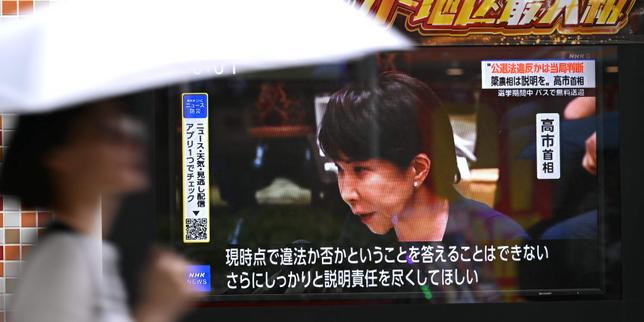
- Japanese Prime Minister Sanae Takaichi publicly rejected the espionage allegation, stating there was no such fact, while Tokyo lodged a formal protest and faced counter-claims from Russian officials alleging that foreign intelligence services recruit journalists.
- Japanese officials reported being denied access to the detained reporter, underscoring the diplomatic deadlock.
Educated Hypotheses on State Incentives
Beyond the confirmed statements lies the question of why this arrest occurred when and how it did. Under game theory and signaling models in international relations, states use high-visibility detentions to alter an adversary's cost calculation without escalating to kinetic conflict.
One educated hypothesis is coercive bargaining and deterrent signaling. By detaining a journalist near contested waters and sensitive military logistics hubs, Moscow raises the perceived cost of on-the-ground reporting in the Russian Far East and creates potential bargaining chips amid broader geopolitical pressure. A second hypothesis is domestic information control and counter-intelligence theater. Televised arrest footage and sweeping claims of foreign recruitment serve domestic audiences by projecting vigilance against external interference while intimidating local sources who might speak to foreign reporters.
These hypotheses are not mutually exclusive. A single arrest can simultaneously deter sensitive reporting on mobilization and military activity, retaliate against broader diplomatic or law-enforcement friction, and signal resolve across the Sea of Okhotsk.
The Cost Function of Covert Versus Open Information Gathering
A common analytical error in espionage disputes is assuming that because a journalist collects sensitive facts—such as casualty rumors, troop movements, or mobilization patterns—the activity must be intelligence work. In practice, intelligence agencies and journalists face fundamentally different cost functions, tradecraft constraints, and verification standards.
An intelligence officer optimizes for deniability, source protection, and actionable collection aligned with state policy requirements. Covert collection relies on dead drops, encrypted channels, compartmentalized handling, and tasking tied to specific military or diplomatic gaps. Getting caught destroys the asset and embarrasses the sponsoring service.
A foreign correspondent, by contrast, optimizes for timeliness, corroboration, and publication. Reporters ask direct questions, travel with identifiable press credentials or visas, rely on local contacts and open observation, and face constant bureaucratic scrutiny from host authorities. In tightly controlled regions, ordinary journalistic curiosity—asking how local families are affected by mobilization or observing military activity near disputed territory—can look indistinguishable from espionage to a security apparatus that treats information transparency itself as a threat to state security.
Cause-and-Effect Chains Often Missed
When a correspondent is detained on espionage charges, the second-order effects ripple outward through diplomatic channels, newsrooms, and regional information ecosystems:
- Chilling effect on local sources: Even when foreign journalists leave or go quiet, Russian citizens in peripheral regions who previously answered questions face heightened fear of surveillance or prosecution, shrinking independent visibility into the Russian Far East.
- Diplomatic asymmetry: Tokyo's protest channels rely on norms of consular access and rule-of-law reciprocity. When Moscow restricts access and frames the case around national security, standard diplomatic demarches yield minimal short-term concessions.
- Information vacuum reinforcement: Fewer accredited correspondents on the ground means outside observers rely more heavily on official state releases, propaganda, or unverified social media claims—the exact opposite of analytical clarity.
Operational Playbook for Crisis Management and Risk Containment
Managing a cross-border journalist detention requires coordinated action across diplomatic desks, legal teams, and editorial leadership. None of these measures guarantees rapid release, and every option carries trade-offs that must be weighed explicitly.
- Enforce strict factual discipline in public messaging. Anchor official statements and editorial coverage strictly to verified facts—such as detention location, legal status, and consular access—while refuting unsupported espionage claims clearly without speculating on covert motives.
- Centralize consular and legal escalation. Route demands for immediate consular access, medical checks, and fair legal representation through dedicated diplomatic channels and experienced local defense counsel, avoiding ad hoc public bargaining that can harden positions.
- Audit field reporting protocols in high-risk jurisdictions. Review travel routing, source-protection practices, digital hygiene, and topic sensitivity for correspondents stationed in or visiting borderland and militarized zones, recognizing that local political sensitivity can shift faster than accreditation rules.
- Build multi-source analytical redundancy. Pair on-the-ground reporting where still viable with satellite imagery, public procurement and demographic data, and regional expert analysis so coverage does not collapse if a single bureau is disrupted.
Limits and Failure Modes of These Measures
No playbook eliminates geopolitical coercion. Public pressure can occasionally help keep international attention focused on a detainee's welfare, yet aggressive public escalation can also lead a detaining state to dig in deeper to avoid appearing weak. Similarly, tighter field precautions reduce exposure for reporters in the field, but over-caution can hollow out reporting on precisely the stories of greatest public interest.
Strategic Play for Sustaining Visibility Without Feeding Escalation
Tokyo and news organizations covering Northeast Asia should treat this arrest as a structural feature of prolonged strategic friction rather than an isolated anomaly. The most effective strategic play is to decouple principled, persistent pressure for consular access and release from reactive diplomatic escalation, while shifting analytical coverage of the Russian Far East toward verifiable structural indicators—force deployments, economic dependencies, and demographic shifts—that do not depend on exposing vulnerable local sources to security scrutiny.