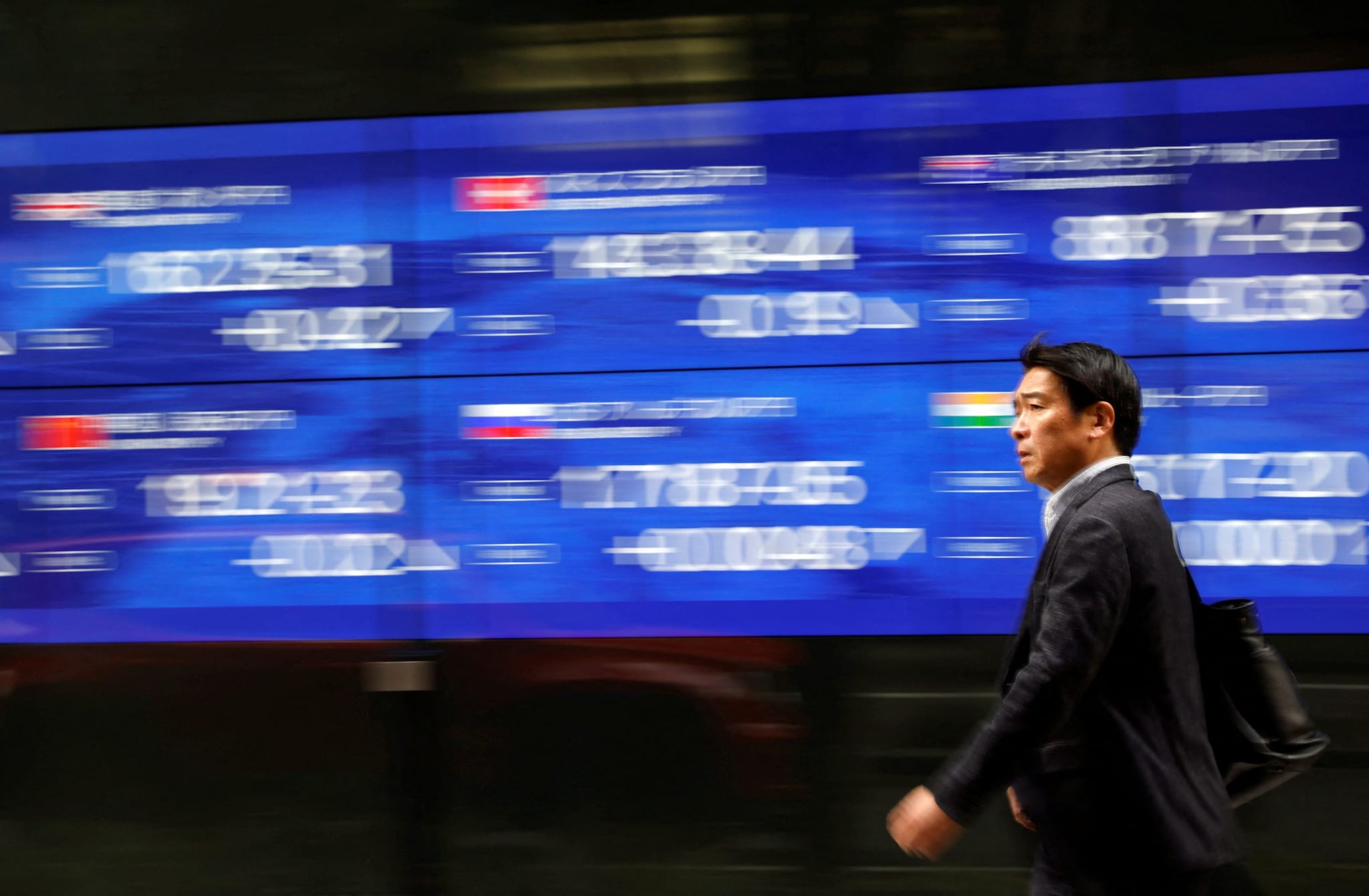
The global economy is currently holding its breath as a split-screen reality plays out in the Middle East. On one side, the U.S. Navy is enforcing a high-stakes blockade of the Strait of Hormuz, a move that historically would have sent global markets into a tailspin. On the other, a flurry of diplomatic "peace signals" from the Trump administration has convinced Asian investors to buy the dip, betting that the aggression is merely a theatrical prelude to a grand bargain.
Asian stocks climbed on Tuesday, ignoring the immediate physical reality of stalled tankers and rising freight costs. The Nikkei and Hang Seng posted gains despite the fact that West Texas Intermediate (WTI) crude remains stubbornly above $104 per barrel. The primary driver is not the current state of supply, but a collective belief in a "Trumpian pivot"—the idea that the administration’s maximum pressure campaign has a short shelf life and an inevitable diplomatic exit ramp.
The Mechanics of the Mirage
To understand why markets are rising while a chokepoint responsible for 20% of the world’s oil remains constricted, one must look at the specific language coming out of Washington. Over the weekend, the collapse of the Islamabad talks seemed like a terminal failure. Vice President JD Vance pointed to Iran’s nuclear intransigence, and the blockade was triggered almost immediately.
However, the tone changed within 24 hours. President Trump’s recent social media activity, hinting that Tehran "wants to make a deal very badly," has acted as a synthetic stabilizer for equities. Investors are essentially pricing in a repeat of previous diplomatic cycles: a period of extreme, televised tension followed by a sudden, televised handshake. This "buy the chaos" strategy assumes that the blockade is a bargaining chip rather than a permanent shift in trade routes.
The Real Cost of the Hormuz Choke
While traders in Tokyo and Hong Kong celebrate a potential thaw, the physical logistics of energy are in shambles. A blockade of the Strait is not a light switch that can be flipped without long-term damage.
- Rerouting Reality: Tankers previously destined for the Gulf are now diverting around the Cape of Good Hope. This adds roughly 10 to 14 days to the journey.
- The Insurance Spike: War risk premiums for vessels still attempting to navigate near the blockade zone have reached levels not seen since the 1970s energy crisis.
- Shadow Fleet Disruption: The blockade specifically targets Iranian ports, but the collateral effect has been the total paralysis of the "shadow fleet" that traditionally bypasses sanctions.
The Goldman Sachs Factor
A significant and overlooked catalyst for the current market optimism was an unexpected pivot from Wall Street. During a Q1 earnings call, Goldman Sachs leadership characterized the recent geopolitical selloff as "overdone." By framing the Middle East tension as a temporary volatility event rather than a structural collapse, they provided the intellectual cover for institutional buyers to move back into software and tech stocks, which carried the broader Asian indices higher.
This creates a dangerous divergence. The "paper market" for stocks is operating on the assumption of a peaceful resolution by the April 21 ceasefire deadline. Meanwhile, the "wet market" for physical crude is pricing in a world where the Strait remains a no-go zone for the foreseeable future.
Why the Peace Talk Signals Might Be a Trap
The assumption that a "Regime Change" in Tehran—as termed by the administration—leads to immediate stability is a massive leap in logic. Even if a deal is struck tomorrow, the removal of naval assets and the clearing of mines (real or perceived) takes weeks.
The administration’s current strategy relies on a 50% tariff threat against any nation supplying weapons to Iran. This is a double-edged sword for Asian economies like China and India, which are forced to choose between American trade access and Middle Eastern energy security. If the peace talks fail to produce a signed document by next week, the current stock rally will likely be remembered as a classic "bull trap."
The Inflation Lag
Central banks across Asia are already sounding the alarm. Bank Indonesia and the Monetary Authority of Singapore have noted that even if stocks rise today, the lag in energy pricing will hit consumer price indices (CPI) by May. A $100+ oil price is a tax on every sector of the economy, from agriculture to semiconductor manufacturing.
The current market exuberance is built on the hope that the blockade is a performance. But in the shipping lanes of the Gulf, the steel and the sailors are real. If the "Deal of the Century" doesn't materialize within the next seven days, the pivot from peace talks back to "Epic Fury" will be a violent one for global portfolios.
The immediate takeaway for any serious observer is that the markets are currently trading on personality, not supply chains. We are seeing a global economy that has become so accustomed to geopolitical volatility that it has begun to treat a naval blockade like a temporary labor strike. That is a dangerous level of complacency.
The blockade is effective. The tankers have turned around. The peace signals are, for now, just signals.