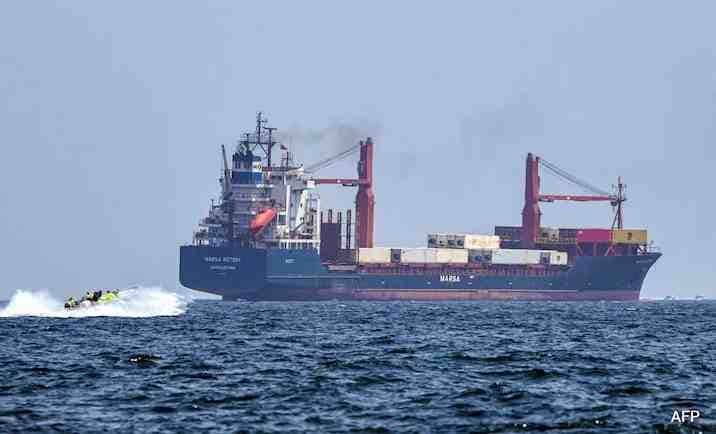
The Strait of Hormuz is not a "choke point" in the way the armchair generals at Langley want you to believe.
When retired intelligence chiefs start whispering advice to a president about "protecting the flow of oil," they are usually reciting a script written in 1974. They talk about carrier strike groups, freedom of navigation, and "deterring" Iran through sheer tonnage. It sounds authoritative. It looks great on a map. It is also fundamentally disconnected from the reality of modern kinetic warfare and the shifting math of global energy.
The lazy consensus suggests that if Iran closes the Strait, the global economy collapses and the only solution is a massive, multi-national naval escalation. That is a fantasy built on outdated logistics and a refusal to acknowledge that the age of the billion-dollar destroyer is over.
We are obsessed with a 21-mile-wide strip of water while ignoring the fact that the tools used to "protect" it are now the most vulnerable assets in the theater.
The Myth of the Indestructible Carrier
The standard advice given to the executive branch always involves "projecting power." In the Persian Gulf, that means parking a Nimitz-class carrier or an Arleigh Burke-class destroyer within range of the Iranian coastline.
I have watched strategic planners gamble billions on the assumption that a carrier is a mobile fortress. It isn't. In a narrow, congested waterway like Hormuz, a carrier is a massive, slow-moving target. The math of the "kill chain" has flipped.
Iran does not need a navy that matches ours. They only need a saturated swarm of $20,000 suicide drones and subsonic anti-ship missiles. When you pit a $13 billion ship against 500 disposable drones, the ship loses every time. Not because it can't shoot them down, but because it runs out of interceptors before the enemy runs out of targets.
Traditionalists argue that our Aegis Combat System is "state of the art." Sure, it is. But even a 95% success rate means five missiles hit the deck. In the Strait of Hormuz, 95% is a failing grade that results in a catastrophic loss of life and a humiliating retreat.
We are trying to play chess with a sledgehammer. Iran is playing Go with a handful of gravel.
The Oil Obsession is a Ghost of the 70s
The second pillar of the "Hormuz Panic" is the belief that a 30-day closure of the Strait would trigger a global Great Depression.
This ignores the structural shift in energy markets over the last decade. The United States is now a net exporter of crude and petroleum products. While a price spike would hurt, the "supply shock" that crippled the West during the Nixon era is a historical artifact.
Furthermore, the regional players have already built the workarounds that the media ignores. The East-West Pipeline in Saudi Arabia can move five million barrels a day to the Red Sea, bypassing Hormuz entirely. The Abu Dhabi Crude Oil Pipeline (ADCOP) can shunt another 1.5 million barrels to the Gulf of Oman.
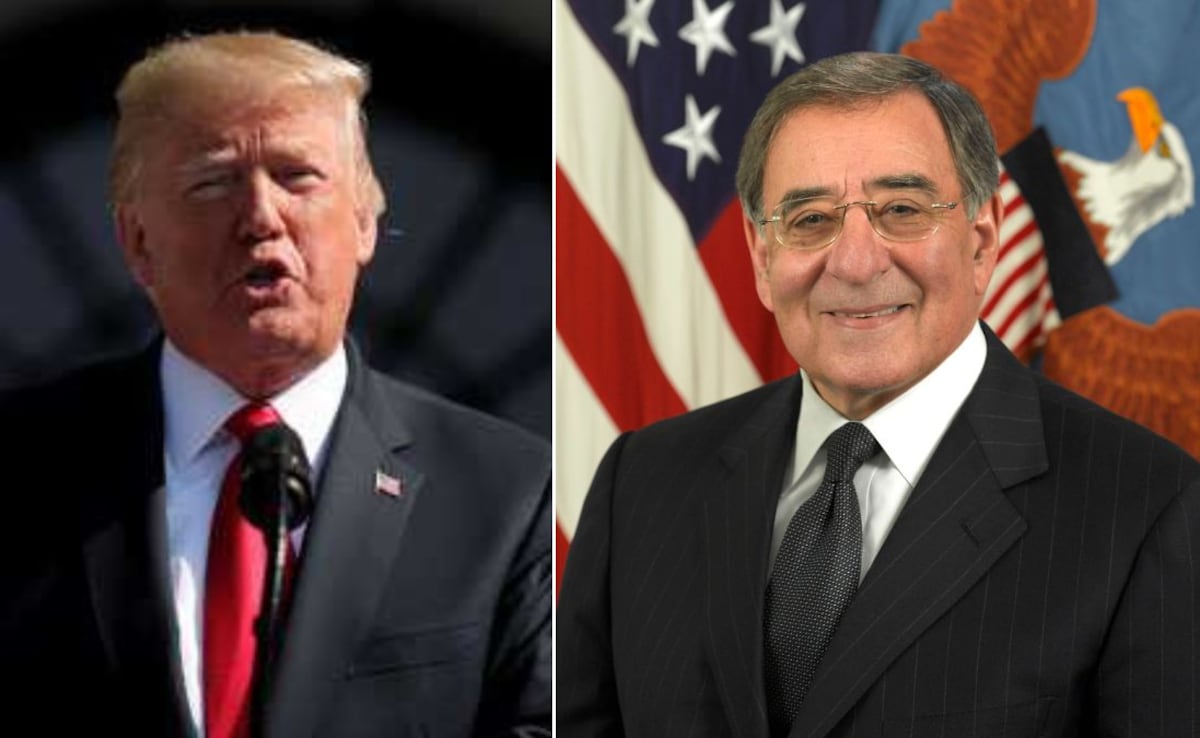
When an ex-CIA chief tells the President we must "defend the Strait at all costs," they are defending a price point, not a survival necessity. We are risking American sailors to subsidize the profit margins of global energy traders and the stability of the Chinese industrial base—which, ironically, is the primary destination for that Iranian and Iraqi crude.
The Intelligence Failure of "Deterrence"
The most dangerous advice being circulated is that "visible strength" prevents conflict.
History shows that in the Persian Gulf, visible strength often acts as a magnet for escalation. The "Tanker War" of the 1980s proved that presence does not equal protection. When we reflagged Kuwaiti tankers and provided escorts, the result wasn't a cessation of hostilities; it was a minefield that nearly sank the USS Samuel B. Roberts.
The "insider" advice usually suggests more sanctions and more patrols. This is a linear solution to a non-linear problem.
Iran’s strategy is built on plausible deniability and asymmetric "grey zone" operations. They don't need to sink a ship to win. They just need to make the insurance premiums for Lloyd’s of London so high that the Strait becomes commercially unviable. You cannot "deter" a magnetic mine with a fighter jet. You cannot "deter" a cyber-attack on a port terminal with a carrier group.
The High Cost of the Wrong Solution
If we actually wanted to secure the region, we would stop thinking about ships and start thinking about infrastructure.
The contrarian truth is that the most effective way to "win" in Hormuz is to make Hormuz irrelevant.
Instead of spending $2 billion a year on a naval presence that serves as a target, that capital should be redirected toward hardening the very pipelines that bypass the Strait and investing in the strategic petroleum reserves of our allies.
But there is no glory in a pipeline. There is no "Top Gun" sequel for a logistics manager who optimizes a redundant supply chain. So, the old guard keeps pushing the same naval-heavy narrative because it justifies the budgets of the 20th century.
The Ghost in the Machine: Drone Logistics
Imagine a scenario where the Strait is "closed." The conventional wisdom says we send in the minesweepers and the destroyers.
The reality? We should be sending in autonomous underwater vehicles (AUVs) and drone swarms of our own. The future of naval dominance in confined waters is not "manned and massive." It is "unmanned and expendable."
If we lose 50 underwater drones clearing a minefield, it’s a line item in a budget. If we lose one littoral combat ship, it’s a national mourning period and a geopolitical shift.
The advice currently being fed to the White House is dangerously sentimental. It clings to the image of the "Great White Fleet" in an era where a teenager in a basement with a 3D printer and a basic understanding of RF jamming can disrupt a global supply chain.
Stop Trying to "Win" the Strait
The goal isn't to "win" a fight in the Strait of Hormuz. The goal is to be the only player who doesn't care if the fight happens.
By obsessing over "advice" from the old intelligence guard, we are telegraphing our biggest weakness: our psychological dependence on a 21-mile wide strip of water.
True power in the 2020s is redundancy. It is the ability to walk away from the table because you have three other ways to get what you need.
We are currently the guy at the casino who has his entire life savings on one spin of the roulette wheel, while the "insider experts" are telling us the solution is to wear a luckier hat.
The hat won't help when the house is rigged.
Stop listening to the generals who want to fight the last war. Start building the infrastructure that makes their war impossible to start.
The Strait of Hormuz is only a weapon because we treat it like one. Give up the obsession with naval dominance in the Gulf, and you take away Iran's only real leverage.
The most powerful move is to stop playing the game entirely.