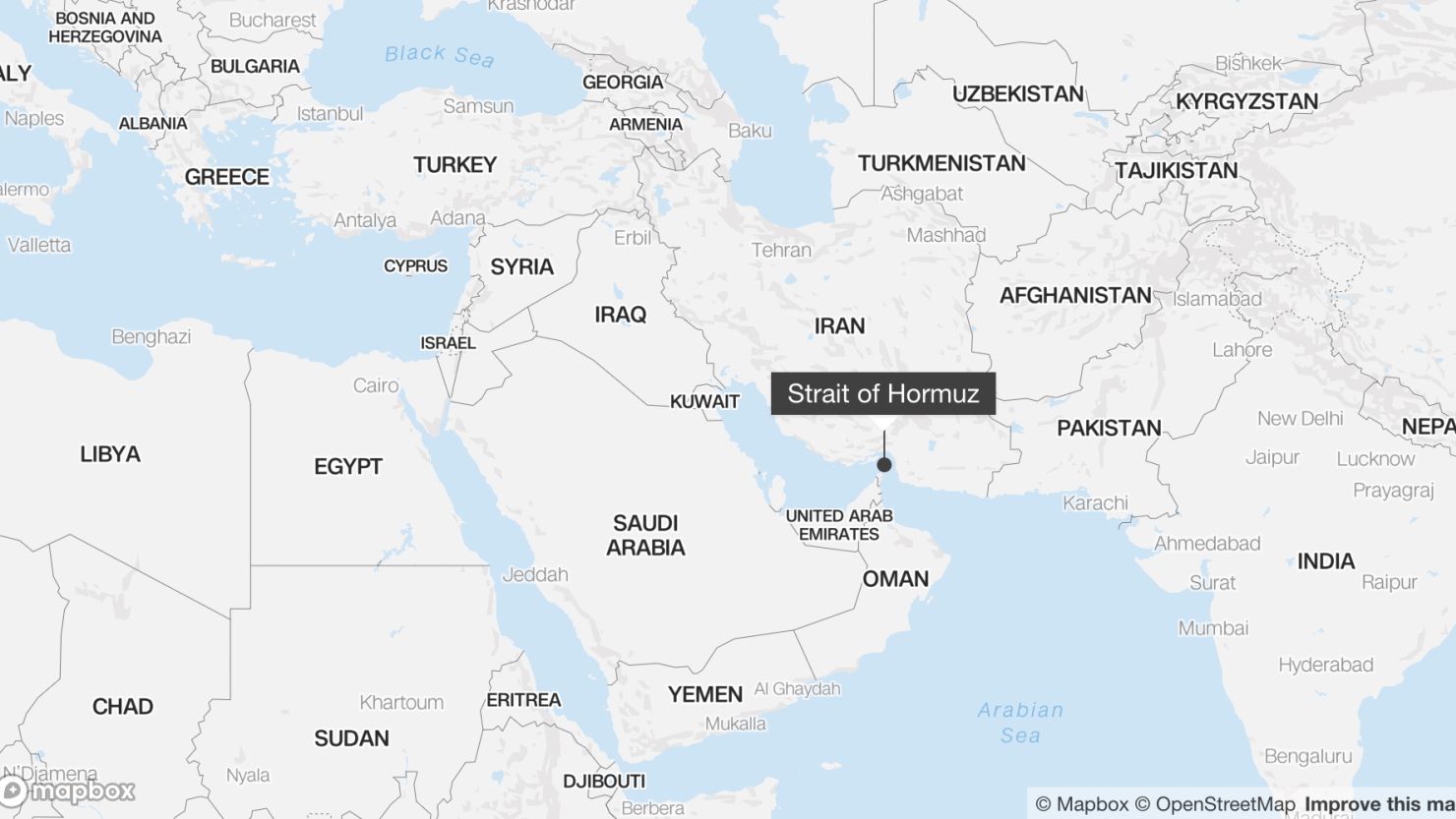
The Strait of Hormuz is the world’s most overrated choke point.
Every time tensions spike in the Middle East, the "Foreign Affairs Experts" dust off the same tired playbook. They talk about a "blockade" as if we are living in 1914, imagining a line of steel ships physically stopping tankers from moving. They speculate on how effective a U.S.-led blockade might be. They worry about $200 oil. They are wrong. You might also find this related coverage useful: Shadows in the Choke Point.
The very premise of a "blockade" in the 21st century is a relic of naval history that ignores the brutal reality of modern asymmetric warfare and global energy logistics. If you’re waiting to see how "effective" a blockade is, you’ve already missed the war. The war isn't about blocking the water; it's about the cost of insurance and the range of a $20,000 drone.
The Physical Blockade is a Fantasy
Let’s dismantle the biggest lie first: that the U.S. or any other power can "blockade" the Strait of Hormuz in the traditional sense. As highlighted in detailed articles by Associated Press, the implications are worth noting.
The Strait is roughly 21 miles wide at its narrowest point. However, the shipping lanes themselves—the actual deep-water paths—are only about two miles wide in each direction, separated by a two-mile buffer zone. "Experts" look at this narrowness and see a vulnerability. I look at it and see a kill zone for the party trying to do the blocking.
To maintain a physical blockade, you need surface dominance. You need ships to sit there. In an era of hypersonic anti-ship missiles and swarm boat tactics, a billion-dollar destroyer sitting in the Strait is just a very expensive target. The U.S. Navy knows this. They don't "blockade" Hormuz; they attempt to "assure transit."
But even that is a losing game. You don't need to sink a tanker to stop the oil. You just need to make the insurance premium higher than the profit margin of the cargo.
The Insurance War Nobody Talks About
While the pundits talk about "freedom of navigation," the real power players are sitting in glass offices in London. Lloyd’s of London has more influence over the Strait of Hormuz than any carrier strike group.
When a single "limpet mine" or a low-cost drone hits a hull, the Joint War Committee (JWC) of the Lloyd’s Market Association adjusts the "Listed Areas." Once a zone is listed, every ship entering it has to pay an additional war risk premium. I have seen shipping companies' margins evaporate in 48 hours because of a single suspicious explosion that didn't even sink the vessel.
The "blockade" isn't a wall of ships. It’s a spreadsheet. If Iran or any regional actor wants to "close" the Strait, they don't need to defeat the U.S. Navy. They just need to keep the risk profile high enough that the world’s merchant fleet decides the math doesn't work. The U.S. can escort ten tankers, but it cannot escort ten thousand.
The "Oil Shock" is a Paper Tiger
The second great misconception is that a Hormuz closure crashes the global economy instantly. This is 1970s thinking.
The world has changed. The U.S. is now a net exporter of petroleum. While a global price spike affects everyone, the strategic leverage held by Middle Eastern producers is at an all-time low.
- Strategic Reserves: The U.S. Strategic Petroleum Reserve (SPR) and international equivalents provide a massive buffer.
- The Red Sea Alternative: Pipelines like the East-West Pipeline (Petroline) in Saudi Arabia can move millions of barrels per day to the Red Sea, bypassing Hormuz entirely.
- Spare Capacity: Production in the Permian Basin can be dialed up with far more agility than a decade ago.
The "Foreign Affairs Experts" love to cite the statistic that 20% of the world's oil passes through the Strait. They fail to mention that a significant portion of that oil is destined for China, India, and Japan—not the West. If the Strait closes, the person with the biggest problem isn't the American commuter; it's the Chinese factory owner.
By framing a Hormuz blockade as a U.S. security crisis, we are essentially subsidizing the energy security of our greatest economic rivals. We spend billions to keep the lanes open so China can get cheap oil. That’s not strategy; that’s a gift.
Asymmetric Superiority: Drones vs. Destroyers
If you want to understand why the U.S. "blockade" or "protection" strategy is failing, look at the math of the intercept.
We are currently witnessing a massive technological mismatch. When a regional militia fires a $10,000 drone, the U.S. Navy responds with an SM-2 or an ESSM missile that costs $2 million.
$$Cost_{Ratio} = \frac{2,000,000}{10,000} = 200$$
You don't need a PhD in economics to see that the U.S. cannot win a war of attrition where it spends 200 times more than the enemy per engagement. This is the "nuance" the experts miss: a blockade isn't effective based on whether you can hit the target; it’s effective based on whether you can afford to keep hitting the target.
The U.S. Navy is currently a Ferrari being used to chase mosquitoes in a swamp. Eventually, the Ferrari runs out of gas or hits a tree. The mosquito just keeps coming.
The China Factor: The Silent Partner
The "lazy consensus" assumes that China would be a passive victim of a Hormuz closure. This ignores reality. China has spent the last decade building the "String of Pearls" and investing heavily in Gwadar Port in Pakistan.
China doesn't want the U.S. to "protect" Hormuz. They want the U.S. to leave so they can "protect" it themselves. Every time a U.S. official talks about the "effectiveness" of our naval presence, they are inadvertently justifying the expansion of the People's Liberation Army Navy (PLAN).
We are playing a 20th-century game of "Battleship" while the rest of the world is playing a 21st-century game of "Go." We are obsessed with the physical control of a small strip of water, while our adversaries are focused on the economic and technological bypasses that render that water irrelevant.
Stop Asking if the Blockade "Works"
The question isn't whether a blockade is effective. The question is why we are still using a metric of success from the age of sail.
Success isn't "zero ships hit." Success is a global energy market that doesn't care if a ship is hit. We should be pivoting away from the maritime "policeman" role and toward a strategy of total energy independence and localized production.
Instead of sending another carrier group to the Persian Gulf, we should be investing that capital into the domestic grid and alternative transit. The best way to "win" at the Strait of Hormuz is to stop needing to go there.
If the Strait closes tomorrow, the world will find out that the "blockade" wasn't a wall—it was a mirror reflecting our own outdated dependencies. The experts are looking at the horizon for a fleet of enemy ships. They should be looking at the cost-per-kill on our own defense contracts and the insurance premiums on our own arrogance.
The U.S. isn't being challenged by a superior navy. It’s being bankrupted by a cheaper one.
Stop worrying about the tankers. Start worrying about the math.