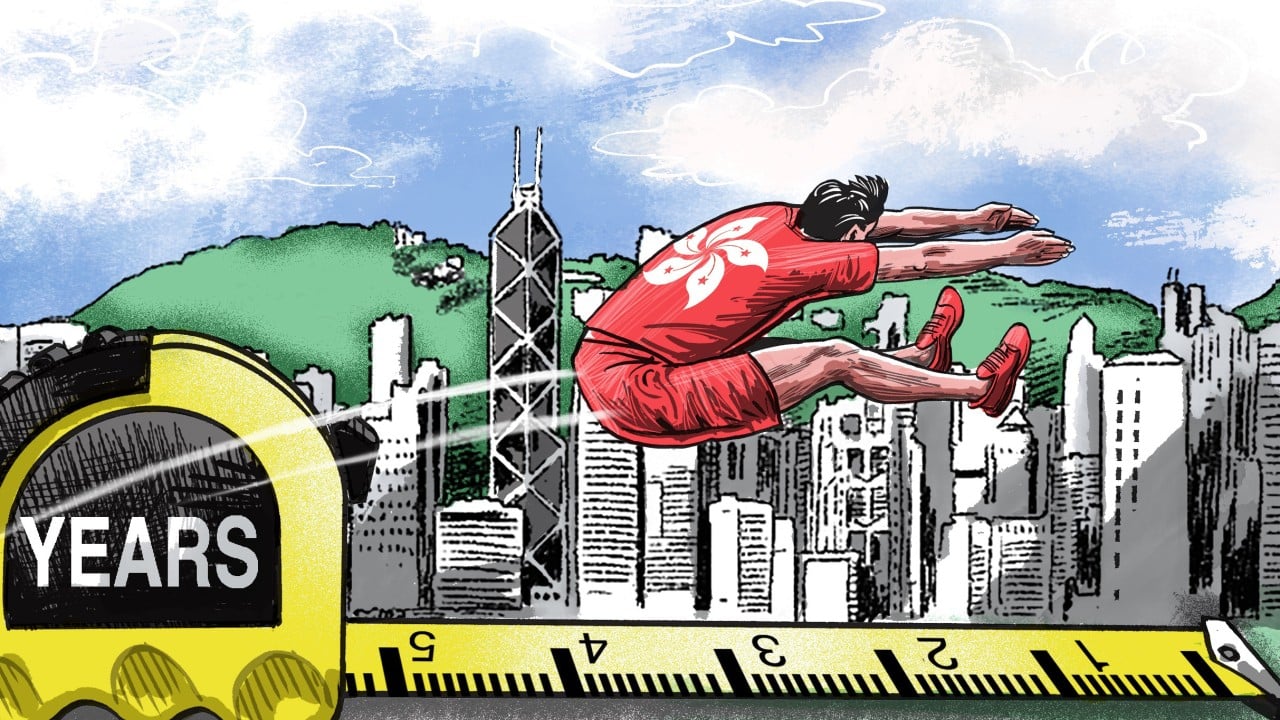
The obsession with key performance indicators is killing the world's most resilient financial hub.
Bureaucrats and corporate analysts love to argue that Hong Kong’s future depends entirely on how meticulously it measures its progress over the next five years. They want spreadsheets. They want quantifiable milestones for technology adoption, infrastructure spending, and green finance metrics. They believe that if you cannot measure it, you cannot manage it.
They are completely wrong.
In fact, the hyper-fixation on rigid metrics is precisely what will paralyze the city. By tying economic survival to a set of arbitrary statistical goalposts, policy creators are incentivizing a culture of compliance rather than raw, unadulterated growth. I have watched multinational firms blow millions of dollars gaming internal metrics just to show "year-on-year progress" to a board of directors, while their core product rotted from the inside out. The exact same disaster happens at a municipal level when governments mistake hitting a target for achieving a victory.
The Flawed Premise of the Metric Obsession
When observers analyze regional roadmaps, they usually ask: What are the specific benchmarks for success? This is the wrong question entirely. The real question is: How quickly can we scrap the benchmarks when the market pivots?
Let's dissect the mechanics of a standard five-year economic framework. Historically, these blueprints are designed to provide stability and signal predictability to global investors. But predictability is a relic of a bygone economic era. When you establish strict metrics for success in 2026, you are effectively predicting the global economic state of 2031. No one has that visibility.
When you measure success by specific outputs—such as the exact number of artificial intelligence startups registered or the precise volume of tokenized assets traded—you get optimization for the metric, not the market.
- The Compliance Trap: Departments will hit their quotas by funding low-quality projects just to clear the bureaucratic bar.
- The Risk-Aversion Vortex: Founders and investors will avoid highly volatile, high-reward innovations because they do not fit into the pre-approved boxes defined by the five-year plan.
- The Missing Nuance: Economic vitality is organic. It thrives on friction, regulatory breathing room, and spontaneous capital flows—none of which look good on a government scorecard.
Consider the concept of Goodhart’s Law: when a measure becomes a target, it ceases to be a good measure. If Hong Kong spends the next half-decade trying to hit specific performance indicators to prove its viability to external critics, it will transform from a dynamic, free-flowing economic engine into a highly predictable, mediocre administrative zone.
The Reality of Capital Flight
The popular narrative suggests that capital is fleeing or staying based on international report cards and credit ratings. This is a sanitized view of how money actually moves.
Traders and sovereign wealth funds do not care about a city's self-reported progress reports. They care about liquidity, speed of execution, and the asymmetry of risk and reward. If a market offers deep liquidity and a clear path to monetize assets, capital will flood in, regardless of whether the jurisdiction hit its arbitrary "sustainability index" goals.
I spent over a decade advising institutional funds on cross-border capital allocation. Not once did a managing director look at a government's five-year planning document and say, "Well, they hit 94% of their key performance indicators, let's deploy two billion dollars." They look at the spread. They look at the regulatory tax friction. They look at the talent pool.
If the administration focuses on making the city the most friction-free environment for wealth generation, the metrics will take care of themselves. If they focus on the metrics, they will create an over-regulated environment that drove that very capital away in the first place.
Dismantling the Talent Retention Myth
Every analyst points to talent acquisition metrics as the ultimate indicator of Hong Kong's long-term viability. The common consensus dictates that the city must track the net inflow of high-earning visas to judge if it is winning the regional talent war.
This metric is fundamentally hollow.
Counting the number of visas approved tells you absolutely nothing about the velocity of innovation occurring within the borders. A thousand mid-level compliance officers relocating to fulfill regulatory requirements does not equal one aggressive entrepreneur who builds a regional logistics empire from a co-working space in Mong Kok.
Instead of tracking the quantity of human capital, look at the concentration of risk-takers. The downside of my contrarian view is obvious: you cannot easily measure risk tolerance on a government spreadsheet. It requires accepting a high degree of statistical invisibility. It means acknowledging that the most valuable economic activity often happens in the grey areas before the regulators even know what to call it.
Stop Measuring, Start Unprotecting
If Hong Kong wants to secure its position for the next generation, it needs to stop trying to fix its measurement systems and start dismantling the safety nets that protect legacy industries.
True economic resilience does not come from a carefully calculated five-year strategy. It comes from the brutal, unyielding forces of creative destruction.
Stop trying to manufacture a perfect ecosystem through top-down planning. Remove the artificial metrics. Stop worrying about how the West or the East grades the progress report. Open the gates, lower the transactional friction to absolute zero, let the legacy players fail if they cannot compete, and let the market decide what success looks like.
The moment a city relies on a plan to prove it is successful, it has already lost the mandate of the market. Turn off the dashboards.