Can a single person change how a whole city learns science? If you look at Hong Kong right now, the answer is yes.
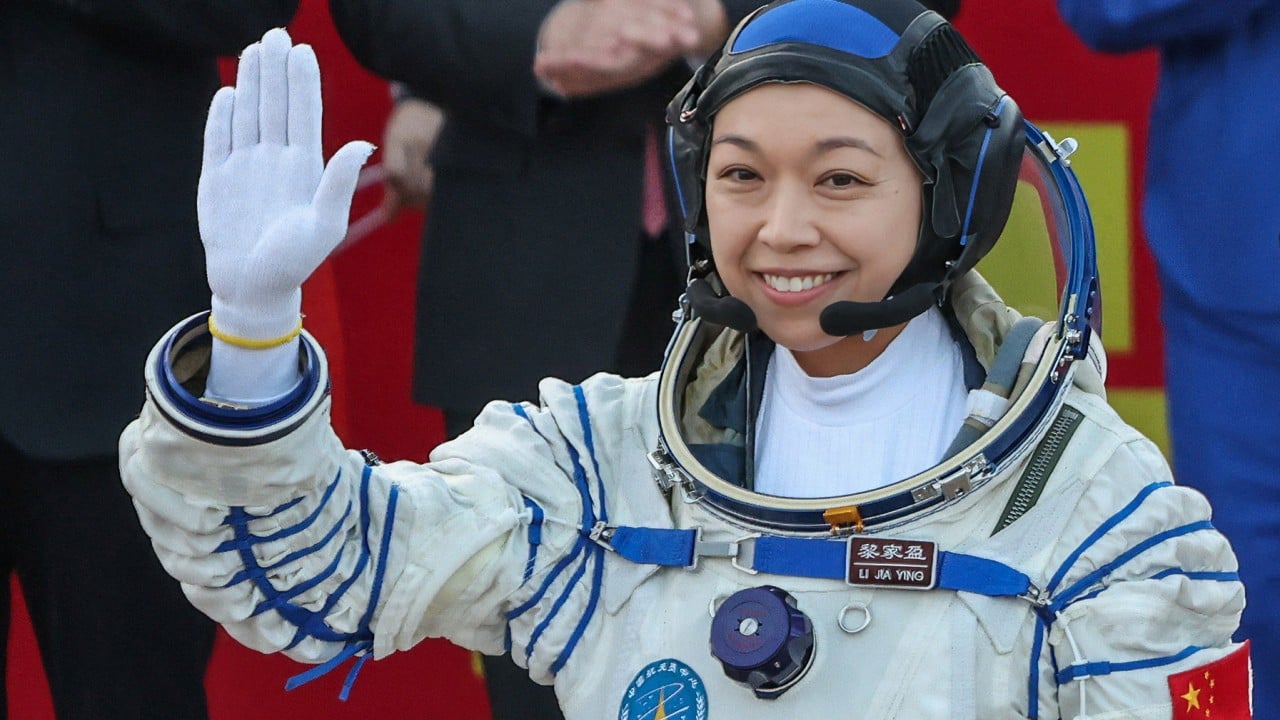
When the Shenzhou-23 mission blasted off, it carried Lai Ka-ying into orbit. She isn't just any astronaut. She is a born-and-raised Hongkonger, a former police superintendent with a PhD in computer science, and China's first female payload specialist. Within hours of her launch to the Tiangong space station, something shifted back home.
Parents flooded learning centers with calls. Schools started scrambling to rewrite their science plans. Suddenly, aerospace education isn't a niche hobby for wealthy kids anymore. It's a massive, city-wide race.
But behind the sudden wave of excitement, there is a real question. Is this just a short-term trend, or are we looking at a permanent shift in how the city handles science and technology?
The Numbers Behind the Sudden Space Rush
The data shows this isn't just social media noise. Local STEM education providers saw an immediate, massive spike in demand the moment Lai's mission was confirmed.
Before the launch, a typical science learning center might get around ten inquiries a day about specialized tech programs. Right after the announcement, those numbers jumped more than threefold. Parents who used to push their kids exclusively toward traditional careers like medicine, finance, or law are suddenly asking about satellite design and microsatellite assembly.
It's an expensive investment too. Hourly fees for these specialized aerospace science classes range from HK$300 to HK$650. Yet, parents are lining up to pay. They see a clear path that didn't exist two years ago.
Why Lai Ka-ying Broke the Traditional Mold
To understand why this hit Hong Kong so hard, you have to look at who Lai Ka-ying actually is. She isn't a military test pilot. She didn't grow up in a specialized aerospace academy.
She grew up in Tsuen Wan. She spent over a decade at the University of Hong Kong, earning her bachelor's, master's, and eventually a doctorate in computer science, focusing on digital forensics. Then she worked for the Hong Kong Police Force, handling cybersecurity and technical services.
That matters because it changes the definition of an astronaut for local students. You don't need perfect military flight credentials. If you are an expert in coding, data analysis, or electronics, the door to space is open.
As a payload specialist, Lai's job during her six months in orbit involves managing over 100 scientific experiments. She's working on biomedical research using artificial embryos, testing new energy storage systems, and analyzing materials in microgravity. She's a scientist in a spacesuit. For a city that prides itself on academic and technical achievement, that distinction changed everything.
The Problem With Hong Kong's Current Infrastructure
The enthusiasm is real, but the local infrastructure is lagging behind. Right now, Hong Kong doesn't have the physical facilities to match this massive surge in interest. There are no large-scale aerospace museums, no immersive training centers, and very few professional venues dedicated to space tech.
Because of this gap, local educators are looking north. Industry groups are already pushing to adopt mainland China's established aerospace curricula, like the Qian Xuesen Education program.
We are also seeing a major shift in the public school system. The government recently overhauled the primary and secondary school curriculum, replacing old general studies classes with dedicated science subjects. These new courses inject heavy doses of astronomy, robotics, and space science directly into the classroom.
But reading about space in a textbook isn't enough. The real transition will happen through cross-border integration. Expect to see a massive increase in student field trips to astronautical launch sites and research centers in mainland China over the next few years.
The Career Path Is Expanding
If you think this is just about training future astronauts, you're missing the bigger picture. Very few kids taking these classes will ever go to space. But that's not the goal.
The space economy requires a massive ground game. The advanced systems keeping Tiangong running rely heavily on artificial intelligence, advanced semiconductors, specialized sensors, and robotics. These are the exact sectors Hong Kong has been trying to build up through its InnoHK research clusters and the Hong Kong Space Robotics and Energy Center.
When a university student sees an alumnus like Lai using her tech background to reach orbit, it changes their career trajectory. They realize that working on microchips, AI algorithms, or advanced materials isn't just for consumer electronics. It applies directly to deep-space exploration, lunar rovers, and automated Mars missions.
What to Do Right Now
If you're a parent, educator, or student trying to navigate this sudden shift, don't just buy a cheap telescope and call it a day. Focus on actionable skills.
- Prioritize core tech skills over space trivia. Space exploration today is driven by data. Learning Python, data structures, or basic robotics hardware will help a student far more than memorizing planet names.
- Look for hands-on assembly programs. Seek out courses that actually let students build, code, and test small electronics or microsatellite kits. The value is in the troubleshooting, not the theory.
- Watch the university research pipelines. Keep an eye on labs at HKU, PolyU, and other local institutions. They are the ones designing the actual instruments used in national missions. That's where the real career opportunities start.
The space race in Hong Kong's schools is moving fast, and the novelty will eventually wear off. The institutions and students who focus on the hard engineering and computing skills behind the hype are the ones who will benefit when the next selection cycle opens.