The Western media loves a "phoenix from the ashes" narrative. The current obsession with Hong Kong’s supposed tech "rewiring" is a classic example of confusing a massive capital injection with a genuine cultural shift. CNBC and its contemporaries are selling you a story where Hong Kong mimics Silicon Valley’s DNA by blending state-led directives with venture capital.
They are wrong.
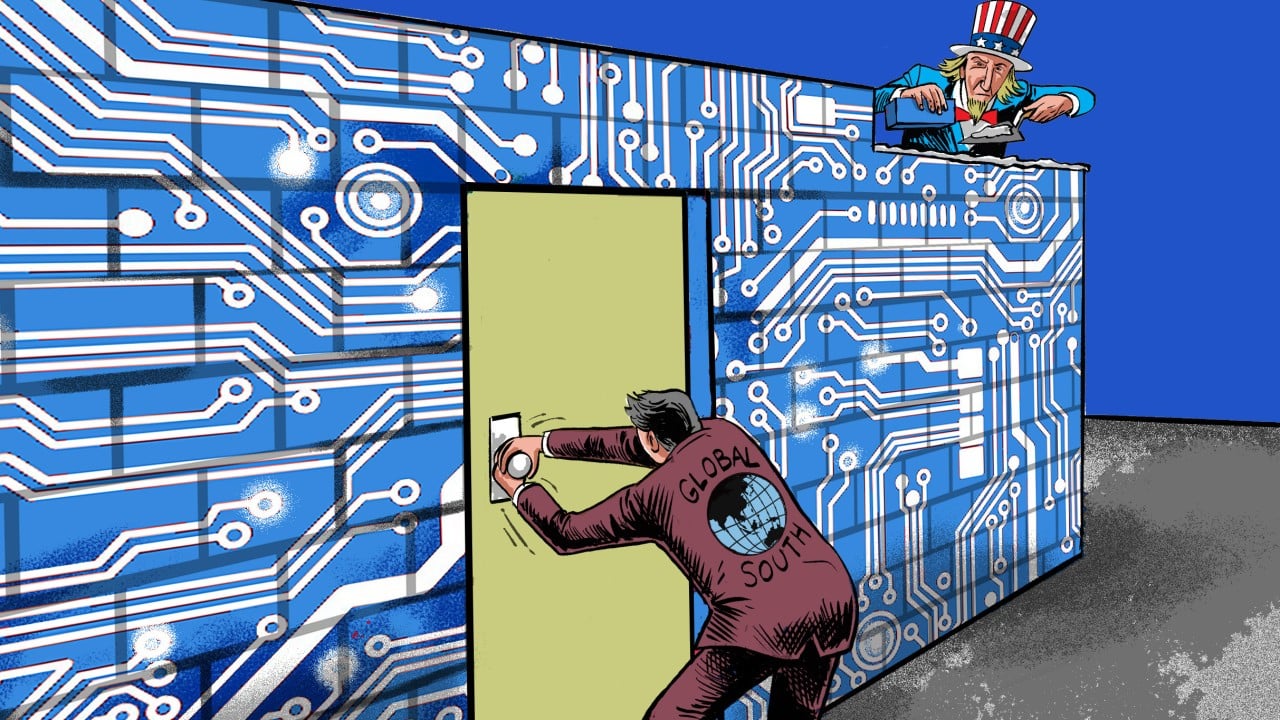
You cannot manufacture a Bay Area by building shiny incubators and throwing billions at "strategic sectors." What is happening in Hong Kong isn't a rebranding of the Silicon Valley model; it is the final burial of it. We are witnessing the rise of State-Directed Innovation (SDI), a mechanism that prioritizes national security and infrastructure over the messy, chaotic, and often offensive disruption that actually creates generational wealth.
The Myth of the Agile Hub
The common consensus suggests that because Hong Kong is situated at the doorstep of the Greater Bay Area (GBA), it is perfectly positioned to be the world's premier R&D lab. The logic is simple: Hong Kong does the "deep tech" research, and Shenzhen does the manufacturing.
This view ignores the fundamental friction of modern geopolitics. I have watched firms dump millions into "cross-border synergy" only to realize that a border still exists—intellectually, legally, and financially. Silicon Valley worked because it was a decentralized mess. It was driven by weirdos in garages who hated the government. Hong Kong's new model is driven by committees in suits who report to the government.
When the state picks the winners, the losers aren't just companies; they are the very ideas that were too radical to fit into a five-year plan. If your startup doesn't align with the current "Seven Strategic Emerging Industries," you aren't just bootstrapped—you are invisible. That isn't a rewiring of the Silicon Valley model. It is the antithesis of it.
Venture Capital has Become Venture Compliance
In the old world, a VC took a risk on a founder's vision. In the new Hong Kong, "Strategic VCs" are effectively government-linked entities looking for "Safe Tech."
Safe Tech is predictable. It’s a slightly better battery. It’s an AI that optimizes logistics without questioning data privacy. It’s "deep tech" that serves a utilitarian purpose.
The "China Connection" narrative argues that this efficiency is an advantage. They say it avoids the "waste" of the Western model—the billions spent on dog-walking apps or social media filters. But that "waste" is the cost of freedom. You don't get the world-changing breakthroughs without the garbage. By pruning the garden before anything grows, the state ensures they only get the plants they recognize.
If you are a founder in this environment, your primary skill isn't coding or market fit. It is regulatory navigation. You aren't building a product; you are building a bridge to a subsidy.
The Talent Trap
The reports highlight "Talent Pass" schemes and high-tech visas as proof of a brain gain. They show you the numbers of mainland engineers moving south.
But quantity is not quality.
Silicon Valley thrived because it was a global magnet for the discontent. It drew the person who felt stifled in London, Mumbai, or Shanghai. Hong Kong is increasingly drawing people who want stability and proximity to the mainland market. There is nothing wrong with that, but stability is the enemy of disruption.
Disruption is uncomfortable. It’s loud. It breaks things.
The current environment in Hong Kong is designed to be quiet. The high-rises at Science Park are beautiful, sterile, and largely occupied by firms that know exactly which lines not to cross. You cannot "rewire" a model based on breaking rules when the primary rule is now "don't break anything."
The Illusion of the Middleman
For decades, Hong Kong's value proposition was "The Gateway."
- You want into China? Go through Hong Kong.
- You want Chinese capital to go out? Go through Hong Kong.
The modern tech world doesn't need a middleman. If a US firm wants to manufacture in China, they go to the source in Dongguan or Vietnam. If a Chinese AI firm wants global reach, they set up in Singapore or Dubai.
The "rewiring" being celebrated is actually a frantic attempt to find a new purpose for a city that is being bypassed by the very technology it claims to champion. Cloud computing and decentralized finance were supposed to make geography irrelevant. Instead, we are seeing a doubling down on physical "hubs" that feel more like high-tech gated communities than vibrant urban ecosystems.
Why the Tech is "Deep" but the Impact is Shallow
You will hear a lot about "Deep Tech" in Hong Kong—biotech, quantum, microelectronics. These sound impressive. They require PhDs and expensive labs.
But deep tech without a permissive market is just an expensive science fair.
To turn a quantum breakthrough into a global standard, you need more than just a lab. You need a legal framework that protects IP against everyone, including the state. You need a financial system that rewards radical transparency. You need an internet that isn't partitioned.
The "rewiring" involves building the hardware of a tech hub while slowly disconnecting the software of a free society. It is like building a Ferrari but replacing the engine with a treadmill. It looks the part from the outside, but it isn't going anywhere fast.
The Cost of the "Safe" Model
Is there a benefit to this state-led approach? Sure.
If you want to build a high-speed rail network or a city-wide surveillance system, the SDI model is peerless. It is fast, well-funded, and efficient. But if you want to build the next paradigm-shifting consumer platform or a truly decentralized protocol, you are in the wrong place.
The downside to the contrarian view is simple: I might be underestimating the sheer power of capital. Perhaps if you throw enough trillions at a problem, you can brute-force innovation. But history suggests otherwise. Innovation is a biological process, not a mechanical one. It requires a certain level of "mess" that the current administration is actively tidying up.
Stop Asking if Hong Kong can be Silicon Valley
The question itself is flawed. It assumes that "Silicon Valley" is a goal to be reached through a series of policy adjustments.
Silicon Valley was an accident of history, geography, and a specific brand of American libertarianism that probably won't happen again anywhere—including the US.
By trying to "rewire" this model, Hong Kong is chasing a ghost. It is attempting to replicate the symptoms of success (IPOs, unicorns, lab space) without the causes of success (radical dissent, total mobility, and legal unpredictability).
What we are seeing in Hong Kong isn't a new version of the future. It is a very old version of the past: the state-run shipyard, updated for the 21st century. It will produce impressive ships. It will employ thousands of smart people. But it will never discover a new continent.
If you want to build the future, you don't go where the government is "inviting" you. You go where the government has no choice but to follow you.
The real innovation is happening in the places these newsletters aren't talking about, because those places don't have a PR department or a "Strategic Task Force." They just have people with nothing to lose and a Wi-Fi connection.
Stop looking at the skyline. Start looking at the exits.