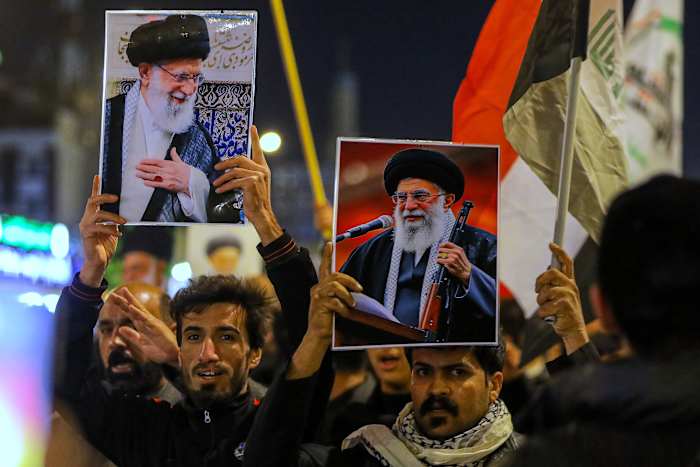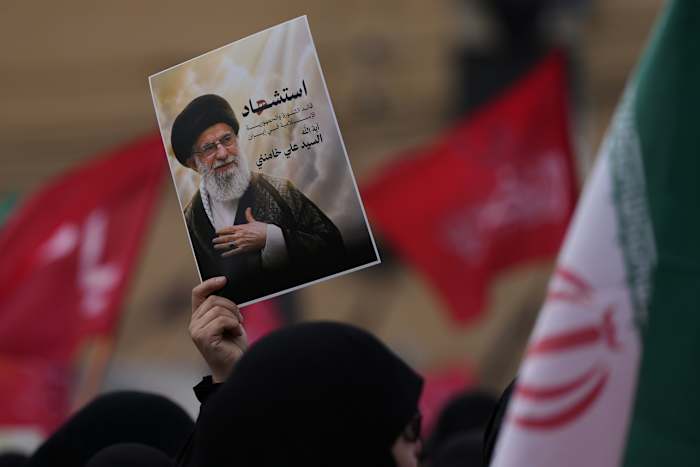
The structural collapse of Iran’s forward defense strategy is no longer a matter of theoretical debate among intelligence circles. It is a visible, bleeding reality. For four decades, Tehran built a "Ring of Fire" designed to keep any potential conflict far from its own borders, using a network of proxies to bleed its enemies through unconventional means. Today, that ring is not just fraying; it is being systematically dismantled. The recent sequence of precision decapitation strikes and the technical infiltration of Hezbollah’s communication networks have stripped away the myth of proxy invincibility. This shift has removed the primary psychological barrier preventing a direct, large-scale confrontation between the Israel-US alliance and the Islamic Republic.
Iran's regional power relied on a specific brand of shadow theater. They didn't need to win a conventional war; they only needed to make the cost of attacking them too high to contemplate. By arming Hezbollah with 150,000 rockets and positioning militias in Iraq and Syria, Tehran created a stalemate. However, the technological gap has widened to a canyon. The ability of Israeli intelligence to penetrate the most secure layers of the Iranian command structure—culminating in the assassination of high-level figures in the heart of Tehran and the crippling of Hezbollah’s mid-level leadership—has signaled that the "Shield of Resistance" is compromised at the source.
The Fatal Flaw in the Proxy Architecture
The fundamental weakness of the Iranian model is its dependence on centralized command for decentralized execution. Tehran provides the money, the drones, and the satellite guidance, but the foot soldiers are local. This creates a massive communication trail. In an era of pervasive signals intelligence and AI-driven pattern recognition, a militia cannot hide its logistics. The recent strikes in Lebanon and Syria demonstrate that the "stealth" of these groups was an illusion maintained only by their enemies' previous reluctance to escalate.
When the decision was made to remove the gloves, the results were surgical. We are seeing a transition from "mowing the grass"—the periodic degradation of militia capabilities—to a "root-canal" strategy. This involves targeting the specific individuals who hold the institutional knowledge of these organizations. When you kill a commander who has spent twenty years building a smuggling route, that route doesn't just go quiet; it dies. The replacement is almost always less experienced, more prone to mistakes, and easier to track.
The Technology Gap is the New Front Line
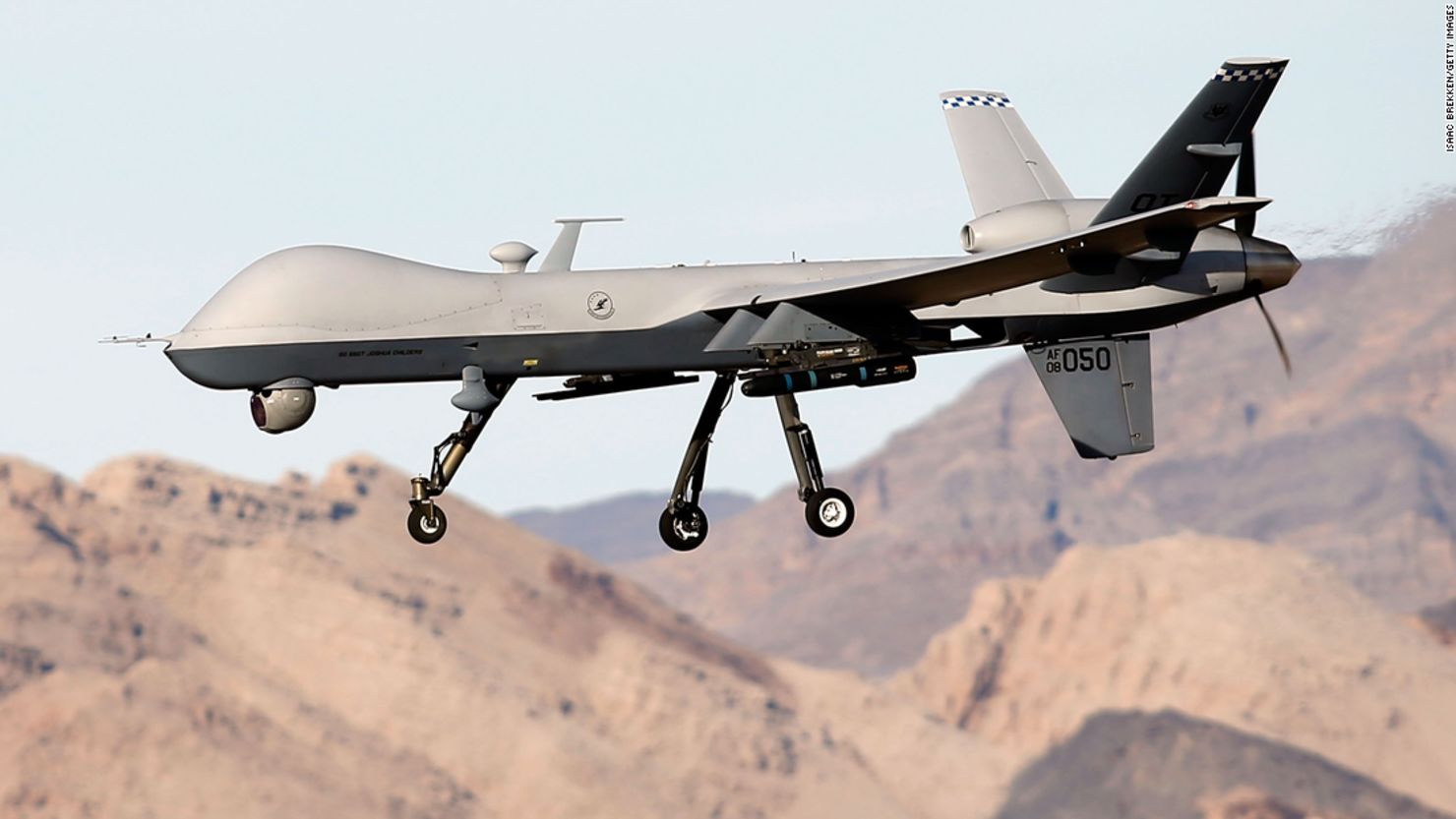
We have moved past the era of simple suicide drones. The current conflict is defined by the integration of cyber-warfare with physical kinetic strikes. The sabotage of Hezbollah’s communication devices was not just a tactical victory; it was a psychological castration. It told every operative in the region that their very equipment—the tools they trust for survival—could be turned into an executioner’s tool at any moment.
This level of penetration suggests that the supply chains Iran spent years cultivating are now compromised. If a state cannot guarantee the safety of a simple pager or radio, it cannot coordinate a complex multi-front war. Iran’s domestic industry, despite its bluster about "indigenous" missile technology, still relies on global markets for high-end semiconductors and specialized components. Each of those components is a potential backdoor for Western or Israeli intelligence.
The Collapse of the Mediterranean Bridge
For years, the "Land Bridge" from Tehran to Beirut was the crowning achievement of the late Qasem Soleimani. It allowed for the seamless flow of heavy weaponry across borders that existed only on maps. That bridge is now a shooting gallery. Israeli air superiority over Syria has reached a point where shipments are often destroyed within minutes of crossing the border or landing at an airfield.
The Syrian government, once a staunch pillar of this axis, is increasingly viewed as a liability by Tehran. Damascus is broke, exhausted, and wary of being dragged into a terminal conflict. This hesitation creates friction. Without a reliable Syrian conduit, Hezbollah is effectively an island. An island with a lot of rockets, yes, but an island nonetheless. When an entity is isolated, its deterrence value drops because it can be besieged. We are watching the slow-motion siege of the world's most heavily armed non-state actor.
Economic Strangulation and Domestic Fragility
While the kinetic war rages in Lebanon and Syria, the economic war is hollowing out Iran from the inside. A proxy costs money. It costs money to pay the salaries of tens of thousands of fighters, to provide social services to their families, and to replace destroyed hardware. Iran’s economy, crippled by years of sanctions and systemic corruption, is struggling to keep up with the burn rate of a high-intensity regional conflict.
The Iranian public’s appetite for foreign adventures has vanished. Every dollar sent to a militia in Yemen or Gaza is a dollar not spent on the crumbling power grid or the devaluing currency. This creates a double bind for the leadership in Tehran. If they stop funding the proxies, they lose their primary defense mechanism. If they continue, they risk a domestic explosion that the security forces might not be able to contain. The "Woman, Life, Freedom" protests were a warning shot; the next uprising may be fueled by the simple desperation of a population watching its wealth incinerated in foreign deserts.
The Redefinition of Israeli Red Lines
The October 7th attacks fundamentally altered the Israeli psyche. The old doctrine of "containment" is dead. In its place is a proactive, almost predatory stance that seeks to eliminate threats before they can reach a threshold of parity. This shift has caught the Iranian leadership off guard. They were playing a game of chess based on old rules, while their opponent flipped the table and reached for a sledgehammer.
By targeting the Iranian "consulate" annex in Damascus and high-ranking IRGC officials, Israel signaled that the era of plausible deniability is over. If a proxy attacks, the sponsor will pay. This is a direct challenge to the very foundation of Iranian foreign policy. If the "shadow war" is brought into the light, Iran loses. It cannot win a conventional head-to-head conflict against a nuclear-armed state backed by the world’s lone superpower.
The Role of the United States as an Anchor
The United States has moved from a role of "de-escalation" to one of "active positioning." The deployment of carrier strike groups and advanced missile defense systems is not just a show of force; it is a logistical reality that provides Israel with the "deep bench" it needs to take massive risks. With the US providing the defensive umbrella, Israel is free to dedicate its entire offensive capacity to dismantling the proxy network.
This partnership is more integrated than it appears on the surface. Intelligence sharing has reached an unprecedented level, particularly in the realm of electronic and satellite surveillance. The "blind spots" that once allowed militias to operate are being filled in. When the US and Israel synchronize their target lists, the life expectancy of a regional militia commander drops to nearly zero.
The Illusion of the Great Satan
Tehran’s rhetoric regarding the United States has always been a tool for domestic mobilization. However, the recent lack of a significant Iranian response to the dismantling of its network suggests a deep-seated fear. They know that a full-scale war with the US would result in the end of the clerical regime. The survival of the state is the ultimate priority, outweighing the survival of any proxy, including Hezbollah.
This creates a credibility gap. If Iran watches its most valuable assets being destroyed and does nothing but fire a few ceremonial missiles, its allies will take notice. The Houthis in Yemen, the militias in Iraq, and the remnants of Hamas are beginning to realize that the "Brotherhood of Resistance" is a one-way street. They are expected to die for Tehran, but Tehran will not commit suicide for them.
The Nuclear Wildcard
As the proxy network fails, the temptation for Iran to sprint for a nuclear weapon increases. If your conventional deterrence is gone, you reach for the ultimate insurance policy. This is the most dangerous phase of the conflict. The West knows that a weakened Iran is a desperate Iran.
The window for a "diplomatic solution" has likely slammed shut. The technical knowledge gained by Iranian scientists cannot be unlearned, and the trust required for a deal has been vaporized. We are entering a period where the only thing preventing an Iranian nuclear breakout is the credible threat of a total preemptive strike. The dismantling of the proxy network makes that strike more likely, not less, because the "cost" of the strike (in terms of proxy retaliation) has been significantly lowered.
A New Regional Order
The Middle East is being forcibly reordered. The "Shiite Crescent" that Iran spent decades and billions of dollars to cultivate is being broken into isolated pockets of resistance. What comes next is not necessarily peace, but a period of intense, fragmented instability. However, the centralized threat of a coordinated, Iranian-led regional war is receding.
The era of the proxy is ending because the technology of the sovereign state has finally caught up. You can no longer hide a military infrastructure behind the veil of a "liberation movement." The sensors are too sharp, the drones are too many, and the world is too connected. The stage is indeed set, but not for a balanced war. It is set for a clinical, persistent extraction of Iranian influence from the Levant and beyond.
The shadow theater has ended, and the lights are blindingly bright.
The strategic calculus has shifted from managing the threat to erasing it. If the Iranian leadership continues to value the survival of their revolutionary project, they will have to accept a diminished role on the world stage, or face the consequences of a direct confrontation they are fundamentally unprepared to win. The "Ring of Fire" has become a noose.
Would you like me to analyze the specific shifts in Gulf State diplomacy as a result of this weakening Iranian influence?