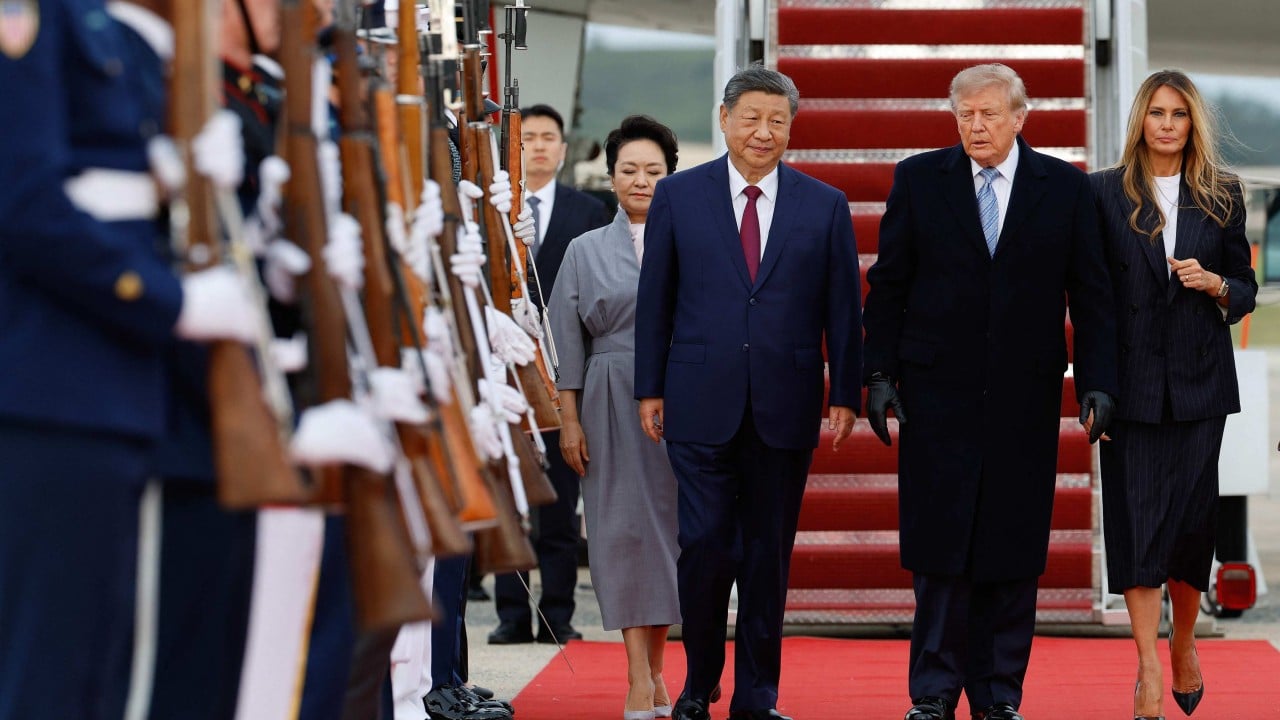
The announcement of a two-month trade truce extension between Washington and Beijing reads less like a breakthrough and more like a tactical stall. Markets react with cautious relief whenever diplomats manage to kick a contentious deadline down the road. Veteran observers of bilateral economic conflict know better than to confuse a delayed collision with a avoided one. When two superpowers agree to buy sixty more days of talking, they are usually just buying time to marshal arguments, reposition supply chains, and brace for the next escalation.
Trade friction between the United States and China no longer stems from simple tariff disagreements over manufactured goods or agricultural exports. The modern theater of friction centers on industrial policy, technological sovereignty, and critical mineral dominance. A sixty-day window does not alter the fundamental incompatibility of state-directed capitalism and market-driven trade models. Structural subsidies, intellectual property disputes, and national security restrictions on advanced semiconductors cannot be resolved in committee rooms over an arbitrary bimonthly extension.
The Mechanics of Delay
Diplomatic breathing room serves distinct political calendars rather than economic stability. Both capitals face domestic constituencies demanding firmness on foreign economic threats. In Washington, bipartisan consensus dictates a hardline posture toward Beijing, making any permanent compromise politically hazardous for an administration facing legislative oversight or election pressures. In Beijing, leadership confronts a cooling domestic property market, high youth unemployment, and an urgent mandate to achieve technological self-sufficiency before foreign restrictions tighten further.
A short-term extension allows officials to claim progress without expending political capital on difficult concessions. Tariffs remain locked in place. Export controls on dual-use technology continue to tighten quietly in the background. Cargo vessels still cross the Pacific under the looming threat of sudden tariff adjustments or port-entry restrictions. The truce is a paper shield against immediate market panic, offering zero protection against long-term structural decoupling.
Supply Chain Realities and the Cost of Friction
Corporate planners long ago stopped waiting for a grand diplomatic settlement. Multinationals spent the past several years aggressively diversifying manufacturing hubs across Vietnam, India, Mexico, and other alternative jurisdictions. This geographic dispersal carries a heavy price tag. Redundant supply chains sacrifice economies of scale for resilience, driving up structural costs that ultimately land on the balance sheets of end consumers.
A temporary trade truce does nothing to reverse this capital expenditure. Chief financial officers cannot unwind multi-billion-dollar reshoring and friend-shoring strategies based on a sixty-day diplomatic grace period. Corporate strategy now operates under the assumption of permanent volatility. Every bilateral meeting, summit photo-op, and communique is treated as background noise compared to the hard reality of customs enforcement and regulatory compliance.
Strategic Competition in Advanced Technology
At the core of the ongoing friction lies a high-stakes race for dominance in artificial intelligence, quantum computing, and advanced semiconductor manufacturing. The United States aims to maintain a technological choke point on cutting-edge hardware, restricting access to advanced lithography equipment and high-performance computing chips. Beijing responds by accelerating domestic research initiatives, pouring state capital into indigenous chip fabrication, and tightening domestic controls over the rare earth elements essential for modern electronics.
These are zero-sum domains. Neither government views compromise as a viable long-term option when national security arguments are invoked. When a state categorizes economic competitiveness as a matter of national survival, trade negotiations cease to be commercial transactions. They become a continuation of statecraft by other means. A two-month extension cannot bridge a chasm defined by competing visions of twenty-first-century hegemony.
The Illusion of Finality
Financial journalism often falls into the trap of treating each bilateral meeting as a turning point. The historical record suggests otherwise. Temporary pauses in superpower friction typically precede sharper rounds of confrontation once the designated review period expires. The underlying structural drivers of distrust remain completely untouched by diplomatic communiques.
Markets will eventually price in the permanence of this friction. Until policymakers address the fundamental questions of industrial sovereignty and market access with realistic frameworks rather than endless extensions, the global economy will remain suspended in a state of chronic uncertainty. The clock is already ticking down on the current grace period, and the fundamental math of the dispute has not changed by a single digit.