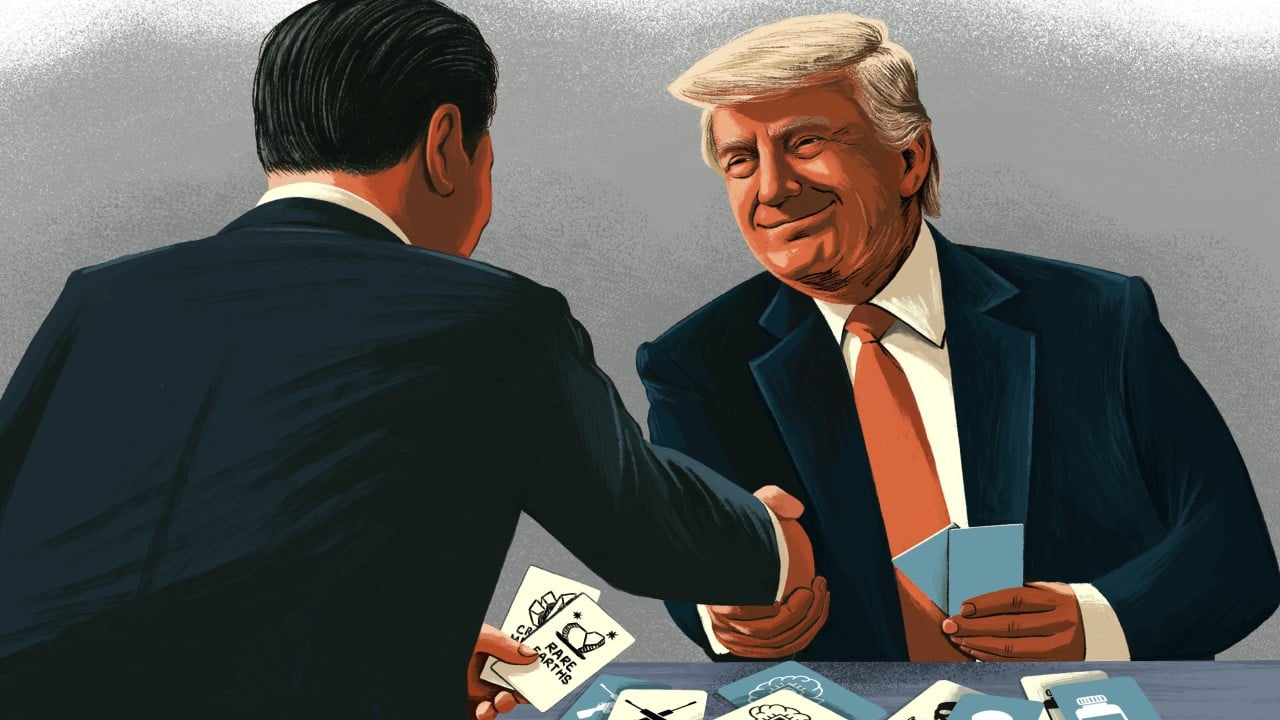
When Ukrainian President Volodymyr Zelensky sat across from Donald Trump on the margins of the United Nations General Assembly, the public theater masked a grinding structural reality. Kyiv stated its readiness to accept a mutual suspension of attacks on critical energy infrastructure, provided Moscow adhered to identical terms. Yet, within hours of diplomatic pronouncements echoing from New York, air raid sirens wailed across Ukrainian population centers as Russian drones struck power substations. This stark contradiction exposes the fundamental flaw embedded within high-level diplomatic interventions that treat a total war of attrition like a corporate contract dispute.
The Asymmetry of Destruction
To understand why this proposed energy ceasefire remains perpetually out of reach requires examining the stark asymmetry of what energy infrastructure means to each belligerent. For months, Ukraine executed a high-stakes, long-range drone campaign targeting major Russian oil processing hubs and refineries. These systematic strikes inflicted billions of dollars in damage, constraining domestic Russian fuel markets and forcing Moscow to confront rare economic vulnerabilities far from the front lines. Conversely, Russia focused its military might on obliterating Ukraine's municipal power generation, transformers, and heating networks, seeking to freeze civilian populations into submission before winter arrives.
Treating these two campaigns as moral equivalents ignores the strategic calculus driving the Kremlin. For Moscow, winter blackouts and the systematic destruction of civilian heating grids are not secondary tactical objectives. They are primary mechanisms of coercion designed to break societal resilience and force political capitulation. Halting strikes on power plants means surrendering the single most effective tool of psychological terror available to the Russian military leadership. Expecting an authoritarian regime to abandon its primary bargaining instrument based on a handshake brokered across an ocean reveals a profound misunderstanding of how modern attritional conflicts operate.
Diplomatic posturing in Western capitals often mistakes the desire for a headline-grabbing breakthrough for actual strategic alignment. When announcements emerge regarding mutual freezes on energy targeting, they frequently originate from political imperatives thousands of miles away from the craters of the Donbas. Observers tracking these developments must look past the optimistic rhetoric of peace summits to analyze the actual mechanisms of enforcement. Without verifiable, boots-on-the-ground monitoring or immediate, teeth-bearing consequences for violations, any declared truce collapses the moment a single squadron of long-range drones leaves its hangar.
Economic Pressures and Political Expediency
The economic dimensions of this diplomatic push further complicate the situation. Global fuel markets reacted sharply to the sustained campaign against Russian refineries, sparking anxieties over diesel supplies and pricing pressures that ripple directly into Western political cycles. Energy costs remain a sensitive nerve in domestic politics, creating an urgent incentive for American negotiators to stabilize commodity flows regardless of the broader geopolitical fallout. When economic pressures collide with national survival, the friction generates desperate shortcuts that ultimately favor the aggressor.
Kyiv finds itself caught in an agonizing bind. Rejecting Washington-backed diplomatic initiatives risks alienating vital international partners whose material support underwrites the entire national defense effort. Yet accepting an unverified energy truce without ironclad enforcement mechanisms hands Moscow a tactical timeout to repair damaged refining networks while leaving Ukrainian cities vulnerable to continued aerial bombardment. History demonstrates that temporary ceasefires in this conflict serve primarily as logistical recovery periods for Russian forces rather than stepping stones toward a lasting settlement.
Military analysts tracking the trajectory of the conflict recognize that energy grids are deeply intertwined with military logistics. Refineries supply the fuel that powers armored columns, while regional power substations run the railway networks transporting ammunition to the front lines. To ask a nation fighting for its sovereign existence to unilaterally halt strikes on fuel depots while its own citizens freeze in dark apartments is an exercise in diplomatic detachment. True deterrence cannot be constructed on wishful thinking or well-meaning communiques issued from luxury hotels in New York or Geneva.
The Anatomy of Diplomatic Disconnect
The widening chasm between diplomatic announcements and operational reality points to a systemic failure in how international mediators assess adversary intent. When political figures declare unilateral or mutual truces without securing prior written consent from the military command in Moscow, they create an informational vacuum. In that vacuum, Russian state media spins narratives of Western capitulation while field commanders interpret the diplomatic chatter as a sign of weakness or impatience.
This disconnect is compounded by the fundamental differences in political accountability. Democratic leaders face immediate electoral consequences tied to inflation, fuel prices, and voter fatigue, creating an insatiable appetite for quick diplomatic wins. Authoritarian rulers operate free from domestic electoral cycles, allowing them to absorb multi-billion-dollar economic hits to their refining sector while maintaining steady pressure on civilian heating grids. A negotiator seeking a quick diplomatic trophy cannot bridge this structural asymmetry through sheer optimism.
Furthermore, the technical complexity of verifying an energy truce is immense. A modern power grid comprises thousands of high-voltage substations, transmission lines, and distribution nodes dispersed across thousands of square miles. Monitoring compliance requires continuous aerial surveillance, independent inspectorate access, and rapid-response verification teams stationed in both countries. None of these prerequisites exist in the current diplomatic architecture. Without them, any declared ceasefire functions merely as a cover for tactical repositioning.
The Illusion of Enforcement
The diplomatic machinery must confront the reality that Vladimir Putin operates outside the constraints of Western political incentives. When announcements of ceasefires are made public before any operational agreement has been finalized or accepted by the Russian high command, the resulting vacuum is immediately exploited. Moscow tests the boundaries of every proclaimed truce, launching calculated provocations to measure the reaction speed and resolve of international allies. Every time a retaliatory response is delayed by bureaucratic hesitation, the credibility of the entire diplomatic framework erodes further.
Examining the ground truth in cities like Kharkiv, Sumy, and Kyiv reveals an unmistakable pattern of adaptation. Municipal authorities and utility workers labor under constant threat of double-tap missile strikes to patch together shattered transformers before freezing temperatures set in. For these engineers and local leaders, discussions of an energy truce sound less like a roadmap to peace and more like a cruel abstraction divorced from the realities of daily survival. They measure safety not in diplomatic communiques, but in the thickness of concrete protective barriers and the availability of emergency generators.
The structural imbalance of the current diplomatic push stems from a fundamental reluctance to enforce hard consequences. If international actors wish to compel an aggressor to respect infrastructure protections, those measures must be backed by immediate, crippling escalation in economic and military sanctions rather than vague warnings. Until the cost of violating an agreement significantly outweighs the strategic benefits of continued bombardment, declarations of an energy ceasefire will remain little more than rhetorical exercises designed for evening news broadcasts.
Beyond the Negotiating Table
Financial markets and commodity traders watch these diplomatic developments with nervous intensity, seeking signals of relief for strained fuel inventories. Yet market stability cannot substitute for strategic clarity. When political leaders prioritize short-term commodity relief over sustainable security architecture, they incentivize bad actors to weaponize civilian misery. Every unverified diplomatic overture sends a dangerous signal that persistence in brutality eventually extracts concessions from weary democracies.
The physical reality on the ground mocks the theoretical constructs debated in conference rooms. Winter in Eastern Europe does not pause for bilateral communiques or social media announcements. Power transformers damaged by high-explosive ordnance require months of specialized manufacturing to replace, making temporary cessations of hostilities structurally unequal when one side possesses vast industrial depth and foreign supply chains while the other relies on fragile, exposed municipal grids.
Intelligence assessments from European capitals indicate that Moscow's military planners view any prospective energy moratorium as an opportunity to reconstitute depleted missile stockpiles. The technical components saved from defensive expenditure can be redirected toward ballistic and cruise missile production, ensuring that when the truce inevitably shatters, the subsequent barrage is even more devastating. Ignoring this well-documented pattern of behavior amounts to willful blindness.
The path forward requires abandoning the fantasy that words alone can halt an invasion driven by ideological erasure. Every diplomatic initiative that fails to establish rigid accountability mechanisms ends up serving the aggressor's strategic timeline. As long as the Kremlin calculates that time and exhaustion are on its side, formal agreements regarding energy truces will continue to shatter against the harsh reality of front-line combat.