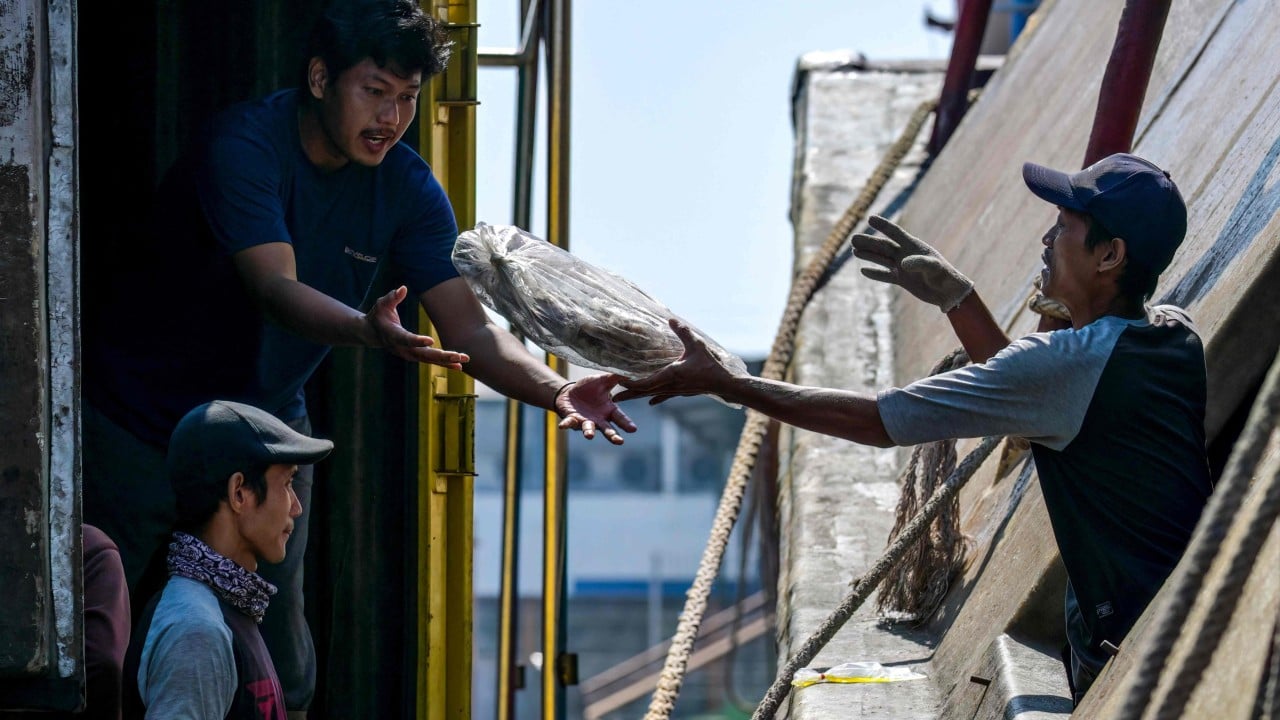
Western human rights campaigns love a simple villain. For years, the narrative surrounding Indonesian migrant fishers has been wrapped in a predictable, heartbreaking package: naive men from rural villages, tricked by villainous manning agencies, trapped on distant-water fishing vessels, and reeled into modern-day slavery on the high seas.
It is a compelling story. It wins journalism awards. It drives donations for NGOs.
It is also fundamentally wrong about how the global maritime economy actually functions.
By hyper-focusing on the sensational imagery of physical chains and dramatic rescues, activists and competitors are missing the real crisis. The tragedy of distant-water fishing is not a failure of criminal law enforcement. It is a predictable, structural consequence of razor-thin seafood margins, misaligned regulatory incentives, and a global supply chain that demands cheap protein at any cost.
If we keep trying to fix this with superficial human rights checklists, nothing will change. We need to dismantle the economics that make exploitation profitable in the first place.
The Lazy Consensus of The Victim Narrative
Most reporting on this issue relies on a comforting lie: that eliminating a few corrupt manning agencies will solve the problem. The current consensus blames "false promises" and deceptive recruiting.
This view treats migrant fishers as passive victims lacking agency. Having worked alongside maritime supply chain logistics for over a decade, I can tell you the reality on the ground in places like Central Java is far more complex.
Many fishers are not naive. They are rational economic actors making a calculated, high-risk gamble. They know the risks of distant-water fleets. They know the reputation of Taiwanese, Chinese, and South Korean vessels. Yet, they choose to sign those contracts because the domestic economic alternatives are nonexistent. When local artisanal fisheries collapse due to climate shifts and industrial overfishing closer to shore, the high seas become the only employer of last resort.
By framing the issue purely as a criminal human resources problem, the industry avoids looking at the mirror. The manning agencies are not the root cause; they are the symptom of an insatiable demand for ultra-cheap labor driven by global seafood buyers.
The Economic Mechanics of Exploitation
To understand why working conditions on the high seas decay into brutality, follow the money.
Distant-water fishing is an incredibly capital-intensive business with highly volatile returns. Fuel costs alone can eat up more than 50% of a vessel's operating expenses. When you add the fact that global fish stocks are plummeting—requiring ships to stay out at sea for months, or even years, at a time—the financial pressure becomes immense.
Vessel owners face fixed costs they cannot control:
- Marine diesel prices pegged to global oil markets.
- Skyrocketing maintenance costs for aging fleets.
- Heavy regulatory fees for operating in international waters.
Where is the only place a captain can cut costs to maintain a profit margin? Labor.
[Global Seafood Demand] ➔ [Fixed Retail Prices] ➔ [Squeezed Vessel Margins] ➔ [Labor Exploitation]
This is where the standard "slavery" analogy breaks down. Traditional slavery implies an ownership asset. In distant-water fishing, the dynamic is closer to hyper-squeezed operational arbitrage. Because the vessels operate in the legal vacuum of the high seas, captains pass the financial pain of a poor catch directly onto the crew through wage deductions, extended shifts, and starved rations.
It is an economic survival mechanism for the vessel, driven by the structural reality that consumers expect a can of tuna to cost less than a cup of coffee.
The Transparency Mirage
The standard solution pushed by NGOs is "transparency." They demand blockchain tracking, electronic monitoring, and third-party audits of labor practices.
This approach is laughably naive. I have seen seafood companies spend millions implementing these compliance frameworks, only to produce meaningless paperwork.
The high seas operate under the system of Flags of Convenience (FOC). A vessel owned by a Taiwanese conglomerate can be registered in Panama, managed by an entity in Vanuatu, and crewed by Indonesian nationals. When a ship stays in international waters for two years without ever docking at a port—relying on transshipment vessels to transfer fish, fuel, and crew—an audit is practically impossible to execute.
A digital certificate of compliance signed in an office in Jakarta means absolutely nothing when a vessel is 4,000 miles away in the Pacific Ocean.
Worse, these compliance frameworks create a false sense of security for Western retailers. A supermarket can point to its "sustainably sourced, ethically harvested" label while buying from processors who mix legally caught fish with catch from vessels utilizing forced labor. The supply chain is too fragmented, and the physical product is too easily commingled at sea during transshipment.
Dismantling the Flawed Premises
Let's address the common arguments that dominate this space, using the raw financial reality most commentators ignore.
Question: Why don't governments just enforce existing maritime labor laws?
The premise assumes governments have the jurisdictional power or the willpower to do so. The International Labour Organization’s Work in Fishing Convention (C188) sets clear standards for crew accommodation, food, and medical care. But look at who ratifies it. The nations operating the largest distant-water fleets either reject it or lack the naval resources to police millions of square miles of open ocean. You cannot enforce a law where there is no police force.
Question: Can't we just boycott seafood from fleets with poor track records?
Boycotts are a blunt instrument that usually backfire on the very people they are meant to protect. If a major fleet loses access to premium Western markets due to a boycott, they do not suddenly reform their labor practices. Instead, they divert their catch to less regulated markets with lower price points. To make up for the lost revenue, vessel owners squeeze labor costs even harder. A boycott often accelerates the downward spiral of working conditions.
The Hard Truth About Regulation
If we want to stop the exploitation of migrant fishers, we must stop treating it as a moral crusade and start treating it as a market distortion.
The real culprit sustaining this broken system is government subsidies. Distant-water fishing fleets from major nations are heavily subsidized by billions of dollars in taxpayer money. Governments artificially lower the cost of fuel and vessel construction.
Without these subsidies, the entire distant-water fishing model collapses. It is economically unviable to sail a boat thousands of miles away to catch low-value forage fish if you have to pay the true market price for fuel.
+------------------------------------+------------------------------------+
| Traditional Human Rights Approach  | Structural Economic Approach        |
+------------------------------------+------------------------------------+
| Focuses on criminal recruiters     | Attacks the vessel subsidy models  |
| Demands unenforceable ocean audits | Targets the port state import choke|
|                                    | points                             |
| Relies on consumer guilt           | Aligns financial penalties with    |
|                                    | retail margins                     |
+------------------------------------+------------------------------------+
By keeping dying fleets on life support, subsidies create artificial capacity. Too many boats are chasing too few fish. The resulting economic desperation is what forces captains to turn their ships into floating sweatshops. If you want to save Indonesian fishers, stop funding the boats that exploit them.
The Leverage Point That Matters
Forget trying to police the open ocean. It cannot be done. The only way to disrupt this cycle is to shift the risk profile at the port of entry.
Right now, the financial risk sits entirely on the migrant worker, who takes out loans to pay recruitment fees. The vessel owner faces almost no risk because their product is bought regardless of how it was caught.
We must invert this dynamic through strict Port State Measures. If a vessel cannot prove the legal, paid status of every crew member via verified banking deposits—not paper logbooks—the entire catch must be seized at the dock. Not delayed. Not fined. Seized and destroyed.
When the financial penalty for labor exploitation exceeds the cost of paying fair wages and providing decent food, the market will correct itself overnight. Until then, every corporate social responsibility report issued by a seafood brand is just expensive fiction. Stop romanticizing the problem as a tragic tale of modern slavery, and start choking the profits of the entities that demand it.