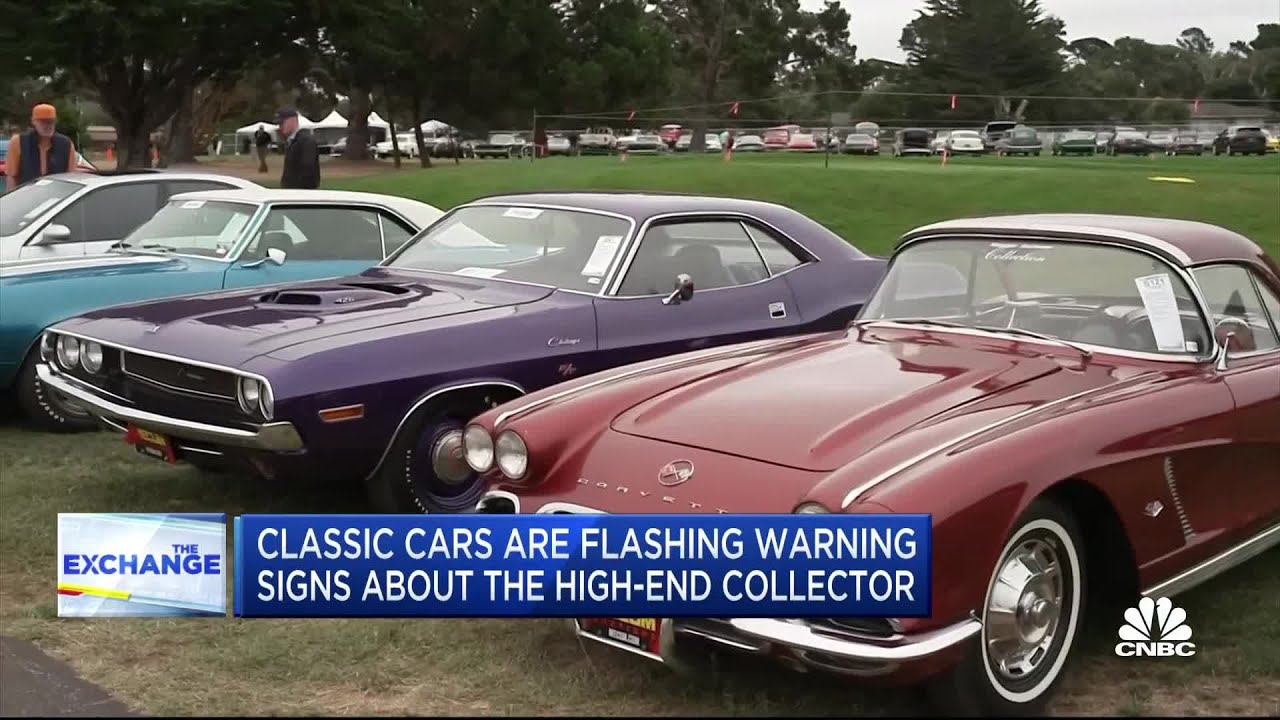
Geopolitics usually kills the luxury market. When missiles fly, people usually tuck their cash into gold or Swiss bank accounts and wait for the dust to settle. But the start of 2026 is flipping that script. Despite the escalating Iran war and the subsequent chaos in global shipping, art and classic car auctions just cruised past the $600 million mark.
If you think that sounds insane, you aren't alone. Logic says that with the Strait of Hormuz effectively closed and oil prices spiking, discretionary spending on things like 1960s Ferraris should crater. Instead, we’re seeing the opposite. The "risk-off" mood hasn't hit the auction block. If anything, the ultra-wealthy are treating "blue-chip" collectibles as the new gold bars. In related developments, read about: The Volatility of Viral Food Commodities South Korea’s Pistachio Kataifi Cookie Cycle.
The $600 million defiance
The numbers coming out of the early 2026 sales in Paris, Miami, and Scottsdale don't just show resilience; they show a market that’s completely decoupled from the evening news. RM Sotheby’s Paris sale alone pulled in massive figures, headlined by a 1960 Ferrari 250 GT SWB California Spider that hammered for over $17 million.
It’s not just one lucky car. Across the board, high-end assets are moving. We’ve seen: The Economist has provided coverage on this fascinating topic in great detail.
- Modern hypercars like the Ferrari Enzo hitting $9 million—a price that was unthinkable just a few years ago.
- Record-breaking sales for 1990s icons, including the Lamborghini Diablo SE30.
- A surge in "youngtimer" classics that younger, tech-wealthy buyers are snagging to diversify away from traditional stocks.
Why is this happening now? Because during high inflation and regional war, tangible assets feel safer than a digital ticker tape. When the value of currency feels shaky, a physical object you can park in a climate-controlled garage feels like a hedge.
Why the Iran war didn't stop the bidding
You’d expect the Middle Eastern bidding block to go silent. Historically, Gulf collectors are some of the biggest players in the art and car worlds. With the Iran conflict disrupting the UAE and surrounding hubs, the flow of luxury goods has certainly been hit—shipping a car out of Dubai right now is a logistical nightmare.
But the market didn't dry up; it just shifted. While the physical supply of cars through the Gulf is restricted, the money is still moving. American and European collectors are stepping in to fill the gap, seeing the current instability as a reason to "buy the dip" in quality, even if the "dip" still costs eight figures.
There's also a psychological element at play. Investors have learned from the 2020-2022 period that "waiting for things to get back to normal" is a losing game. They'd rather own the asset today, even with a war next door, than hold cash that’s losing purchasing power by the hour.
Art and cars as a survival strategy
It's easy to dismiss a $600 million auction total as rich people playing toys while the world burns. That's a shallow take. For many of these buyers, these aren't toys. They're a specific asset class.
The art market is seeing similar trends. Large-scale contemporary pieces and "trophy" works are still finding homes. Sotheby’s and Christie’s reported a clear rebound in late 2025 that has carried straight into the 2026 chaos. They’re seeing a 17% increase in consolidated sales year-over-year.
What’s interesting is the demographic shift. Nearly 46% of new bidders are millennials or younger. These buyers don't view a Porsche Carrera GT or a Basquiat the same way their parents did. They see them as high-liquidity (relatively speaking) stores of value. They’re less bothered by the "fog of war" because they’ve spent their entire adult lives in a state of permanent global crisis.
The Ferrari fever isn't breaking
If you want to know where the smart money is, look at the "Big Three" of the car world: Ferrari, Porsche, and McLaren.
- Modern Ferrari Hypercars: The Enzo, F50, and LaFerrari are currently the hottest assets on the planet. Four Enzos sold for over $9 million in a single month.
- Analog Icons: Cars with manual gearboxes and no driver aids are pulling massive premiums. The Porsche Carrera GT is now a $3 million+ car consistently.
- Formula 1 History: Even non-running F1 chassis are selling for over $10 million. It’s about the "provenance" and the brand, not the utility.
The shipping bottleneck is real
While the auction totals are high, don't think everything is perfect. The Iran war has created a massive bottleneck in how these assets actually move. Shipping routes through the Red Sea and the Strait of Hormuz are effectively dead zones for high-value cargo insurance.
If you buy a car in a London auction but you live in Singapore, your "delivery" might take six months and cost three times the usual rate. This is actually driving up the prices of cars already located in "safe" hubs like the US and mainland Europe. A Ferrari already in a Montana warehouse is worth more than the same car sitting in a bonded warehouse in the Middle East right now.
Stop waiting for a crash
Every time a new conflict breaks out, "experts" predict the end of the luxury boom. They've been wrong for five years straight. The $600 million threshold proves that the top 0.1% of the market operates on a different set of rules.
If you're looking to enter this space, don't wait for a global peace treaty to make your move. The most successful collectors are the ones who buy when the headlines are the scariest. Focus on the "blue chips"—cars and art with undisputed history and limited production numbers.
Start by auditing your current portfolio's exposure to geopolitical risk. If you’re too heavy in traditional equities that are sensitive to oil prices, a shift toward "hard" luxury assets might be the stabilizer you need. Check the upcoming spring catalogs for New York and London. The momentum isn't slowing down, and by the time the war ends, these prices will likely be out of reach.