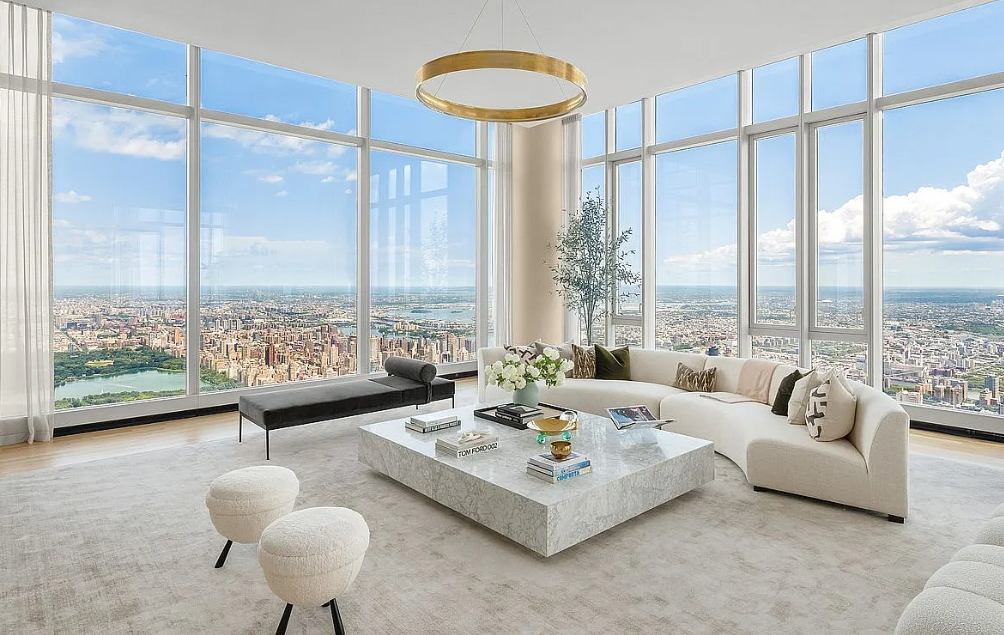
The real estate market loves a sob story about a vacant luxury asset. Currently, the industry is weeping over a $70,000 monthly body corporate fee keeping a high-end penthouse empty. The consensus is lazy: "Fees are too high," or "The market is broken."
They are wrong.
The $70,000 "catch" isn't a barrier to entry. It is a filter. If a buyer can’t stomach a $840,000 annual carrying cost, they shouldn't be in the building. Real estate pundits treat these levies like a bug in the software. In reality, they are the firewall.
I’ve watched developers slash fees to lure buyers into "prestige" builds, only to see the entire ecosystem collapse three years later when the elevators fail and the facade starts shedding tiles. This isn’t a story about an overpriced apartment. It’s a story about the death of the "lifestyle" lie and the return of math-based ownership.
The Myth of the Passive Luxury Asset
Most people buy real estate because they think it’s a "safe" place to park cash. They treat a penthouse like a gold bar in a vault. But a $20 million sky-home isn't a bar of gold; it's a high-performance Italian supercar. It requires constant, expensive calibration.
The competitor narrative suggests that $70,000 a month is an "unreasonable" sum. Let’s look at the physics of a modern skyscraper. You are maintaining:
- Redundant high-speed lift systems ($250k+ per overhaul).
- Climate-controlled common areas with 24/7 concierge security.
- Structural waterproofing for infinity pools suspended 60 stories up.
- Sinking funds for the inevitable $5 million glass replacement project in year ten.
When you buy into a building with low levies, you aren't saving money. You are just accruing "deferred maintenance debt." Eventually, the bill comes due. I’ve seen owners in "low-fee" buildings get hit with special levies of $200,000 overnight because the board was too scared to charge what the building actually cost to run.
The $70,000 fee is the only honest number in the sales brochure.
Why High Levies Protect Your Net Worth
Counter-intuitively, the higher the body corporate fee, the more secure the investment.
Think about who your neighbors are. In a building with $2,000-a-month fees, you might get a "stretch" buyer—someone who scraped together the deposit but is living paycheck to paycheck. When the economy dips, they stop paying their dues. The building falls into disrepair. The gardens die. The gym equipment breaks. The value of your $10 million unit drops to $7 million because the building feels "tired."
In a building with a $70,000 monthly gatekeeper, every single neighbor is liquid. They are bulletproof. They won't vote against a necessary $10 million roof repair because they can't afford their share. They will vote for it because they want to protect their asset.
High fees are a socio-economic insurance policy. If you are a billionaire, you don't want to live in a building where the HOA is arguing over the cost of lightbulbs. You want to live where the problem is solved before you even notice it existed. The vacancy isn't a sign of failure; it's a sign that the building is waiting for its peer group.
The Math of the $70k "Catch"
Let’s run the numbers. On a $20 million asset, an $840k annual carry represents roughly 4.2% of the value.
In any other business, a 4% operational expense ratio is considered lean. Why do we expect real estate to be different?
- Inflation is a ghost in the machine. Construction costs have surged 30% in three years. Insurance premiums for high-rise buildings have doubled.
- Liability is the new tax. Concierge staff, 24-hour security, and onsite management aren't luxuries; they are legal necessities to keep the building insurable.
- The "Prestige" Tax. If you want a private lift that opens into your living room, you are paying for the technician who stays on call to fix it.
People asking "Why is it vacant?" are asking the wrong question. They should be asking "What happens to the buyer who buys it for $50k a month?" The answer: They go broke or the building rots.
Stop Trying to "Fix" High-End Real Estate
The media wants a "solution" to the vacancy. They suggest the developer should subsidize the fees for five years.
This is a trap.
Subsidized fees are a classic "bait and switch" that lures in the wrong class of buyer. When the subsidy ends, the owners realize they can't afford the lifestyle they bought. They dump their units simultaneously. The market floods. Prices crater.
The only "fix" is to accept that ultra-luxury real estate is no longer a mass-market product. It is a niche service. It is more like a private jet than a house. You don't buy a Gulfstream and then complain about the cost of fuel and the pilot's salary.
The Brutal Reality for Modern Buyers
If you’re looking at a penthouse and the fees seem "too high," you are simply too poor for that building.
That sounds harsh. It is. But the "battle scars" I’ve earned in this industry come from watching middle-wealth individuals try to play in the ultra-high-net-worth sandbox. They buy the unit, then spend every board meeting crying about the cost of the pool heater. They ruin the vibe, they ruin the maintenance schedule, and eventually, they ruin the resale value.
The $70,000 fee is doing its job. It is keeping the "aspirational" buyers out. It ensures that whoever eventually occupies that space actually belongs there—someone who views $70k as a rounding error on their quarterly dividends.
The Hidden Opportunity in the Empty Penthouse
For the right buyer, the vacancy is the ultimate leverage.
You don't negotiate on the fees. You never win that fight because the building’s costs are fixed. Instead, you use the "scary" fee to beat the developer down on the purchase price.
Imagine a scenario where you buy the unit for $15 million instead of $20 million because the "high fees" have scared off every other bidder. You just saved $5 million upfront. That $5 million covers your $70k monthly fee for nearly six years.
By the time that "savings" runs out, the market will have adjusted. Inflation will make $70k look like $40k in today's dollars. You will be sitting on a pristine, well-maintained asset in a building full of wealthy, liquid neighbors, while the "value" buildings down the street are crumbling under the weight of their own cheapness.
Stop looking at the monthly bill. Look at the balance sheet.
A vacant penthouse with high fees is a sign of a building with integrity. It refuses to compromise its standards for a quick sale. It’s not a "catch." It’s a standard.
Pay the fee or stay on the ground floor.