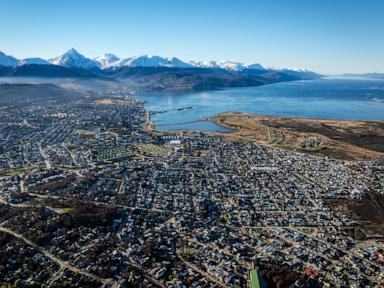
The scenic ports of Southern Argentina are currently locked in a high-stakes battle to protect their lucrative cruise industry from the shadow of a lethal pathogen. While local authorities in Ushuaia and surrounding regions have scrambled to distance the tourism sector from recent hantavirus clusters, the tension between public health reality and economic necessity has reached a breaking point. The core issue is not merely whether a cruise ship "caused" an outbreak—an oversimplification that ignores how these viruses actually move—but whether the infrastructure of rapid mass tourism can coexist with a rural environment where hantavirus is endemic.
Hantavirus Pulmonary Syndrome (HPS) is a severe respiratory disease transmitted by the secretions of infected rodents, specifically the long-tailed pygmy rice rat (Oligoryzomys longicaudatus) in Patagonia. It is not a "cruise ship disease" in the way Norovirus is. However, the surge in international arrivals to the "End of the World" creates a logistical pressure cooker. When a cluster of cases emerges near a major transit hub, the reflex of the tourism board is defensive. The reflex of the epidemiologist is caution. Somewhere in the middle lies a truth about the fragility of Patagonia’s wilderness-based economy.
The Geography of Contagion
To understand the friction between the cruise industry and the health department, one must look at the map. The ports of Chilean and Argentine Patagonia are gateways to the deep wilderness. Passengers don't just stay on the docks; they take "nature treks," visit remote farmsteads for "authentic" lamb barbecues, and hike through the very brush where the colilargo rat thrives.
Local officials insist that the recent spike in cases is a localized phenomenon, confined to rural residents rather than transient tourists. They are technically correct. Statistically, the people most at risk are those who live in proximity to rodent habitats or perform clean-up in enclosed, dusty spaces like sheds or cabins. Yet, the narrative that the cruise industry is "immune" to the outbreak ignores the porous nature of modern travel.
Staff members live locally. Tour guides move between the deep woods and the gangway. Provisions are sourced from regional warehouses. The virus does not care about the boarding pass in a traveler’s pocket. The insistence that there is no link is a PR strategy, not a biological certainty. It is a necessary fiction maintained to prevent a catastrophic collapse in booking numbers.
Economic Fragility and the Price of a Panic
Argentina's economy is notoriously volatile. In provinces like Tierra del Fuego, the cruise season is the financial lifeblood that sustains the region through the brutal winter months. A single "red alert" from international health organizations could divert dozens of ships to Chilean ports or cancel itineraries entirely.
This creates a dangerous incentive to downplay.
When a hantavirus outbreak occurred in Epuyén several years ago, it provided a grim blueprint for how quickly a region can be ostracized. That outbreak featured a rare and terrifying development: person-to-person transmission. While the current strains are largely suspected to be the standard rodent-to-human variety, the memory of Epuyén haunts the Ministry of Tourism. They are fighting a ghost. They aren't just fighting a virus; they are fighting the perception of Patagonia as a "hot zone."
The Science of the Colilargo
The long-tailed pygmy rice rat is a survivor. Its population cycles are tied to the flowering of the colihue bamboo. When the bamboo flowers—an event that happens every few decades—the food supply explodes, and so does the rodent population. This is known as a ratada.
During these cycles, the risk of human-rodent contact skyrockets. The virus is aerosolized. A hiker kicks up dust in a trail shed, or a maintenance worker sweeps a storage room at a luxury lodge, and the microscopic particles are inhaled. The incubation period is long—sometimes up to six weeks—which means a passenger could board a ship in Ushuaia, sail through the Beagle Channel, and not show symptoms until they are back in London or New York.
Risk Factors for the Modern Traveler
- Remote Shore Excursions: Visiting rural estancia homes that haven't been properly ventilated.
- Off-Trail Hiking: Entering dense vegetation where rodent nesting is high.
- Logistical Overlap: Sharing transport with local workers who reside in high-risk rural areas.
The cruise lines themselves have implemented rigorous cleaning protocols, but these are largely designed for gastrointestinal illnesses. Hantavirus requires a different level of environmental management. It requires controlling the wilderness at the edge of the asphalt.
The Communication Breakdown
The failure of the current situation is one of transparency. By insisting that the cruise industry is entirely disconnected from the regional health crisis, authorities risk losing credibility if a single passenger eventually tests positive. A more robust approach would involve active education: telling passengers exactly how to stay safe, what to avoid, and why the risk, while real, is manageable.
Instead, we see a wall of denial.
International health monitors look for consistency. When local data suggests a spike in rural cases, but the "tourist zones" are declared magically pristine, it raises red flags. The irony is that the cruise ships are likely the safest places in the region due to their controlled environments. The danger is the "last mile" of the excursion.
Structural Deficiencies in Rural Health
Beyond the ports, the provincial health systems are under-resourced. If a tourist were to contract HPS, the clinical progression is rapid and often fatal. The mortality rate can hover around 30% to 40%. Treatment requires high-level ICU support and, in some cases, ECMO (extracorporeal membrane oxygenation).
These facilities are scarce in the remote reaches of the south. A cruise ship with 3,000 passengers represents a massive potential liability for a local hospital that may only have a handful of ventilators. The industry’s insistence on "business as usual" puts an unspoken pressure on these local systems to manage any fallout quietly.
Shifting the Responsibility
The burden of safety has been shifted onto the individual. Travelers are told to wash their hands and avoid "wildlife," but the systemic risks—like the lack of rodent-proofing in tourist-heavy rural infrastructure—remain unaddressed.
True safety would require a massive, publicly funded rodent mitigation program across all transit corridors. It would require the cruise lines to contribute financially to the local health infrastructure they rely on. Currently, the relationship is extractive. The ships bring the people, the people see the mountains, and the local government prays that the virus stays in the woods.
The Reality of Person-to-Person Transmission
The elephant in the room is the Andes strain of hantavirus. Unlike its North American cousins, the Andes strain has demonstrated the ability to pass from one human to another. This is what turned the Epuyén outbreak into a nightmare.
If this strain were to find its way into the confined quarters of a cruise vessel, the result would be a quarantine situation that would make the early days of 2020 look like a rehearsal. The industry’s refusal to discuss this possibility is a gamble of breathtaking proportions. They are betting that the virus will behave, that the rats will stay in the fields, and that the tourists will stay on the path.
The Path Forward is Not Denial
To protect the future of Patagonian tourism, the conversation must change. The "not us" defense is brittle. It shatters the moment the first headline hits the wires.
Instead, there must be a move toward a "One Health" approach. This means recognizing that the health of the cruise industry is inextricably linked to the ecology of the Patagonian forest and the robustness of the local rural clinics. It means cruise lines must stop being passive observers of regional health and start being active participants in rodent monitoring and hospital funding.
The region's beauty is its selling point, but that beauty comes with biological costs. You cannot market the "wild" while ignoring the "wilderness."
If Argentina wants to remain a premier destination for global voyagers, it must stop treating hantavirus as a PR problem and start treating it as a permanent environmental factor. The rats aren't going anywhere. The virus isn't going anywhere. The only thing that can leave is the ships.
Stop pretending the dock is a border that a virus won't cross.