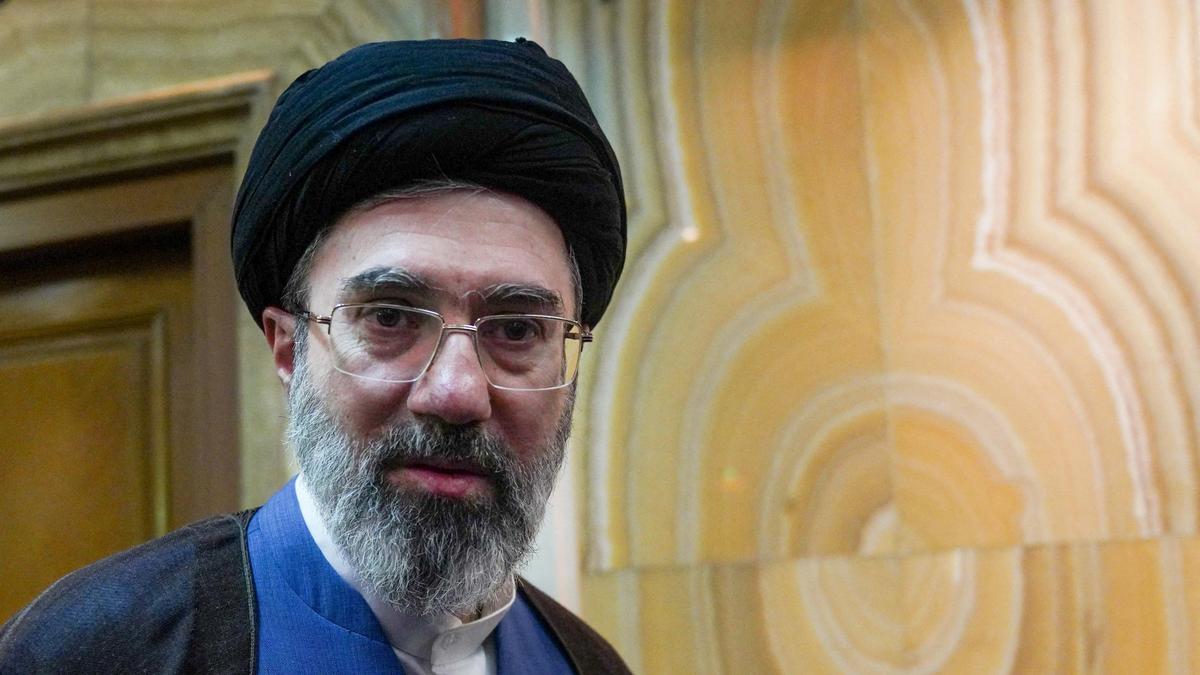
The man sitting at the apex of the Islamic Republic is currently a ghost. For weeks, the streets of Tehran have been haunted by a single, whispered question: "Where is Mojtaba?" Since the March 8 appointment of Mojtaba Khamenei as Supreme Leader, following the airstrike that claimed his father’s life, not a single frame of video or scrap of audio has been released to the public.
Behind this silence lies a brutal physical reality. Sources close to the inner sanctum in Qom and Tehran confirm that the 56-year-old leader is grappling with severe, disfiguring injuries sustained in the very explosion that killed Ayatollah Ali Khamenei. The strike, which leveled a primary residence complex in central Tehran on February 28, didn't just decapitate the old guard; it nearly claimed the successor.
The new leader is reportedly suffering from significant facial disfigurement and the potential loss of a leg. While the state media apparatus attempts to project a facade of seamless transition, the physical absence of the "Commander of the Faithful" creates a vacuum that even the most aggressive propaganda cannot fill.
The Janbaz in the Shadows
Iranian state television has subtly prepared the public for a damaged leader. Broadcasters have begun referring to Mojtaba as a janbaz—a term of high honor reserved for those "willing to lose their souls" or, more literally, those who have been severely disabled in the service of the revolution. It is a strategic linguistic pivot. By framing his injuries as a sacred sacrifice, the regime attempts to turn a liability into a badge of revolutionary legitimacy.
But the reality of governing via audio conference from a secure medical wing in Qom is far from the image of the vigorous, unchallenged arbiter of the law.
Intelligence assessments suggest that while Mojtaba remains mentally sharp and is actively directing high-stakes peace talks in Islamabad, his physical state makes him a fragile symbol. A leader who cannot stand before the people at a Friday prayer or review the ranks of the Islamic Revolutionary Guard Corps (IRGC) faces an inherent deficit in a system built on the cult of the persona.
A Succession Born of Fire
The elevation of Mojtaba Khamenei was not the smooth crowning many had predicted for decades. It was a panicked necessity. Before the February strikes, the path to power was cluttered with rivals like Ebrahim Raisi—whose 2024 helicopter crash cleared the board—and moderate clerics like Alireza Arafi.
When the bombs fell on the leader's compound, the constitutional mechanism for succession nearly shattered. An Interim Leadership Council, featuring President Masoud Pezeshkian and Chief Justice Gholam-Hossein Mohseni-Eje'i, held the reins for a frantic eight days. The IRGC, fearing a total collapse of the state, eventually forced the hand of the Assembly of Experts.
The Guards didn't back Mojtaba because of his clerical credentials. They backed him because he is their creature. For years, he served as the Deputy Chief of Staff for Political and Security Affairs, acting as the primary conduit between the office of the Supreme Leader and the military elite. He is a man who speaks the language of asymmetric warfare better than the language of theology.
The Islamabad Gamble
The irony of the current moment is that Iran’s most reclusive leader is presiding over its most public diplomatic gamble. Negotiations with the United States in Pakistan represent a desperate attempt to halt the cycle of strikes that have gutted the regime’s infrastructure.
Mojtaba is reportedly managing these talks through a series of intermediaries and secure lines, weighing the demands of the "Resistant" hardliners against the reality of a country whose internet is patchy and whose youth are increasingly emboldened by the regime’s perceived weakness.
The disfigurement of the leader is more than just a medical curiosity. It is a metaphor for the state itself. The Islamic Republic is currently a wounded entity, hiding its scars behind a veil of secrecy while trying to negotiate a future that looks nothing like its past.
The Power of the Absentee
In the short term, Mojtaba’s invisibility protects him from further assassination attempts. In the long term, it erodes the very authority he needs to survive. The IRGC may hold the guns, but the Supreme Leader provides the ideological glue.
If the "Year of Resistance" is to mean anything to the person on the street in Mashhad or Isfahan, they must eventually see the man leading it. A leader who remains a voice on a speaker is a leader who can be easily replaced or ignored when the next crisis hits.
The regime has signaled that images may be released within the next two months. This timeline suggests a desperate race between the skills of reconstructive surgeons and the patience of a restless public. Until then, Iran is a ship being steered by a captain no one can see, through waters more treacherous than any the country has navigated since 1979.
The scars on Mojtaba Khamenei’s face are now the scars of the nation. Whether he can heal—and whether he can lead while broken—will determine if the Islamic Republic survives its most violent transition. The clock is ticking in the medical suites of Qom.
Watch the silence. It is often louder than the bombs.