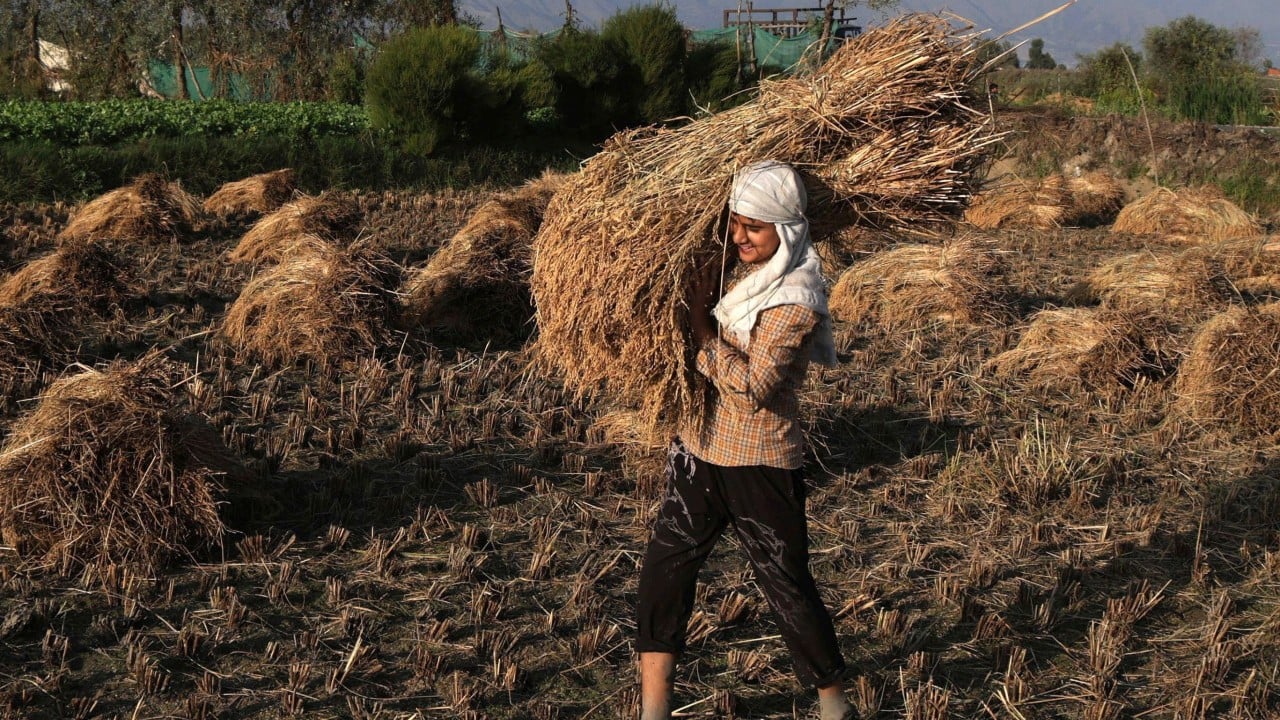
When agricultural supply chains break, the warning signs do not start with empty grocery shelves. They start deep in the chemical processing plants of the Persian Gulf and across the parched paddy fields of South and Southeast Asia. A dangerous convergence of military conflict in the Middle East and severe El Niño weather patterns is quietly strangling the region's food security, setting the stage for widespread economic strain and potential civil unrest through 2027. For millions across Asia, the upcoming harvest seasons carry an unprecedented risk of scarcity, driven not merely by bad weather, but by a systemic rupture in the fertilizer and energy inputs that modern agriculture cannot survive without.
For decades, international commodity markets operated under a comfortable assumption. Weather anomalies would occasionally depress crop yields in one breadbasket, only to be offset by a surplus elsewhere. Logistics channels would absorb local shocks. Energy prices would fluctuate within manageable bounds. That architecture has fractured. The military conflict centered around Iran and the subsequent restrictions in the Strait of Hormuz have exposed a dangerous structural vulnerability. The Persian Gulf supplies over one-third of the global trade in urea and vital nitrogen-based fertilizers. When maritime transit choked and regional production facilities suffered disruptions, the ripple effects bypassed financial boardrooms and hit agrarian economies directly. Don't forget to check out our previous coverage on this related article.
The Chokepoint That Stangles the Harvest
Nitrogen is the invisible engine of contemporary farming. More than half of global demand for nitrogenous fertilizer feeds three staple crops: maize, wheat, and rice. Unlike crude oil, which boasts strategic global reserves stored safely away in government vaults, synthetic fertilizers cannot be stockpiled indefinitely. Their chemical volatility and tendency to degrade into toxic ammonia gas preclude long-term warehousing. Farmers must apply nitrogen at the exact window of planting. If the delivery fails, the crop fails.
When regional conflict flared in early 2026 and shipping through the Strait of Hormuz ground down under security restrictions, the timing could not have been worse. Fertilizer manufacturing relies entirely on a steady feedstock of natural gas. As infrastructure took hits and maritime routes closed, production dropped precipitously. Sulfur, a critical intermediate for phosphate processing, doubled in price almost overnight. Fertilizer producers suddenly found themselves competing directly with chemical and mining conglomerates for scarce industrial sulfur. If you want more about the history here, BBC News provides an in-depth summary.
The economic fallout was immediate. Import-dependent nations across South and Southeast Asia faced sudden price spikes of 15 to 30 percent for essential agricultural inputs. Smallholder farmers, operating on razor-thin margins, faced an impossible choice. They could either purchase overpriced fertilizer and risk financial ruin if crops failed, or reduce application rates and accept severely depressed yields. Most chose the latter. The arithmetic of agriculture is unforgiving. Lower fertilizer inputs today translate directly into grain deficits tomorrow.
When Weather Collides With Geopolitical Shock
Compounding this man-made supply shock is a punishing meteorological cycle. El Niño has returned with a vengeance, bringing erratic rainfall and searing heat anomalies across major agricultural zones. According to recent assessments from global agricultural monitors, global grain supplies are shrinking for the first time in four years
Asia Faces a Hunger Trap as War and Weather Collide
news
Pantry shelves across developing Asia are emptying faster than governments can replenish them. Two independent systemic shocks are colliding over the region right now. A volatile Middle Eastern conflict centered around Iran has choked energy corridors and spiked fertilizer costs, while a stubborn El Niño climate cycle has scorched key agricultural belts from Southeast Asia to the Indian subcontinent. Together, these forces are manufacturing a quiet hunger crisis that policy makers refuse to name. Food security is no longer a distant theoretical metric. It is an immediate political vulnerability threatening fragile governments from Jakarta to Dhaka.
The vulnerability is structural. Asia consumes the vast majority of the world's rice and relies heavily on complex maritime trade routes for agricultural inputs. When these lifelines fray, the results ripple instantly through urban slums and rural farming communities alike.
The Anatomy of the Climate Squeeze
Weather patterns do not negotiate. El Niño brings persistent drought to Southeast Asian rice paddies and erratic rainfall to Indian agricultural zones. Yields drop. Reserves shrink.
Water levels in major river basins have fallen to historic lows. Irrigation channels run dry during critical growing phases. Farmers in Thailand and Vietnam watch their crops wither under blistering heatwaves that defy historical averages. The output contraction is not a temporary dip. It represents a fundamental baseline shift in regional agricultural productivity.
Soil moisture deficits compound over consecutive seasons. Plants fail to reach maturity. Grain quality deteriorates before harvest even begins. Governments respond by dipping into national emergency stockpiles, yet these buffers were designed for short-term weather shocks, not multi-year climate anomalies.
The Energy Shock and the Input Crisis
Weather is only half the equation. Modern industrial agriculture runs on fossil fuels and synthetic chemicals.
When military tensions escalate around Iran and the broader Persian Gulf, global energy markets convulse. Natural gas prices climb. Urea and ammonia production plants shut down or curtail output because feedstock costs become prohibitive.
Farmers face an impossible choice. They can purchase overpriced nitrogen fertilizer and risk financial ruin if the crop fails, or they can skip application and watch yields plummet by half. Most choose reduced application. The resulting harvest shortfall is invisible at first, manifesting months later as empty market stalls and soaring staple prices.
Shipping lanes face simultaneous peril. Freight rates spike as insurers reevaluate risks in contested maritime corridors. Every barrel of oil added to the transport equation translates directly into inflated retail prices for imported wheat, corn, and soy across Asian ports.
The Danger of Beggar Thy Neighbor Policies
Panic breeds protectionism. Governments facing domestic inflation frequently resort to export bans to protect local populations.
India restricts non-basmati white rice shipments. Other regional suppliers follow suit to shield their own citizens from price spikes. This logic makes intuitive political sense in the capital city. It proves catastrophic for the regional ecosystem.
Import-dependent nations like the Philippines, Indonesia, and Bangladesh find traditional suppliers slamming doors shut overnight. Global spot markets thin out. Prices skyrocket for whatever volume remains available. A beggar-thy-neighbor spiral takes hold. Each nation hoarding grain pushes its neighbor closer to desperation.
International trade mechanisms struggle to absorb these shocks. Traditional arbitrage fails when governments suspend contracts mid-stream. Trust evaporates among trading partners. Food becomes a geopolitical weapon rather than a traded commodity.
Urban Fragility and the Spark of Unrest
Rural communities absorb the initial production shock through debt and reduced consumption. Urban populations experience the crisis at the corner market.
Megacities from Karachi to Manila house millions of daily wage earners who spend more than half their disposable income on food. When the price of rice or cooking oil doubles within weeks, family budgets shatter. Savings vanish. Nutritional intake drops to survival minimums.
History shows a direct line between skyrocketing staple food prices and social unrest. Bread riots are rarely about bread alone. They represent the collapse of the social contract between the governed and the governing. When citizens cannot afford basic sustenance, institutional legitimacy evaporates overnight.
Security forces prepare for protests in urban centers. Governments deploy subsidized rations through state-run shops, yet these distribution networks are chronically plagued by corruption, bureaucratic delays, and insufficient supplies. The band-aids cannot cover the hemorrhage.
Structural Fragility in the Grain Market
The global grain trade is concentrated among a handful of multinational traders and major producing nations. This concentration creates systemic fragility.
When supply chains face dual pressures from climate disruption and geopolitical conflict, there is no redundancy in the system. Port bottlenecks in the Black Sea or the Strait of Hormuz send shockwaves through Asian breadbaskets. Speculative capital flows into agricultural futures, driving prices higher regardless of actual physical supply and demand balances.
Smallholder farmers remain largely disconnected from these financial safety nets. They bear the brunt of climatic instability while receiving minimal protection from state agricultural subsidies that usually favor large commercial agribusinesses.
Grain storage infrastructure in many developing Asian nations suffers from massive post-harvest loss due to humidity, pests, and poor transport networks. Up to twenty percent of harvested grain rots before reaching consumers. Fixing this inefficiency would add millions of tons to regional food supplies without requiring a single extra hectare of cultivated land, yet capital investment for cold storage and modern logistics remains chronically underfunded.
The convergence of El Niño and Middle Eastern conflict exposes the deep rot in regional food security frameworks. Governments continue to treat these events as temporary anomalies rather than the opening salvo of a harsher new era.
Granaries empty. Basements fill with panic-bought staples. The next price spike will not announce itself with a warning siren. It will arrive silently in the ledger of a working family unable to buy dinner, turning quiet desperation into public fury across the capitals of Asia.