The heat in Ho Chi Minh City doesn’t just sit on you; it suffocates. It presses against the concrete, drawing up the scent of exhaust, street-side broth, and old rain. If you walk past the police precinct in the city's heart on a mid-June afternoon, the air carries something else. A high, fractured hum. Hundreds of tiny, desperate voices cutting through the roar of motorbike traffic.
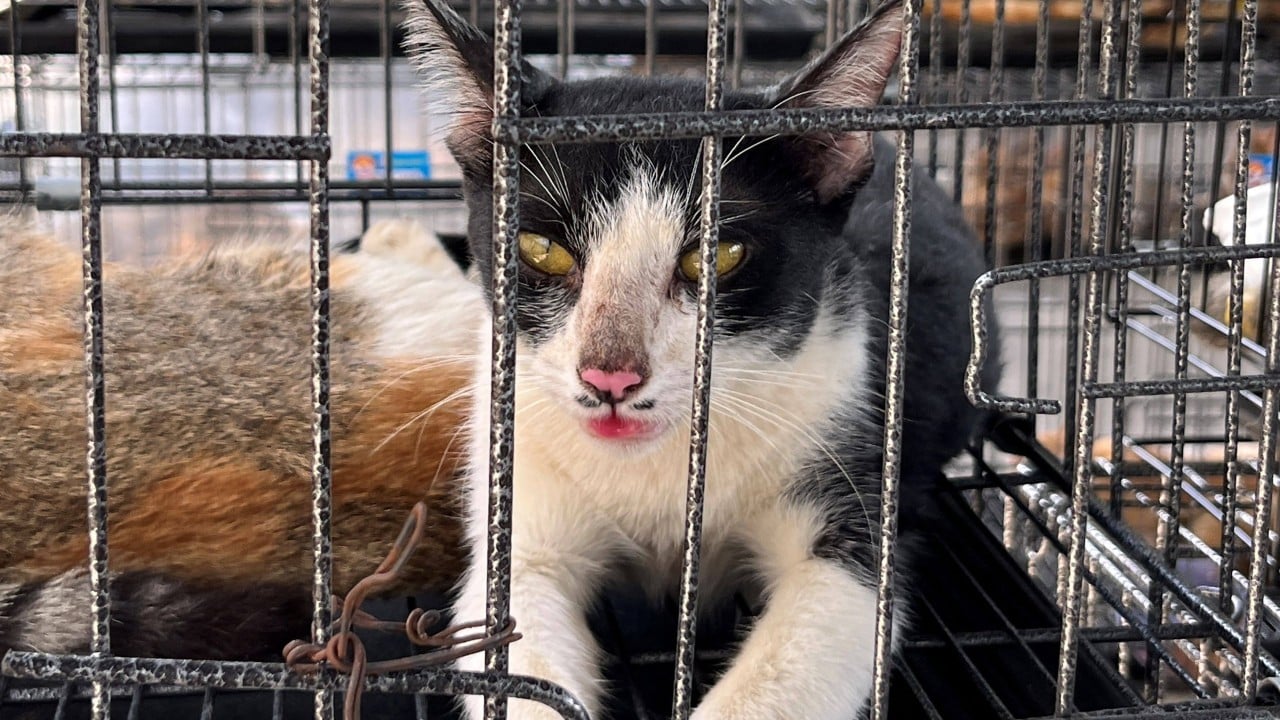
To understand how those voices got there, you have to look closely at a single metal cage, no larger than a suitcase, packed so tightly with bodies that individual shapes blur into a single, pulsing mass of fur.
When the Ho Chi Minh City Criminal Police Division raided a hidden yard last week, they did not just disrupt a criminal enterprise. They cracked open a window into an underground economy that processes roughly one million cats across Vietnam every single year. The dry tally of the bust is staggering: nine arrests, 45 wire cages, more than 400 live cats rescued, and four foam coolers packed with 80 frozen carcasses ready for the kitchen.
But numbers are an anesthetic. They dull the sharp reality of what this trade actually feels like on the ground.
Consider a hypothetical pet owner—let's call her Linh. Linh lives in a narrow alleyway off a bustling district, where her calico cat routinely dozes on the threshold of her front door. One evening, a motorbike idles too quietly outside. A hand reaches down with a spring-loaded snare. A sudden, muffled scuffle, and the bike accelerates into the dark. In less than thirty seconds, a family member is converted into commodity weight.
At the distribution points, those stolen lives are weighed on rusted hanging scales. The going rate for a living, breathing companion? Roughly 70,000 Vietnamese dong per kilogram. That is about $2.70. A family's devotion, priced cheaper than a craft beer on a tourist street.
The suspects caught in this specific dragnet admitted to running this exact operation for three long years, vacuuming up pets and strays across southern provinces like Tay Ninh and An Giang. The logistics were relentless. Every two to three days, the holding yards would fill up, the trucks would be loaded, and the cargo would move toward the slaughterhouses.
Walking through the temporary rescue center set up inside the police compound is an exercise in sensory overload. The volunteers from local groups and international organizations like Humane World for Animals don’t talk much. They move with a quiet, furious urgency. They carry industrial fans to cut the thick, stifling heat. They mix rehydration serums.
The physical toll of the trafficking pipeline is written on the survivors' skin. Many are skeletal, their eyes clouded with infection from days without water in suffocating proximity. Some wear collars—frayed nylon bands with rusted bells, undeniable proof that they once slept at the foot of a human bed.
The tragedy doesn’t stop moving just because the police intervened. Inside one of the crowded wire enclosures, a heavily pregnant cat gave birth hours after the raid. One kitten died on the cold floor before a volunteer could reach it; the other was kept alive only by emergency syringe-feeding and sheer willpower.
Yet, amidst the trauma, the precinct has become a place of raw, vulnerable human connection.
Imagine standing by the cages as the gates open to the public. You see families arrive, their faces tight with anxiety, scanning the sea of terrified eyes. A young woman named Quach Thi Lan Anh searches the rows, her breath catching as she recognizes two familiar faces staring back at her. She leaves with both of her stolen pets cradled in her arms, weeping openly as she thanks the officers.
A few feet away, a local veterinary worker walks up and down the aisles. He is looking for his own missing cat. He checks every cage, twice, but doesn't find him. Instead of leaving, he simply rolls up his sleeves, grabs a bottle of disinfectant, and begins treating the animals belonging to strangers.
Not everyone gets a miracle. A man named Tuan Minh stands quietly in the corner, holding a photo of his British Shorthair that vanished two weeks ago. He searches every face, but his pet is not among the survivors. He leaves alone, his grief heavy, holding onto nothing but the fragile hope that his cat might be trapped in some other yard, still drawing breath.
This emotional tug-of-war highlights a profound cultural shift happening beneath the surface of modern Vietnam. For generations, the consumption of cat and dog meat has been legal, viewed by some as a tradition or a specific culinary preference. But tradition is not a static monument; it is a living collective choice.
A recent survey by the animal welfare organization FOUR PAWS revealed that 91 percent of Vietnamese citizens believe the trade should be banned or actively discouraged. An even higher number—95 percent—stated that eating these animals does not reflect their true cultural values. The younger generation, raised with pets as family members rather than functional property, looks at these cages with horror, not appetite.
Change is grinding forward, though the legal machinery moves slowly. Cities like Hoi An are already partnering with global groups to phase out the trade entirely. Following historic legislative bans in neighboring countries like South Korea, Vietnamese officials have signaled an intent to overhaul animal welfare frameworks to better protect pet owners from the predatory networks that thrive on theft.
But political progress offers little comfort to the veterinarians working through the night in Ho Chi Minh City. Even after the rescue, the trauma claims its victims. Close to 100 of the rescued cats have already perished from the infections and stress endured during their captivity. For those that remain, their legal status as evidence in a criminal prosecution keeps them tethered to the station, surviving on the dedication of volunteers who refuse to let them die in the dark.
As the sun sets over the precinct, the industrial fans hum against the heat, and the volunteers continue their rounds. A tiny, ginger tabby—its neck stabilized by a makeshift medical brace—reaches a trembling paw through the wire mesh, pressing its pads against the palm of a teenager holding a water dropper.
The true cost of the trade isn't measured in Vietnamese dong or kilograms on a slaughterhouse ledger. It is measured in that small, quiet touch in the corner of a crowded police yard, where the line between what we consume and who we love is rewritten one heartbeat at a time.