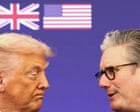
A sweeping trade agreement between Washington and London could cost hundreds of thousands of lives in England alone. The mathematical reality is stark. When trade deals force public healthcare systems to pay American corporate prices for pharmaceuticals, patients lose access to life-saving medicines. It is a matter of budget ceilings. If the cost of standard drugs skyrockets, the National Health Service (NHS) must ration care, delay treatments, or deny coverage for specialized therapies entirely. The inevitable result is an spike in preventable mortality.
Behind the closed doors of international trade negotiations, intellectual property rights frequently take precedence over public welfare. The primary driver of these deadly projections is not a sudden shortage of doctors or hospital beds. It is the calculated extension of drug patents.
The Mechanics of Pharmaceutical Protectionism
To understand how a trade deal translates into excess deaths, one must examine the machinery of drug pricing. Under current British regulations, the National Institute for Health and Care Excellence (NICE) evaluates whether a medicine is cost-effective before the NHS agrees to fund it. This system relies heavily on the availability of generic and biosimilar alternatives, which typically flood the market once an initial patent expires. Generics drive prices down by as much as 80 percent.
American trade negotiators, heavily influenced by the domestic pharmaceutical lobby, consistently push for provisions that delay these generic alternatives. They do this through several mechanisms.
Patent Term Extensions
Negotiators often demand "patent term restoration" to compensate drug companies for regulatory review periods. This keeps monopoly pricing in place for years beyond the original expiration date.
Data Exclusivity Lockouts
Even if a patent expires, companies can block generic manufacturers from using existing clinical trial data to prove their drug is safe. Forcing a generic competitor to rerun these multi-million-dollar trials delays market entry indefinitely.
Evergreening Practices
Drug companies slightly modify an old medicine—changing a capsule to a tablet, or altering an inactive ingredient—and secure a brand-new patent. A trade deal that locks in weak standards for what constitutes a "new" invention allows corporations to evergreen their monopolies indefinitely.
When these three mechanisms are enshrined in a binding international treaty, the host nation loses its sovereign right to regulate its own healthcare costs.
The Budget Ceiling and the Rationing Effect
The NHS operates on a fixed, taxpayer-funded budget. It cannot print money to meet the demands of foreign pharmaceutical conglomerates. Therefore, when the price of a critical oncology drug or cardiovascular medication triples due to extended patent protections, the money must be stripped from somewhere else.
This creates a direct correlation between trade policy and mortality.
Consider a hypothetical scenario where a state-funded healthcare system has a budget of £100 million for specialized respiratory treatments. If the drugs cost £1,000 per patient, the system can treat 100,000 people. If a trade agreement forces the price up to £4,000 per patient, the budget does not quadrupled overnight. Instead, the system can now only treat 25,000 people. The remaining 75,000 patients are pushed onto less effective, older medications, or left without treatment entirely.
They become the "excess deaths" cited in economic models.
The Myth of Innovation Incentives
The standard counter-argument from Big Pharma is predictable. They argue that high prices are necessary to fund the research and development of tomorrow's cures. Without strong intellectual property protections, they claim, innovation dies.
The data tells a different story.
- Marketing Over Medicine: The world’s largest pharmaceutical firms consistently spend more money on marketing, advertising, and stock buybacks than they do on actual laboratory research.
- Publicly Funded Foundations: A significant portion of breakthrough drug discovery originates in publicly funded universities and government labs, such as the National Institutes of Health (NIH) in the United States. Private firms often acquire these discoveries late in the development cycle, patent them, and reap the monopoly profits.
- Me-Too Drugs: Much of corporate R&D is spent developing "me-too" drugs—minor variations of existing, profitable medications designed to capture market share rather than cure unaddressed illnesses.
The argument that high prices automatically equal better health outcomes collapses under scrutiny. The United States spends more on healthcare per capita than any other developed nation, yet it lags behind its peers in life expectancy, infant mortality, and chronic disease management. Importing the American pricing model through a trade deal means importing its systemic inefficiencies and health disparities.
Independent Oversight Under Siege
A secondary, equally dangerous component of these trade negotiations involves the dismantling of price-assessment bodies like NICE. American pharmaceutical companies have long viewed the British evaluation system as an unfair barrier to trade. They want it gone.
In standard trade talks, clauses are introduced that allow corporations to challenge national pricing decisions through Investor-State Dispute Settlement (ISDS) tribunals. These are private, extrajudicial panels where corporate lawyers can sue sovereign governments if domestic regulations hurt their expected profits.
If an independent body rules that a new drug is not worth its astronomical price tag, the manufacturer could theoretically sue the government for damages. This creates a chilling effect. Regulatory bodies become hesitant to negotiate aggressive discounts, knowing that a prolonged legal battle in an international court could cost more than simply capitulating to the pharmaceutical company's demands.
The True Path to Healthcare Security
Protecting public health requires treating pharmaceuticals as a global public good rather than a pawn in geopolitical trade maneuvers. Governments must explicitly carve out healthcare, drug procurement, and patent regulation from standard free-trade agreements.
National sovereignty means nothing if a country cannot protect its citizens from preventable diseases because a foreign treaty forbids the manufacturing of affordable medicine. Trade ministers are not public health experts. They should not be allowed to trade away a nation's longevity for concessions in agricultural or financial sectors.