The microphone in a European Union committee room does not care who your grandmother was. It does not hum any louder for a prince, nor does it soften its cold, metallic feedback when a man walks up to the podium alone, carrying a folder of notes meant for two.
Silence.
That is what hits you first when you step into the sterile, glass-and-concrete corridors of the European Parliament in Brussels. Having spent years covering the breathless circus of modern diplomacy and celebrity advocacy, I know the exact scent of those rooms—stale espresso, wool suits damp from Belgian rain, and the thick, unspoken tension of people trying to look more powerful than they feel. Usually, when Prince Harry and Meghan Markle enter a space, the atmosphere fractures. Cameras click like a swarm of locusts. Security details stiffen. The air turns electric with the sheer gravitational pull of two people who traded a thousand-year-old crown for a microphone in California.
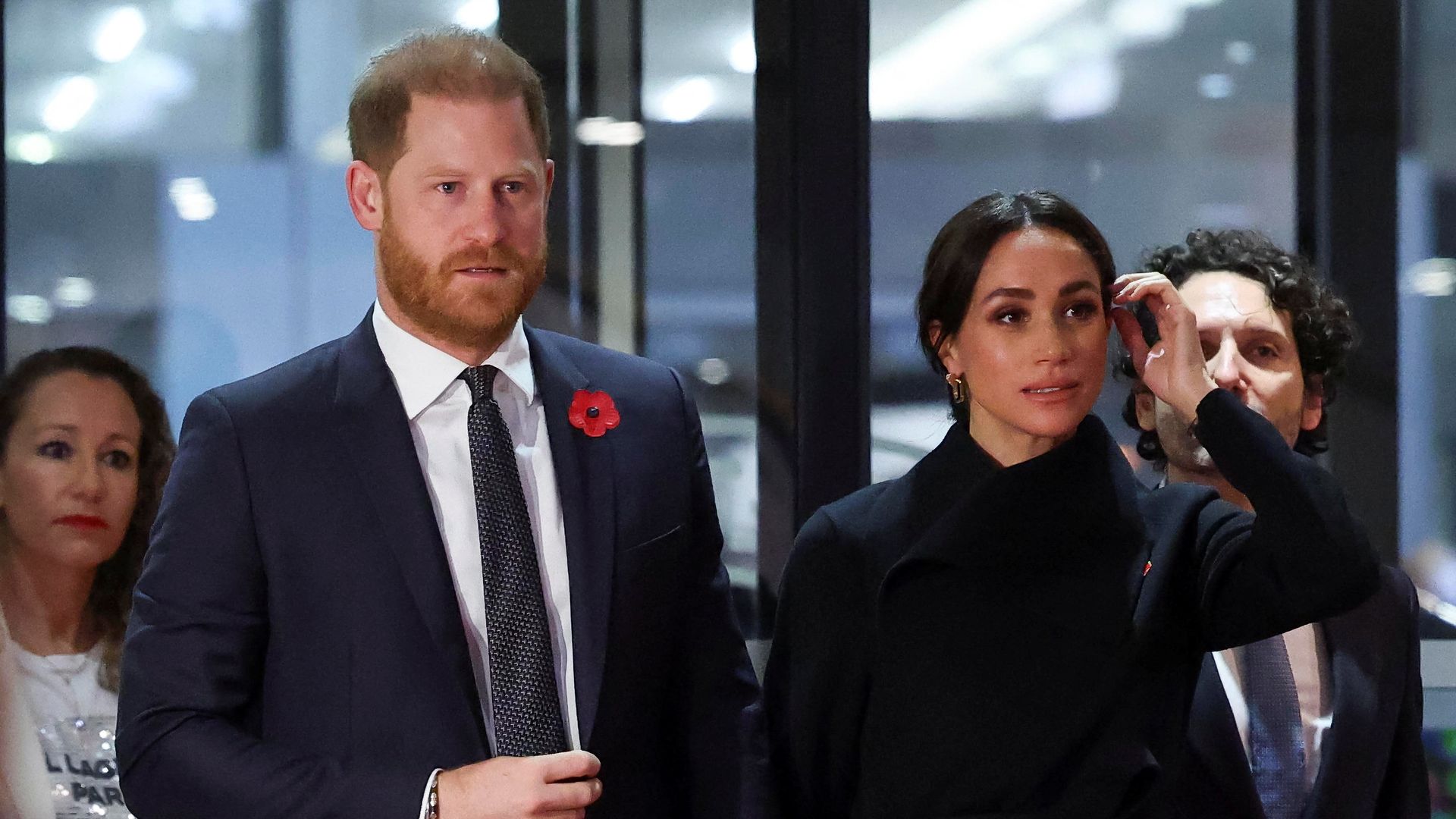
Yet on a crisp morning in Brussels, the script tore in half. Meghan pulled out at the last minute, leaving the Duke of Sussex to step into the fluorescent glare of the European Parliament entirely solo.
To the casual observer scrolling past a headline on their phone, this looks like simple scheduling logistics. A sudden change of plans. Another royal rumor mill churning out speculation about separate brand strategies, quiet rifts, or strategic pivots. Look closer, though. Strip away the tabloid noise, and what happened in that room reveals a profound, deeply human truth about the burden of modern advocacy, the mechanics of public partnership, and what happens when the armor you rely on suddenly vanishes right before you walk onto the battlefield.
The Architecture of a Shared Shield
Think about the last time you had to walk into a room where you knew half the people wanted you to fail, and the other half were waiting for you to stumble. Maybe it was a hostile boardroom, a contentious family dinner, or a courtroom. Now, imagine doing it with a partner by your side. When two people present a united front, they create an invisible psychological shield. You absorb half the stares; they absorb the other half. When your voice falters, their hand on your arm steadies the breath in your lungs.
For years, Harry and Meghan have operated as a closed-loop system. Since stepping back from senior royal duties in 2020, their entire public identity has been forged in the crucible of togetherness. Every major interview, every foundation launch, every international tour—from the Invictus Games in Düsseldorf to their engagements in Colombia and Nigeria—relied on a carefully calibrated choreography. Meghan brought the polished, camera-ready poise of a former actress fluent in the cadence of American philanthropy. Harry brought the raw, bruised authenticity of a man who grew up inside a gilded cage and survived to tell the tale.
Consider a hypothetical scenario to understand the sheer weight of that dynamic. Imagine two tightrope walkers crossing a gorge, holding opposite ends of the same balancing pole. Every gust of wind is negotiated together. If one leans left, the other instinctively shifts right. Now, imagine halfway across the wire, one of them has to step off, leaving the other holding a twenty-foot pole alone in a crosswind.
That is the exact emotional physics of a solo speech when the world expects a duet.
When word rippled through the press corps in Brussels that the Duchess of Sussex would not be attending, the immediate reaction was predictable. Reporters scrambled to rewrite their leads. Critics sharpened their knives, eager to frame the absence as a sign of fracturing ambition or diverging paths. Supporters scrambled to defend the move, citing scheduling conflicts, family obligations in Montecito, or strategic focus.
Yet while the internet argued over why she wasn't there, Harry still had to walk up to the podium and speak.
The Brussels Crucible
Why Brussels? Why the European Parliament? To understand the stakes of this particular speech, you have to understand the arena Harry chose to enter.
Brussels is not Hollywood. There are no sympathetic late-night hosts tossing softball questions, and there are no carefully curated documentaries where you control the final edit. The European Union’s legislative heart is a labyrinth of bureaucrats, policy wonks, and seasoned politicians who measure value in regulatory frameworks, cross-border directives, and hard data. It is a place where star power gets you through the front door, certainly, but it will not save you once the Q&A begins.
Harry was there to speak on issues that have become the bedrock of his post-royal life—specifically, the intersection of digital safety, online harm, and the mental health crisis gripping a generation raised on algorithms. Through the Archewell Foundation, both he and Meghan have spent the last several years lobbying lawmakers, tech executives, and parents to treat social media platforms not as harmless town squares, but as unregulated public health hazards.
It is an uphill war. Tech giants spend hundreds of millions of dollars lobbying those very same halls in Brussels, working tirelessly to soften legislation like the Digital Services Act. When a former British royal walks into that arena without his co-pilot, the vulnerability is absolute.
I remember watching a similar dynamic play out years ago during a high-stakes climate summit in Geneva. A prominent activist couple was slated to deliver the keynote address—a speech designed around their personal tragedy and their shared policy demands. Two hours before showtime, one of them fell violently ill. The remaining partner had to take the stage alone, rewriting twenty pages of "we" into "I" with a shaking fountain pen backstage. When they finally spoke, the polished, rehearsed cadence was gone. What remained was rougher, slower, and infinitely more exposed. You could hear the intake of breath before every sentence. You could see the sweat beading beneath the stage lights.
In Brussels, Harry faced that exact transformation. Without Meghan beside him to soften the edges or pivot the conversation, the spotlight narrowed into a laser beam focused solely on him.
The Anatomy of a Solo Pivot
The questions that immediately flooded search engines and social feeds following the event tell us everything about how the public processes celebrity politics. People wanted to know: Why did Meghan pull out of the EU Parliament speech? Are Harry and Meghan separating their professional brands? What did Prince Harry actually say in Brussels?
Let us look at the verified reality of how high-level advocacy operates. In the world of international foundations and political lobbying, last-minute withdrawals happen far more often than the public realizes. Illness, childcare emergencies involving young children like Prince Archie and Princess Lilibet, or sudden shifts in parallel project timelines frequently force one half of a power couple to stay behind. More importantly, over the past year, a clear strategic pattern has emerged from the Sussex camp—a deliberate decoupling of their professional appearances.
For a long time, the "twin-track" approach was the only way they could survive the media onslaught. By appearing together, they controlled the narrative. Over time, however, being permanently tethered to one another created a different kind of trap. Every appearance became about them—their body language, their hand-holding, the subtle glances decoded by self-proclaimed experts on morning television. The actual message—whether it was veteran recovery, online safety, or global vaccine equity—got drowned out by the spectacle of their marriage.
Stepping onto that stage in Brussels alone forced the room to actually listen to the words.
When Harry spoke to the European lawmakers, he did not lean on royal nostalgia. He leaned on urgency. He spoke about the real-world consequences of algorithmic amplification—how outrage is monetized, how young minds are engineered for addiction, and how democratic institutions are eroded when truth becomes indistinguishable from profitable fiction. Without the visual distraction of a royal couple posing for the cameras, the substance of his argument had nowhere to hide. Neither did he.
There is a specific kind of courage required to stand in front of cynical policymakers when your own credentials are constantly under attack. Harry is not a computer scientist. He does not hold a law degree from Oxford or a seat in the House of Lords. His authority comes entirely from lived experience—from watching the media machine chew up his mother, Diana, Princess of Wales, and later turn its sights on his wife and children.
When you bring trauma to a policy table, you are offering your own scars as evidence. Doing that alone, in a room full of strangers wearing headsets and translating your words in real time, strips away every ounce of royal insulation.
The Myth of the Invincible Front
We have a strange, almost cruel expectation of public figures. We demand that they be relatable, vulnerable, and human, yet the moment they deviate from a synchronized script, we treat it like a structural collapse.
Think about the couples in your own life—the ones who run a family business together, or navigate a difficult career transition side by side. Nobody expects them to attend every single meeting together until the end of time. In fact, true maturity in a partnership often looks like division of labor. One person holds down the fort at home or manages a separate venture while the other flies across an ocean to deliver a crucial pitch.
Yet when Meghan stepped back from the Brussels trip, the cultural reflex was to interpret absence as failure.
I will admit, even for someone who studies media narratives for a living, watching the choreography of the Sussexes can be dizzying. One month they are inseparable on an international tour, dancing in crowds and holding hands on stage; the next, they are appearing solo on opposite coasts, fueling endless speculation about what is happening behind closed doors in Montecito. It is confusing because we are watching two people try to invent a blueprint that does not exist. There is no manual for how to be a former working royal navigating the brutal economy of American philanthropy and European politics.
History offers few comforting parallels. When Edward VIII abdicated the British throne in 1936, he and Wallis Simpson retreated into a gilded, aimless exile in France, spending their days hosting dinner parties and nursing grievances. They never found a way to translate their fame into meaningful institutional work. Harry and Meghan chose the opposite path—a relentless, high-wire pursuit of relevance and impact.
That pursuit comes with a tax. Every time one of them steps out alone, they absorb the full brunt of the world's scrutiny without a buffer.
What Happens When the Noise Stops
Let us strip away the palace intrigue, the anonymous "sources close to the couple," and the breathless commentary from London and Los Angeles. Picture the reality of that afternoon in Brussels once the cameras were packed into their pelicans and the lawmakers filed out to catch their trains to Paris, Berlin, and Amsterdam.
A man walks back down a long, echoing hallway toward a waiting black sedan. His throat is dry from speaking into a microphone for forty minutes. His phone is buzzing in his pocket with updates from across the Atlantic—texts from his wife checking in on how the room received him, photos of his children waking up in California eight time zones away, memos from his staff dissecting the immediate press reaction.
In that quiet moment between the podium and the car door, the grand theories about royal strategy and brand separation vanish. What remains is the simple, universal weight of having stood up, alone, to say something you believe matters, knowing full well that half the world was watching just to see if you would flinch.
The empty chair beside him in Brussels was not a symbol of defeat, nor was it a cryptic message to the tabloids. It was simply the reality of two lives moving at full speed, intersecting and diverging as the work demands.
When the motorcade finally pulls away from the glass facade of the European Parliament, merging into the gray, relentless traffic of the Brussels ring road, the microphones inside the building are already switched off, waiting for the next voice to step up to the glass and try to make the room listen.