The air inside an archive smells of vinegar, decaying wood pulp, and slow, undisturbed time. It is a quiet so absolute it feels heavy, almost physical.
In these rooms, history does not scream. It whispers from the fragile edges of yellowed paper, written in faded ink by hands that have long since turned to dust. Here, the past is messy, contradictory, and stubbornly inconvenient. It refused to cooperate with the clean lines of a campaign poster when it was lived, and it refuses to do so now. Recently making news lately: The Dangerous Realities of Trumps New Hormuz Toll Booth Strategy.
But step outside those heavy double doors, and the silence vanishes.
In the bright, hot glare of the public square, history is treated not as a fragile record to be preserved, but as a weapon to be wielded. Politicians grasp at it like a sword, polishing the parts that shine and grinding down the jagged edges that might cut their own hands. They want a mirror that reflects only their triumphs, a ancestry of pure heroes, and a legacy free of shadow. Additional details into this topic are detailed by TIME.
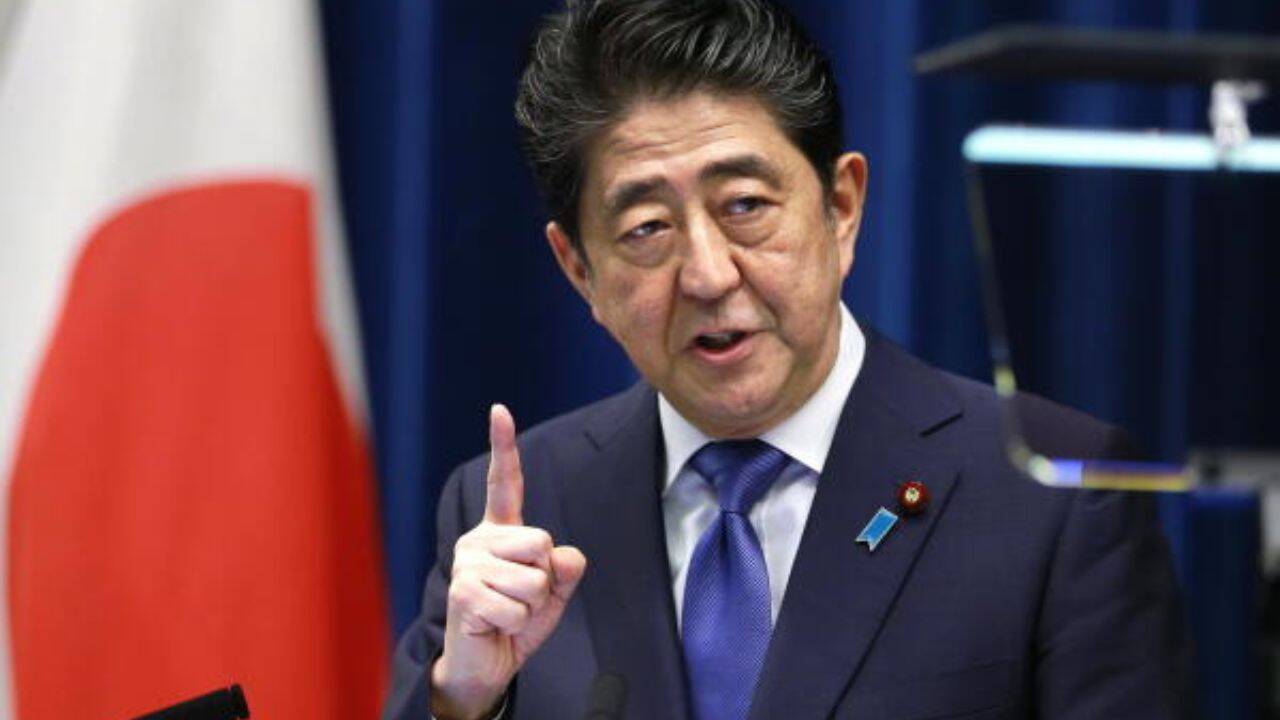
It was against this eternal friction between the messy truth and the convenient myth that former Japanese Prime Minister Shinzo Abe spoke a quiet, yet striking truth:
"My opinion is that politicians should be humble in the face of history."
He argued that when the past becomes a battleground of debate, the fighting should not be led by those seeking votes. It must be left to the scholars, the researchers, and the quiet guardians of the record.
This was not just a dry academic observation. Coming from Abe—a leader whose entire career was deeply, sometimes painfully intertwined with the fiery debates of twentieth-century memory—it was a confession of the invisible, immense stakes of the political stage.
The Temptation of the Eraser
Consider a quiet office in a provincial capital, far from the grand halls of parliament. Let us call the man sitting at the desk Kenji.
Kenji is a fictional construct, but his dilemma is entirely real. He is a mid-level bureaucrat tasked with reviewing a regional history textbook. On his desk lies a red pen. His phone has just chimed with a message from an aide to a local minister. The message is polite, but the subtext is sharp: Does the section on the wartime factory conditions really need to be so dark? Can we not emphasize the spirit of national unity instead?
Kenji is tired. He has a mortgage. He has two children sleeping at home.
He looks at the red pen. It is so light. It would take less than a second to cross out three sentences. To soften a verb. To turn "forced labor" into "mobilized workers."
With one stroke, the friction disappears. The local minister is happy. The textbook gets approved. The controversy evaporates into the warm evening air.
This is how history is rewritten. Not always with dramatic bonfires in public squares, but with the quiet squeak of a red pen in a room where no one is looking. It is done under the guise of patriotism, or national pride, or simply avoiding unnecessary division.
But every time Kenji, or anyone like him, softens the edges of what happened, a thread is pulled from the fabric of our shared reality. The past becomes a fable. And a nation that feeds on fables eventually loses the ability to navigate the real world.
The Scholar and the Politician
There is an inherent conflict between the mind of the politician and the mind of the historian.
The politician works in the immediate. Their horizon is the next election, the next press cycle, the next policy victory. They need simple, powerful narratives that can be summarized in a slogan. They need certainty. To admit doubt, to say "it is complicated," is seen as a weakness that opponents will exploit.
The historian, however, lives in the gray.
To a true scholar, history is not a straight highway. It is a dense, tangled forest. They know that two people can witness the exact same event and leave behind wildly different accounts. They know that motives are rarely pure, that heroes have flaws that make us uncomfortable, and that villains sometimes act out of terrifyingly ordinary impulses.
When a politician tries to act as a historian, they bring the tools of the campaign trail into the archive. They do not look for the truth; they look for ammunition.
This is why humility is not just a moral virtue; it is a practical shield. When leaders step back and defer to the slow, agonizing work of historical consensus, they protect the past from being burned for temporary political warmth. They acknowledge that some truths are too heavy to be carried by those who must constantly worry about their standing in the polls.
The Weight of the Unspoken
But why does this matter to the rest of us? Why should we care if the past is polished a little?
Because history is the architecture of our identity.
If we build our house on a foundation of sanitized myths, we will never understand why the walls are cracking. We see this play out globally. When a nation refuses to confront its historical wounds, those wounds do not heal. They fester beneath the surface, occasionally erupting into modern political anger.
We see it in the unresolved tensions of East Asia, where arguments over events that happened eighty years ago still dictate modern trade agreements and military alliances. We see it in the West, where debates over statues and colonial legacies can bring cities to a standstill.
These are not arguments about the past. They are arguments about the present, fought with the ghosts of yesterday.
When a politician uses these ghosts to rally their supporters, they are playing with fire. It is easy to summon historical grievance. It is almost impossible to control it once it has been unleashed. The crowd gathers, the flags wave, and the complex, nuanced reality of human struggle is replaced by a cartoonish struggle between absolute good and absolute evil.
The Long Road to Consensus
Left to the experts, the process of understanding what happened is excruciatingly slow. It involves decades of comparing archives, translating diaries, debating footnotes, and challenging long-held assumptions.
It is a process that never truly ends. A new cache of letters discovered in a dusty attic in Munich or an old military ledger unearthed in Tokyo can change how we view an entire decade.
This constant revision is not a sign of failure. It is the scientific method applied to human memory. It requires a willingness to be proven wrong, a trait that is dangerously rare in modern political life.
Imagine if we treated medicine the way we often treat history. If a prime minister or a president decided, by executive decree, that a virus did not exist because it hurt the national image, we would recognize the madness instantly. Yet, we routinely allow political bodies to vote on historical truths, passing resolutions to declare what did or did not happen in the shadows of the past.
True humility means accepting that the past is sovereign. It exists independently of our current desires. It cannot be negotiated with, and it certainly cannot be bought.
The light in Kenji’s office is fading now. The red pen remains untouched on the desk.
He chooses to leave the paragraph exactly as it was written by the historians—messy, difficult, and true. He packs his bag, turns off the light, and locks the door behind him. He knows the phone will ring again tomorrow. He knows the pressure will not go away.
But for tonight, the record remains intact.
We do not study the past to feel good about ourselves. We study it to understand how we became the people we are, and to catch a glimpse of the traps that lie ahead on our path. To do that, we need the whole picture—the brilliant light and the deepest shadows.
When we strip away the political theater, we are left with a simple choice. We can demand that history serve our comfort, or we can have the courage to serve the truth. Only one of those paths leads to a future worth inheriting.