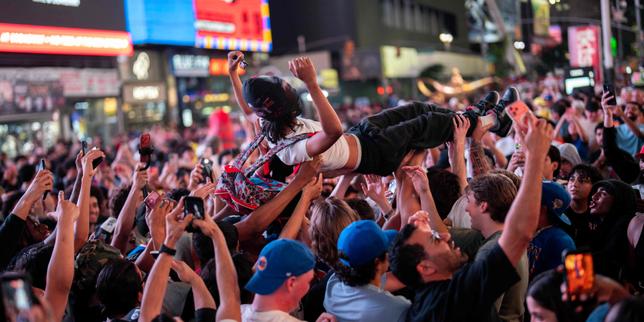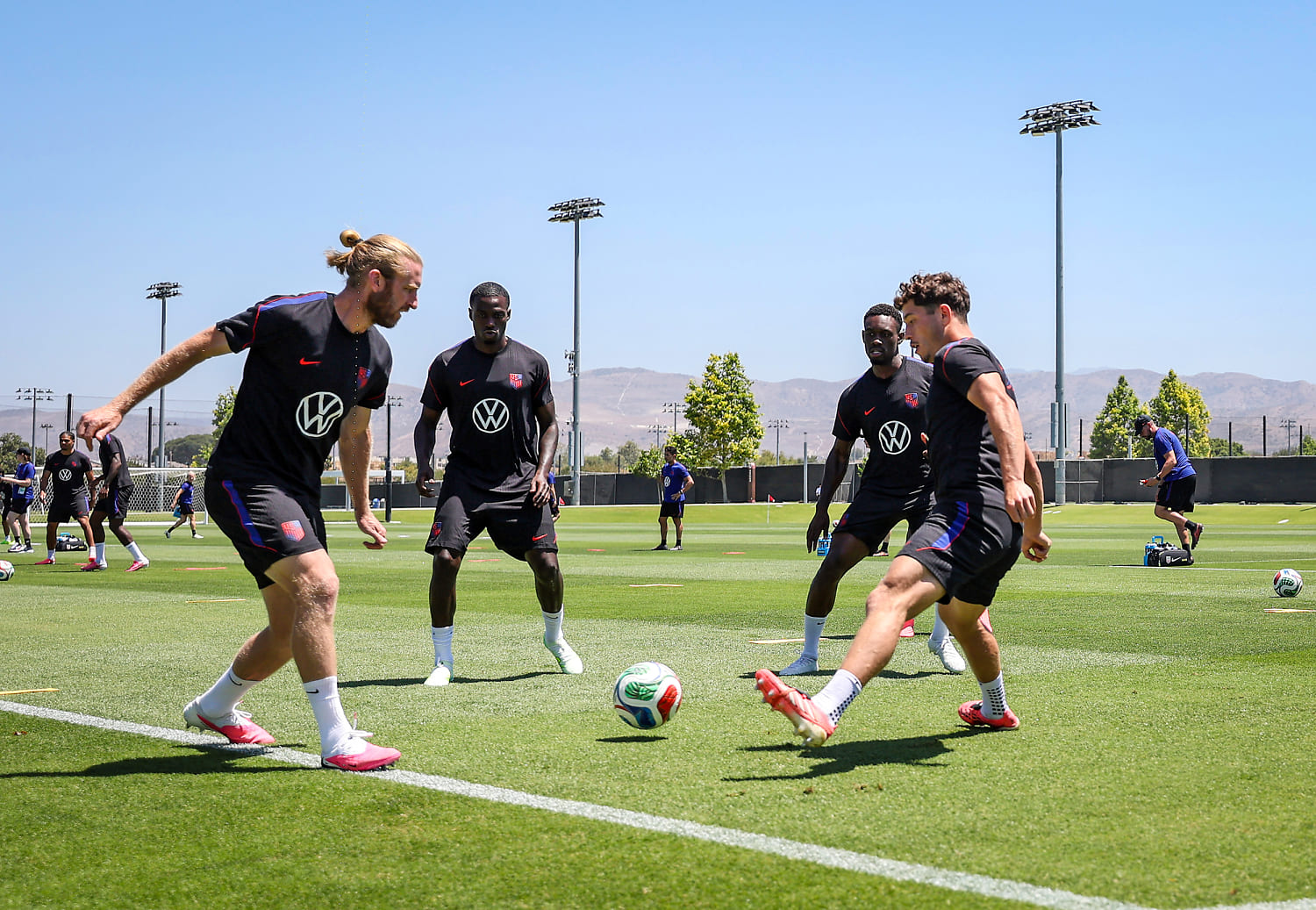
The air inside a tunnel before an international match does not circulate. It stays trapped, heavy with the scent of deep-heat rub, damp grass, and the collective nervous sweat of twenty-two men trying to swallow the lump in their throats. If you stand close enough to the steel doors that lead to the pitch, you can hear the crowd. It does not sound like cheering. Not yet. It sounds like a low, vibrating engine, a mechanical hum that shakes the concrete floor beneath your boots.
Every four years, a handful of young Americans are forced to grow up in that tunnel.
They are usually in their early twenties. They have multi-million-dollar club contracts in Europe, custom-designed cleats, and hundreds of thousands of followers who watch their every meal on social media. They are treated like royalty in London, Turin, or Dortmund. But none of that protects them from the specific, crushing weight of the World Cup opener. When they wear the national team jersey, they are no longer just athletes playing a game. They become a mirror for a nation’s insecurities, its pride, and its desperate desire to be taken seriously on the world stage.
Consider Christian. He is not a hypothetical person, but a human being who has spent his entire adult life under a microscope. By nineteen, he was carrying the expectations of an entire soccer-skeptic superpower. When the team failed to qualify for the tournament years ago, the blame did not scatter evenly across the federation. It landed squarely on his teenage shoulders. He wept on the pitch in Trinidad, the cameras zooming in to catch every tear, capturing the exact moment a boy realized that his sport could be cruel.
Now, the cycle resets. The spotlight returns, brighter and hotter than before.
The Noise Beyond the Touchline
There is a fundamental misunderstanding about what pressure does to an elite athlete. People assume it acts as a motivator, a surge of adrenaline that makes a player run faster or jump higher. It does not. Pressure is a thief. It steals a millisecond of reaction time. It makes a routine ten-yard pass feel like throwing a bowling ball through a window.
When the opening whistle blows, the immediate challenge isn't tactical. It isn't about breaking down a low block or tracking a winger's overlapping run. It is about blocking out the noise.
The American soccer landscape is unique in its hostility. In England or Brazil, football is a religion; the pressure is suffocating, but it is born of deep, generational understanding. In the United States, the pressure is different. It is a strange mix of casual apathy from the mainstream media and intense, hyper-critical scrutiny from a dedicated subculture. The players know that if they misplace a pass in the tenth minute, a million keyboards will click in unison across North America. They know that a single mistake can define their entire legacy before they are old enough to rent a car without a corporate waiver.
The tactical briefings inside the locker room are precise. Managers draw lines on whiteboards, pointing out the vulnerabilities in the opponent's transition defense. They talk about high pressing and expected goals. They look at data.
But data cannot measure the tightness in a player’s hamstring when he realizes thirty million people are watching him control a bouncing ball.
The Invisible Balance Sheet
To understand the stakes, look at the roster. This is not the veteran-heavy squad of the early 2000s, men who had spent a decade grinding out results in MLS or fighting for survival in the lower tiers of European football. This is a generation raised in elite academies. They speak fluent tactics. They have played in the Champions League.
That pedigree creates a dangerous illusion of invincibility.
The public looks at the names on the back of the jerseys—Pulisic, McKennie, Reyna, Adams—and assumes that success is a mathematical certainty. They see the club logos and expect a smooth, dominant performance. What they forget is that these players are still finding out who they are. A twenty-three-year-old living in a penthouse in Milan is still just a twenty-three-year-old trying to figure out how to lead men.
During the qualification rounds, the cracks showed. There were nights in Central America where the humidity felt like soup and the crowd threw batteries from the stands. The young Americans looked bewildered. They looked for a veteran referee to protect them, or a familiar tactical system to save them. It didn't happen. They had to learn, on the fly, that international soccer is not a pristine chess match. It is a street fight in short pants.
The opening match of a World Cup is the ultimate test of that education. History shows that the first game dictates seventy percent of a team's tournament fate. Win, and the narrative becomes an unstoppable wave of optimism. Lose, and the next two weeks become a miserable, defensive autopsy conducted by talking heads on morning television.
Walking Into the Light
The referee checks his watch. The assistants line up by the door, their flags furled tightly against their sides. The captain takes a deep breath, his chest rising and falling beneath the crest.
This is the moment where the training ground cliches die. There is no more "taking it one game at a time." There is only the long walk out of the dark concrete tunnel and into the blinding glare of forty thousand stadium lights.
The transition from the quiet of the locker room to the roar of the stadium is a physical shock. The air suddenly feels colder. The grass looks impossibly green under the lights, like a stage waiting for an opening act. For the next ninety minutes, every movement will be analyzed by tracking cameras, parsed by analysts, and judged by a country that only tunes in once every four years.
They walk out in pairs, shoulders back, trying to look like the stoic professionals their PR agencies want them to be. But if you look closely at their hands, you can see the truth. Some players ball their fists so tight their knuckles turn white. Others constantly touch their shorts, adjusting the fabric just to give their fingers something to do.
They stand in a line for the anthems. The music starts, echoing through the massive stadium structure, a wall of sound that blots out individual thought.
Christian looks down at the grass, his face a mask of intense concentration. He knows what happens next. He knows that within seconds, the ball will be at his feet, and the world will be waiting to see if he stumbles. The whistle blows, a sharp, piercing sound that cuts through the stadium's roar, and the young men take their first steps into the bright, unforgiving light.