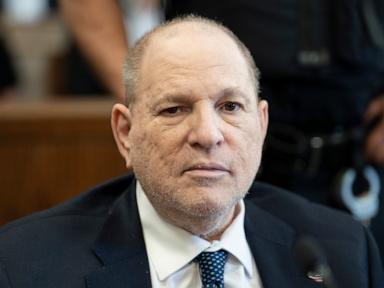
The Manhattan district attorney dropped the final unresolved New York rape charge against Harvey Weinstein after his primary accuser, Jessica Mann, refused to endure a grueling fourth trial. This decision halts the state's multi-year effort to secure a definitive rape conviction regarding a 2013 hotel room assault, but it does not free the 74-year-old former film executive. Weinstein remains incarcerated at Rikers Island, facing a 20-year sentence recommendation for a separate New York sexual assault conviction and a 16-year sentence waiting for him in California. The dropping of this single charge is less a legal victory for the defense and more an indictment of how the American criminal justice system processes historical sexual assault cases.
To understand why a major criminal charge vanishes after eight years of intense litigation, one must look at the mechanics of the retrial process.
The Exhaustion of the Witness
Jessica Mann sat on a witness stand across three separate trials, facing aggressive cross-examination for days at a time. The legal ping-pong match began in 2020 with a conviction, which was subsequently overturned by the New York Court of Appeals due to judicial overreach regarding uncharged prior bad acts testimony. Two subsequent retrials ended in deadlocked juries.
The state expected a human being to maintain identical emotional and factual precision across nearly a decade of public scrutiny. In a letter read to Manhattan Supreme Court Judge Curtis Farber, Mann stated that the process had put her through more harm than good.
The state relies heavily on the psychological endurance of survivors. When that endurance breaks, the state's case collapses, regardless of the underlying evidence or the prosecutor's confidence. Manhattan District Attorney Alvin Bragg noted that Mann had testified before two grand juries and three trial juries. That is five separate times a single individual had to recount trauma to rooms full of strangers.
The Math Behind the Dismissal
The charge dropped was third-degree rape, a low-level felony in New York carrying a maximum penalty of four years in prison. Weinstein has already spent more than four years behind bars since his initial 2020 arrest.
From a prosecutorial standpoint, pouring millions of dollars of taxpayer money into a fourth trial for a four-year maximum sentence is an inefficient allocation of state resources. This is particularly true when Weinstein is already facing a massive sentencing window this September for his conviction involving former production assistant Miriam Haley.
Weinstein Sentencing Outlook (Fall 2026)
----------------------------------------
New York (Miriam Haley Case):   Up to 20 Years
California Conviction:          16 Years (Consecutive)
Dropped Charge Maximum:         4 Years (Rendered Moot)
The defense team immediately claimed that the charge should never have been brought, asserting the encounter was part of a consensual, years-long relationship. This argument highlights a persistent gray area in jury trials involving complex, ongoing relationships between powerful figures and aspiring industry professionals. Juries struggle with non-linear relationships. The two hung juries in the retrials prove that when a relationship spans years, defense attorneys can easily plant the seeds of reasonable doubt.
The Systemic Failure of Overturning Verdicts
The structural problem lies in the appellate court system. When the high court overturned Weinstein’s 2020 conviction, it did so because the trial judge allowed prosecutors to call witnesses whose allegations were not part of the actual criminal charges. This tactic is designed to show a pattern of behavior, but the appellate court ruled it prejudiced the jury.
By forcing a total reset, the courts essentially penalized the victim for a judicial error. The prosecution had to build the house a second and third time with the exact same bricks, while the defense had the advantage of studying the witness's previous testimony to identify minor inconsistencies.
Weinstein still intends to appeal his California conviction and the remaining New York conviction. His legal team is using a strategy of pure attrition, banking on the reality that time, institutional fatigue, and witness exhaustion will eventually erode the state's ability to keep him behind bars.
The remaining New York conviction tied to Miriam Haley provides the immediate basis for his continued detention. Prosecutors are demanding the full 20-year term when Judge Farber hands down the sentence in September.
The public often views high-profile trials as definitive moral plays with clear endings. The reality of the Weinstein saga demonstrates that the law is a grinding wheel of procedures, motions, and appellate technicalities that can outlast the people caught within it.
The state did not lose this case because the evidence changed. The state lost because the clock ran out on human endurance.