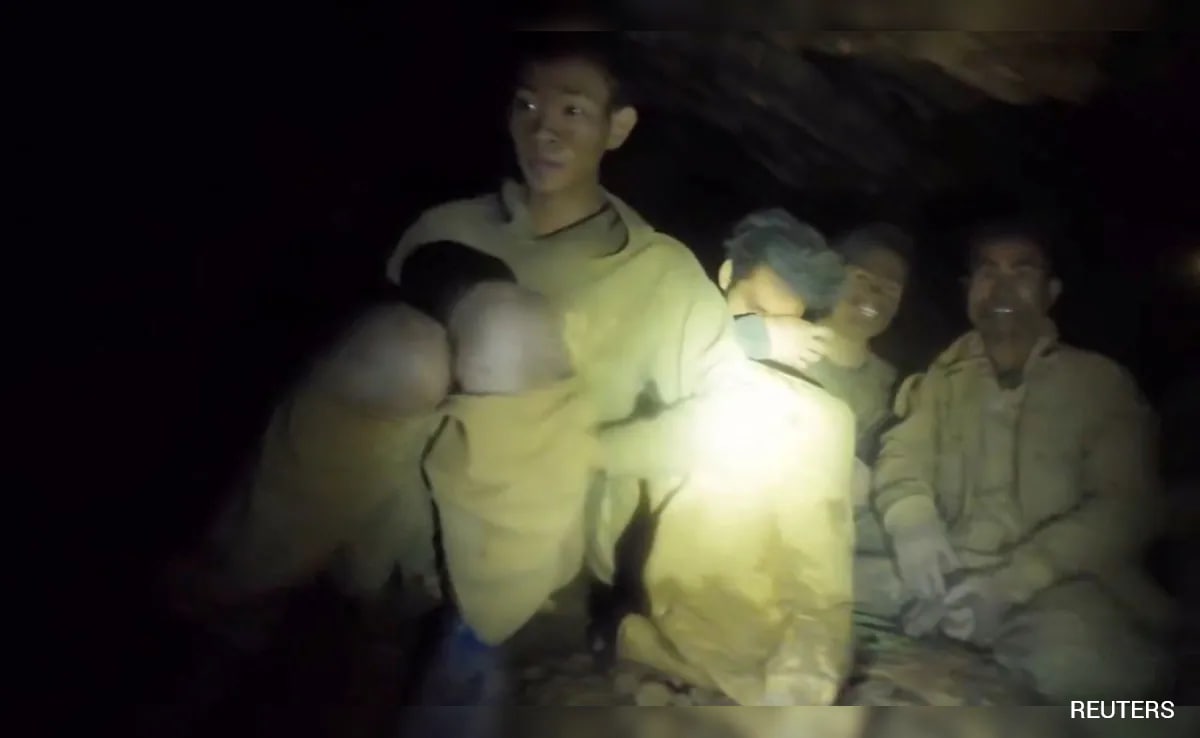
Rescuing people trapped deep underground is a nightmare scenario. In late 2023, the world watched as rescuers fought to save 41 construction workers trapped inside the collapsed Silkyara-Barkot tunnel in Uttarakhand, India. The headlines captured the drama, but they often missed the brutal, physical reality of what happened inside that mountain.
It wasn't just a matter of digging a hole. The rescue team faced a toxic, claustrophobic environment that pushed human endurance and engineering to the absolute limit. When the earth collapses, nature rewires the rules of survival. Understanding what those men went through—and how international experts finally breached the debris—redefines how we look at disaster response.
Why the Silkyara Tunnel Environment Became a Death Trap
When a tunnel collapses, the immediate threat isn't just the falling rock. It's the immediate alteration of the atmosphere. The workers in Uttarakhand were trapped behind a 60-meter wall of fallen debris. Instantly, their world shrank into a humid, dark chamber where every breath was a ticking clock.
Air quality degrades fast. In enclosed spaces, carbon dioxide builds up while oxygen levels plummet. Rescuers had to pump oxygen through small compressor pipes to keep the men alive. But pumping air in doesn't automatically clear out the toxins. Methane gas, dust particles, and fumes from trapped machinery create a stagnant haze. It leaves a metallic taste in the mouth and burns the lungs.
Then there's the water. Underground water doesn't look like the stuff from your kitchen tap. It mixes with silt, pulverized rock, and construction runoff. The result is a thick, muddy sludge often described as looking like dark coffee. It pools around the feet, ruins boots, and speeds up hypothermia. Crawling through that mixture in total darkness ruins your skin and your morale within hours.
The Brutal Physics of a Sixty Meter Wall of Debris
You can't just bring in a standard bulldozer to clear a mountain collapse. The geology of the Himalayas is notoriously unstable. The rock is young, fragile, and prone to shifting without warning. Every time a machine vibrates against the debris, it risks triggering another cave-in.
Rescuers initially relied on an American-made Auger boring machine. This massive drill was supposed to drive an 800-millimeter wide steel pipe straight through the rubble. Think about that diameter for a second. It is roughly 31 inches. That is barely wider than a large pizza.
[Trapped Workers] <--- (60 meters of unstable rock) <--- [Pizza-Wide Rescue Pipe]
To get out, grown men would have to crawl or be dragged on wheeled stretchers through a dark metal tube extending more than half the length of a football field.
The process was excruciatingly slow. The auger kept hitting heavy structural steel bars and machinery parts embedded in the collapsed concrete. On November 24, the machine broke down completely. Its blades shattered, wedging the equipment firmly inside the rescue pipe. The mechanical approach failed.
Rat Hole Mining Saved the Day When Machines Failed
With the heavy machinery broken, the rescue operation had to pivot to a controversial, low-tech method known as rat-hole mining. This technique involves sending individuals into tiny shafts to dig out coal or rock by hand using primitive tools like hand trowels and shovels.
The practice is dangerous and was banned in India in 2014 due to safety risks in unregulated mines. Yet, in the Silkyara tunnel, it was the only option left.
A team of twelve specialized miners took turns entering the narrow steel pipe. Working in pairs, one man lay on his stomach at the front face of the pipe, scraping away the dirt and rock with a hand tool. The second man gathered the loose earth into a small cart to be pulled backward out of the tube.
They worked in shifts around the clock. The air inside the pipe was stifling. Space was so tight that expanding your chest fully to take a deep breath was difficult. It was pure, agonizing manual labor. They cleared the final critical meters by hand, proving that human grit sometimes outmatches modern engineering.
What Trapped Humans Do to Stay Sane
Physical survival requires water and oxygen, but psychological survival is a completely different battle. The 41 workers were trapped for 17 days.
Isolation does strange things to the mind. In total darkness or the harsh, unchanging light of emergency lamps, your internal clock breaks down. You lose track of whether it is noon or midnight. Anxiety spikes. Claustrophobia turns minor chest tightness into a perceived heart attack.
The rescue team managed to push a larger, six-inch digital pipe through the debris before the main rescue line was completed. This allowed doctors to send down solid food like almonds, chickpeas, and rice, rather than just liquid nutrients. More importantly, it allowed them to slide a small endoscopic camera down the line.
Seeing the outside world, hearing the voices of family members, and receiving reassurance from mental health experts kept panic from tearing the group apart. They organized walks within their restricted space and kept a strict routine to mimic normal days. Without that psychological anchoring, the physical rescue wouldn't have mattered.
The Reality of Post Rescue Recovery
When the miners finally broke through on November 28, the workers didn't just jump up and run home. Emerging from a two-week underground ordeal requires a careful medical protocol.
Your eyes cannot handle sudden, bright sunlight after days in a dim cave. Rescuers gave the men sunglasses immediately as they pulled them out of the pipe. Their bodies were weak from restricted movement and a altered diet. They were quickly transferred to a medical facility in Chinyalisaur for monitoring.
The long-term effects of an event like this are often invisible. Post-traumatic stress disorder runs rampant among cave and tunnel collapse survivors. The sound of a loud crack, a sudden power outage, or even a tight elevator ride can trigger severe panic attacks years down the line.
If you ever find yourself handling an emergency survival situation, or want to prepare for extreme environments, keep these immediate priorities in mind:
- Establish a strict air-conservation routine: Minimize physical exertion immediately to reduce carbon dioxide buildup.
- Secure water before food: Humans can survive weeks without food but only days without water. Filter underground water through cloth if it is turbid.
- Create a psychological schedule: Divide your day into specific blocks for rest, communication, and basic movement to prevent mental unraveling.