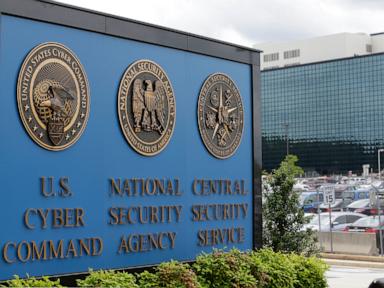
Imagine working inside the most sophisticated signals intelligence agency on Earth, and suddenly your screen freezes. You can't send an email. You can't pull up an intelligence brief. When a classified communications network at the National Security Agency goes down, panic doesn't automatically set in, though the silence on the wires gets deafening fast.
A defense official confirmed that a classified communications network at the NSA experienced an outage, disrupting internal messaging and data sharing across sensitive channels. People immediately assume Russian hackers or Chinese state-sponsored APT groups pulled off the heist of the century. Honestly, that's rarely the case. Most high-side outages come down to botched software patches, hardware failures in aging server racks, or fiber-optic cables getting chewed through during routine construction outside Fort Meade.
Why Classified Networks Break Down More Often Than You Think
You probably picture government intelligence networks as sleek, futuristic command centers straight out of a Hollywood thriller. The reality inside federal IT infrastructure looks a whole lot messier.
Classified systems like SIPRNet (Secret Internet Protocol Router Network) and JWICS (Joint Worldwide Intelligence Communications System) operate on completely air-gapped physical infrastructure. They don't touch the public internet. Because they're isolated from commercial cloud providers, engineers can't just push an automated update and hope for the best. Every single patch has to be manually vetted, burned onto physical media, carried into a Sensitive Compartmented Information Facility, and installed by cleared technicians.
When something breaks, fixing it takes forever.
- Strict access controls slow down diagnostics. A network engineer with a Top Secret clearance might not have the specific compartment read-ins required to look at the router logs on a neighboring server rack.
- Legacy hardware clings to life. Defense agencies run custom encryption gear—like Type 1 cryptographic devices built by General Dynamics or L3Harris—that can't simply be swapped out with off-the-shelf Cisco switches from Best Buy.
- Zero margin for error. If an update corrupts a routing table on the unclassified side, you reboot and apologize to the office. On a classified network, a misconfigured gateway risks spilling sensitive data across security domains, which triggers an automatic, mandatory shutdown of the entire node.
I've seen enterprise networks choke on a single expired SSL certificate. Multiply that friction by ten when every cable is encased in hardened conduit and monitored for electromagnetic leakage under TEMPEST standards.
The Difference Between SIPRNet, JWICS, and NSA-Specific Systems
News reports usually lump all military and intelligence networks together under the vague label of "classified systems." That misses the point entirely. Understanding what actually goes offline requires looking at how the U.S. intelligence community separates its secrets.
At the baseline, the Department of Defense relies on NIPRNet for unclassified, day-to-day administrative traffic. Move one tier up and you hit SIPRNet, which handles Secret-level communications for military commanders, diplomats, and defense contractors. Above that sits JWICS, the Top Secret/Sensitive Compartmented Information (TS/SCI) backbone connecting the Pentagon, the CIA, the Defense Intelligence Agency, and the NSA.
Then you have the NSA's own internal networks. Because the agency handles signals intelligence (SIGINT) and cryptographic keys that even standard TS/SCI users aren't cleared to see, it maintains isolated enclaves like NSANet.
When a defense official confirms an outage on an NSA classified communications network, the operational impact depends entirely on which tier dropped. If an internal administrative enclave goes dark, analysts at Fort Meade spend their afternoon catching up on mandatory compliance training or reading printed binders. If a primary collection or dissemination transport layer drops, field stations in Georgia, Texas, Hawaii, and overseas listening posts suddenly lose their pipeline back to headquarters.
How Analysts Actually Operate During an Outage
Does an outage blind the United States to global threats? Not really.
Intelligence agencies design their architectures around the assumption that primary links will eventually fail, whether from a backhoe cutting a cable in Maryland or an adversary jamming satellite uplinks during a conflict. Continuity of Operations (COOP) plans aren't just dusty binders sitting on a shelf in the Pentagon. They're drilled constantly.
When primary fiber routes stall, traffic automatically fails over to redundant satellite constellations, hardened microwave links, or secondary dark fiber leased from commercial telecom giants under strict non-disclosure agreements. If those choke too, operators fall back to older, slower, bulletproof methods. High-frequency radio broadcasts, physical courier runs with encrypted hard drives, and voice-only secure phones (like the STE or Viper systems) keep critical warnings moving.
It's clunky. It's frustrating. Nobody enjoys dictating complex technical indicators over a grainy secure voice line when they're used to pasting JSON files into a chat client. Yet the mission keeps moving.
The Cyberattack Reflex vs. Operational Reality
Every time a defense official acknowledges a network disruption, cable news panels immediately start speculating about foreign cyber warfare. It makes for great television, sure. The problem is that attributing a localized network outage to a foreign adversary without forensic proof is irresponsible.
Think about how foreign intelligence services actually operate. If Russia's SVR or China's MSS successfully breaches a U.S. classified network, their last goal on Earth is to knock the network offline. Taking a system down alerts the defenders immediately. Adversaries spend years quietly living off the land inside compromised networks, siphoning documents and mapping internal architecture without tripping a single alarm.
Disruptive outages almost always point inward. Look at the historical track record across the federal government:
- The 2014 State Department and White House unclassified email disruptions were deliberate take-downs by U.S. defenders purging Russian intruders, not a Russian denial-of-service attack.
- Major FAA and military transport network halts over the past decade have repeatedly traced back to corrupted database files and botched software rollouts by defense contractors.
- Commercial cloud outages, like the massive AWS and Microsoft Azure disruptions that periodically ripple through federal agencies, usually stem from a single human typing the wrong command during routine maintenance.
When a classified NSA network goes down, the internal Cyber Defense Directorate immediately treats it as a potential intrusion until proven otherwise. Incident responders pull memory dumps, inspect cryptographic key loaders, and verify hardware integrity. Nine times out of ten, they find a fried power supply, a bad BGP route advertisement, or a software bug that slipped past quality assurance.
What This Means for National Security Oversight
The bigger story isn't that a network broke. Technology breaks every day. The real issue is how transparent—or opaque—the Pentagon and intelligence community choose to be when infrastructure fails.
By confirming the outage through a defense official rather than letting rumors fester on anonymous defense forums, the department took a calculated step toward basic accountability. Still, taxpayers rarely get the full post-mortem. Months later, a heavily redacted inspector general report might quietly note that a contractor failed to test a firmware patch or that aging air-conditioning units overheated a server room in Maryland.
If you track defense policy or work in enterprise cybersecurity, pay close attention to how federal agencies talk about these incidents. Watch the specific phrasing officials use. Words like "degraded," "intermittent," and "isolated" carry precise meanings in military communications doctrine.
- "Degraded" means data is still flowing, just slowly or with packet loss.
- "Outage" means a hard stop on a specific enclave or service.
- "No indication of malicious activity" is Pentagon-speak for "we broke it ourselves, and we're currently trying to figure out who pushed the bad code."
Stop assuming every government tech glitch is an act of digital war. Look at the procurement contracts, inspect the aging physical infrastructure, and recognize that even the most secretive spy agency in the world still struggles with the same basic IT headaches as everyone else. Keep your own incident response plans tested, document your network dependencies before something breaks, and never rely on a single point of failure when the stakes actually matter.


