Dust. That is the first thing anyone remembers when a dusty rural road in the West Bank suddenly fills with boots, engines, and raised voices. It coats the tongue, stings the eyes, and turns the dry limestone hills pale gray.
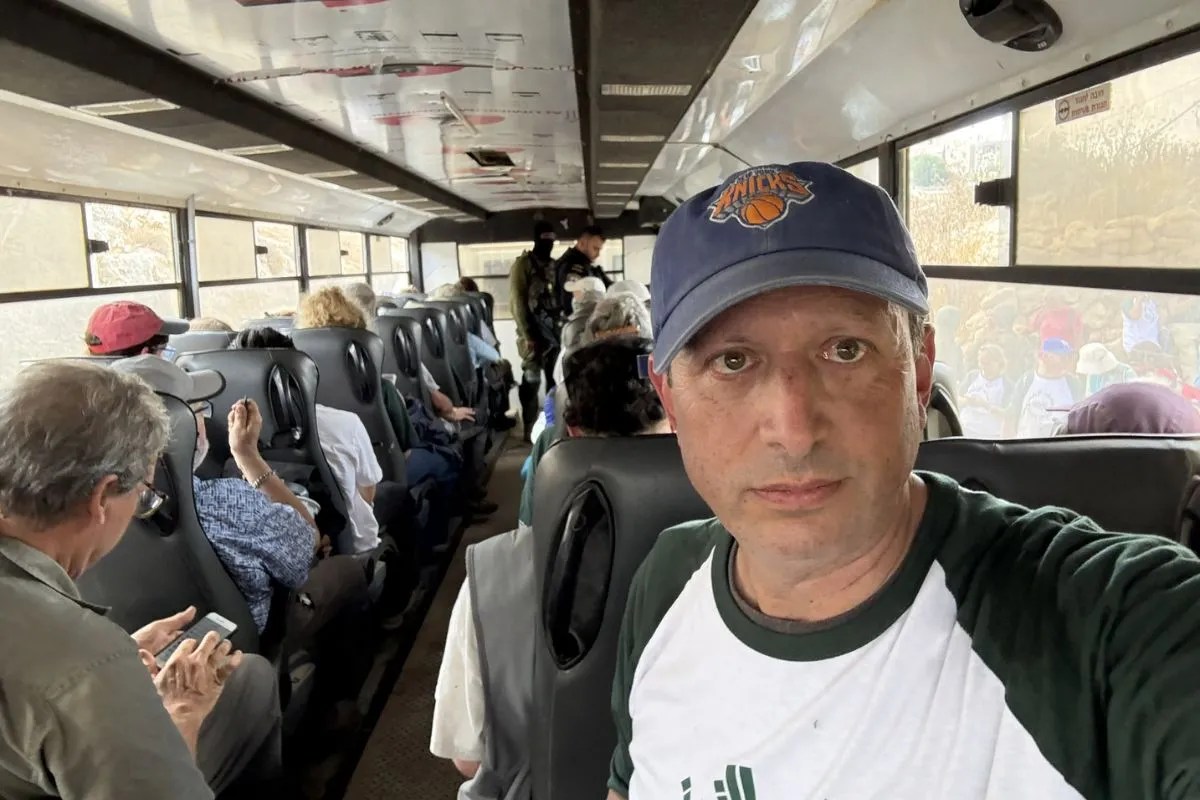
Seventy people. Among them, a candidate running for the United States Congress. Detained by Israeli forces during a sweep or confrontation that began as a local dispute over land, movement, or solidarity and ended with dozens of phones going dark at once.
Wait. Stop and picture that moment.
You wake up in a tidy suburb thousands of miles away—maybe in Ohio, maybe in Illinois, maybe in Texas—where the biggest friction of your Tuesday is traffic near the high school or the price of coffee at the drive-thru. You open your feed and see a headline about more than seventy people swept up by Israeli troops, including someone whose name appeared on a congressional ballot or a campaign flyer back home. Your thumb pauses. Your stomach tightens a fraction. Why was an American congressional candidate out there? What were seventy people doing together? And what happens next when a passport from Washington meets an armed checkpoint thousands of miles from Capitol Hill?
I have spent years standing near borders, talking to people caught between two worlds of law—the quiet, predictable rules of home and the sudden, hard-edged reality of military authority. When a crowd of seventy or more is detained in a single sweep, the numbers on the screen blur together. Seventy sounds like a statistic in a wire dispatch. It sounds like a line item in a geopolitical ledger.
It isn't. Seventy is seventy pairs of shoes left near a doorway or a vehicle. Seventy is seventy families checking a clock and wondering why a text hasn't delivered. Seventy is a room suddenly crowded with strangers holding their breath, trying to figure out whose rules apply now.
To make sense of why a story like this detonates across newsrooms and living rooms alike, I want to use a hypothetical scenario—not to invent facts, because the core premise here is a mass detention of more than seventy people including a U.S. congressional candidate by Israeli forces, where specific granular details of that particular sweep remain contested or unfolding—but to show you how the human gears turn inside an event like this.
Imagine a fictional candidate we will call Nadia Haddad, running a gritty, underdog campaign for a seat in the U.S. House of Representatives. Nadia isn't a career diplomat with a motorcade and a cable line to the Secretary of State. She is a former community organizer who knocked ten thousand doors in freezing rain, raised money twenty dollars at a time, and believes—perhaps with the stubbornness only first-time candidates have—that foreign policy isn't an abstraction drawn in ink on a map; it is lived by real people in real orchards and real neighborhoods.
Say Nadia travels to the West Bank during a campaign recess or a fact-finding trip alongside local residents, legal observers, and international solidarity activists. Around her gather seventy-odd people: villagers trying to reach farmland or protect property, young organizers carrying cameras, older residents who have watched the map of their hills shift three times in one lifetime.
Then the road closes.
How a Routine Gathering Turns Into a Mass Detention
In places where sovereignty is contested and military law governs daily movement, the line between a peaceful gathering, a protest, an access dispute, and an "unlawful assembly" can vanish in less than sixty seconds.
I have seen this happen—not in a movie, not in a textbook, but in real life at tense crossings where loudspeakers crackle over idling diesel engines. One moment people are arguing over a gate or standing shoulder-to-shoulder near olive trees; the next, soldiers in helmets and body armor are forming a perimeter, zip ties or plastic restraints are coming out, and commanders are barking orders in Hebrew and Arabic.
Confusion. Pure, disorienting confusion.
When seventy or more people are taken into custody at once, processing alone becomes a slow-motion bottleneck. Buses pull up. Identity cards and passports are collected into plastic bags or stacks. Phones are confiscated, turned off, or die as batteries drain in the heat or cold.
Think of that as a metaphor for what happens to a story in real time: a bright, noisy room of seventy voices is suddenly funneled through a single narrow keyhole. Outside the keyhole stand journalists, relatives, embassy staff, and voters. Inside, nobody knows who is being released in an hour, who is being taken to a military base or detention facility, or what charge—if any—will be written on a sheet of paper tomorrow morning.
Why does a congressional candidate end up in the middle of that bottleneck?
Sometimes it is deliberate witness. Candidates in competitive or activist-heavy districts often travel to conflict zones to signal moral clarity to voters back home, to document conditions firsthand, or to stand with constituents who have family ties across the ocean. Sometimes it is a delegation that crossed paths with a larger local demonstration or an enforcement raid already underway. Sometimes, once a sweep begins, soldiers detain everyone in a given radius first and sort out who is who afterward.
Regardless of how the net closes, the shockwave travels in two directions at once.
Two Worlds Colliding on One Dirt Road
Locally, in the West Bank or East Jerusalem or wherever a mass arrest occurs, detentions of dozens of people at a time are rarely isolated incidents. They fit into a long, grinding history of friction over land, checkpoints, settler-protester clashes, security operations, and restrictions on movement. For residents who live under military administration, being held for hours or days—or facing military courts and administrative measures—is a grimly familiar hazard of geography.
I won't pretend that part is simple. It isn't. If you look at this conflict from the outside, it can feel like a maze with no exit signs—every street leads to another grievance, another memory, another counter-narrative. Anyone who claims to have a neat, one-sentence summary of decades of bloodshed and political deadlock is selling you certainty you shouldn't buy.
Yet when an American congressional candidate is caught in that same net alongside seventy others, a second layer of tension ignites thousands of miles away.
In the United States, a candidate for Congress is a political actor in domestic democracy, even if they hold no federal office yet. When a foreign military detains a U.S. congressional candidate—alongside American citizens, dual nationals, foreign activists, or local residents—the story stops being "just another overseas clash." It becomes a test of consular reach, political pressure, and public narrative.
Back home, supporters demand immediate answers. Opponents ask what the candidate was doing there in the first place. Cable panels argue over whether the trip was a courageous stand for human rights or a reckless political stunt designed for cameras. Meanwhile, on the ground, seventy people are sitting on metal benches, concrete floors, or the backs of military vehicles, waiting to see what diplomatic weight a campaign badge actually carries when a rifle is slung across someone else's chest.
Spoilers aren't even necessary to see the drama in that contrast: a person whose entire political life revolves around persuasion and ballots suddenly finds themselves in a place governed by command and containment.
What People Actually Want to Know When the Headlines Hit
When a story like "Israeli forces detain more than 70 people including a U.S. congressional candidate" breaks, readers rarely want dry diplomatic jargon first. They want the human bones of the event.
They want to know: Were people hurt? In mass detentions, physical roughness, tear gas, stun grenades, or cramped transport conditions are frequent flashpoints of dispute—eye-witnesses and rights groups often describe harsh treatment or prolonged waiting without clear information, while military spokespeople typically frame operations around public order, security threats, or resisting instructions.
They want to know: How long are they held? Sometimes a sweep results in dozens of people being questioned and released within hours or a day; other times, a subset faces formal charges, court appearances, or prolonged detention while foreign nationals undergo consular checks and deportation or release procedures.
And they want to know: Does being a congressional candidate change how you're treated?
Let's be honest about that. A congressional candidate is not a sitting cabinet secretary with diplomatic immunity. Without official government status, a candidate relies on consular channels if they are a U.S. citizen, pressure from allies in Congress, media attention, and sheer visibility. Sometimes visibility protects you—eyes on the situation make abuse or prolonged secrecy harder to hide. Sometimes visibility makes you a bigger political symbol, which can complicate negotiations rather than speed them up.
There is real vulnerability in admitting that. We like to believe that if you have the right title, the right passport, or the right intentions, a safety net will catch you the moment trouble starts. In high-tension zones, safety nets have holes.
The Invisible Stakes Beneath the Numbers
Why does this matter to someone sitting at home who has never set foot in the Middle East and doesn't even vote in that candidate's district?
Look closely at what happens when seventy people are gathered together and swept up as a group.
First, there is the chilling effect on witness. When ordinary residents, local activists, and outside observers are detained together, the message echoed across the hills is simple: step onto that road, stand in that grove, film that confrontation, and you can disappear from view too. Over time, fewer cameras are raised. Fewer stories get told.
Second, there is the distortion of scale. A single arrest makes a headline. Seventy arrests make a pattern. When numbers climb into the dozens or hundreds across repeated operations, each individual face risks vanishing behind a collective tally. A grandmother with bad knees, a nineteen-year-old student who brought water bottles, a local farmer who just wanted to reach his trees, a candidate trying to bridge domestic politics with international crisis—all of them get compressed into one round number.
Consider what happens next: once the detainees are released or transferred, the arguments over why they were there often drown out what they experienced. One side says the crowd crossed a line, blocked a route, or ignored warnings. The other side says peaceful people were targeted, harassed, or swept up indiscriminately. Both sides point to fragments of video, timestamps, and testimonies.
And in the middle of that tug-of-war, trust erodes a little more.
A Quiet Moment After the Noise
Strip away the cable chyrons, the partisan spin, and the geopolitical posturing for a second. Think back to our hypothetical candidate, Nadia, sitting somewhere quiet after the dust settles—or think of any one of the seventy real people whose names barely made the third paragraph of a news report.
Imagine the sound of a cell phone buzzing back to life hours later when a SIM card or device is returned. A dozen missed calls. A voice note from a sister whose voice is shaking. A group chat lighting up with relief and anger all at once.
Now picture the person sitting ten feet away on the same curb who doesn't have a congressional campaign behind them, doesn't have a cable producer asking for a quote, and doesn't have a plane ticket waiting at the airport.
That contrast is the quiet heart of the whole story.
A congressional candidate stepping into a volatile conflict zone brings spotlight and controversy with them—and when seventy people are detained alongside one, the spotlight briefly illuminates a whole crowd that usually stays in the shadows. Once the candidate's name leaves the top of the feed, the road is still dusty, the checkpoints are still there, and the people who live under that weight every single day are still standing in the sun.