Sirens do not care whether a threat is real.
They tear through damp English air with the same flat, merciless urgency whether a truck carries a bomb or a crate of spare parts, whether a perimeter breach began with a master plan or a bad turn off a country lane.
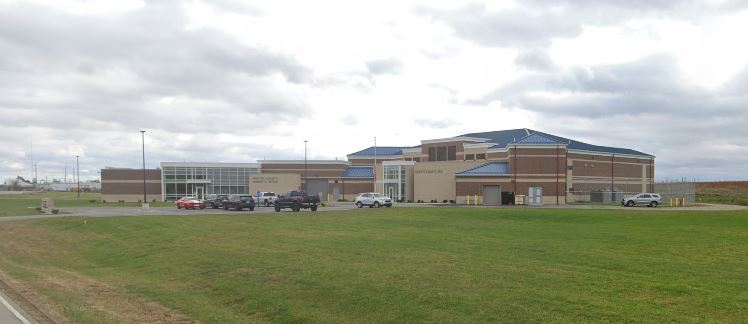
Around a U.S.-run military base in Britain, the sequence has a familiar choreography. Blue lights wash over hedgerows and wet tarmac. Radios crackle with clipped, phonetic English. Armed officers step out of unmarked vehicles into the cold drizzle, eyes scanning ditches, windows, and the quiet geometry of rural roads that were never meant to host a counterterrorism operation. Then came the headline that reads like a door slamming shut before the room is even checked: British police said no explosives were found after arrests near a U.S.-run military base.
Read that sentence twice. Let the stillness inside it settle.
No explosives found.
To a newsroom desk looking for a neat verdict, that looks like an anticlimax. A false alarm. A story that starts with handcuffs and ends with an empty trunk. Yet anyone who has ever stood beside a perimeter fence while officers move through an exclusion zone knows that "nothing found" is rarely nothing at all. It is a suspension of breath. It is the space between suspicion and certainty, where ordinary people—neighbors, commuters, parents waiting at a school gate, officers running on adrenaline—discover how much of modern security is built on shadows.
The Anatomy of a Non-Explosion
Consider what happens in the hours before a police spokesperson steps up to a microphone and uses words like no explosives found.
A call comes in, or intelligence flags movement, or a routine patrol spots something that trips a wire in someone’s training. Within minutes, jurisdictions overlap. British police hold statutory authority on British soil; American personnel guard facilities that operate under bilateral agreements, treaty frameworks, and layers of classification that rarely make it onto a parish council agenda. From the outside, the boundary between "local policing" and "allied defense" can look razor-thin, almost invisible, until something goes wrong near the wire.
Suppose we build a hypothetical scenario to trace how that tension feels on the ground. Let us call the neighborhood constable Arthur—not a real officer from this case, just a composite of the hundreds of British beat and response officers who have spent rainy nights cordoning off lanes near joint facilities. Arthur knows which farm tracks flood in November and which pub car parks fill up on Friday nights. He does not spend his shifts thinking about geopolitics. He thinks about visibility, traffic flow, and keeping civilian cars from drifting into a hot zone.
When arrests happen near a U.S.-run base, Arthur’s world shrinks to a radio channel and a line of cones. Every vehicle parked askew becomes a question. Every jacket worn in mild weather invites a second glance. Bomb disposal units, if called, move with slow, deliberate precision—heavy suits, robots rolling cautiously toward metal housings, technicians measuring readings that most bystanders cannot name.
And then the sweep finishes. No explosives.
Here is the paradox that makes counterterrorism policing so maddeningly human: a negative search does not automatically erase the reason the handcuffs went on in the first place. Investigators can rule out device material while still digging into intent, communications, reconnaissance, or plain old confusion. Arrests are made on reasonable grounds to suspect, not on finished forensic proof. By the time the public reads that no explosives were recovered, the hardest part of the work—separating malice from mistake, or unformed plotting from finished capability—has often barely left the interview room.
Living Next Door to a Perimeter
Ask anyone who has lived within five miles of a major military installation how they experience security, and you will rarely hear a speech about grand strategy. You will hear about traffic. You will hear about low-frequency hums at three in the morning, about sudden road closures that turn a ten-minute errand into a forty-minute detour, about the quiet surrealism of buying milk while armed patrols pass the hedgerow.
There is a specific psychological weight to living beside a base run by a foreign ally. Gratitude sits right next to unease. Many communities value the jobs, the local spending, and the sense of shared deterrence. At the same time, the perimeter fence is a permanent reminder that your quiet corner of the countryside sits on someone else’s target list—or at least inside someone else’s threat model.
When police make arrests near that fence, the community feels the ripple before it gets a full explanation. Rumors travel faster than press releases. A mother scrolling her phone in a parked car sees a snippet about arrests near a U.S.-run military base. Her mind does what human minds have done for ten thousand years when danger is unnamed: it fills in the blank with the worst possible picture.
Later, when British police state that no explosives were found, relief rushes in—and with relief comes a strange, lingering friction. If there were no explosives, what were the arrests for? Were officers ahead of a plot before hardware ever entered the picture? Or did a nervous system of surveillance, tips, and rapid response clamp down hard on something ambiguous?
Neither answer is comfortable. A world where police wait until explosives are strapped to a frame before making an arrest is a world where funerals become the primary metric of intelligence. Yet a world where arrests happen first and empty searches follow can leave communities wondering how transparent the threshold really is.
Why "Nothing Found" Still Costs Something
I have spent enough time around incident rooms and post-mortem briefings to know how quickly people dismiss a non-event. Once the tape comes down and no device turns up, attention evaporates. The story drops out of the feed.
Yet look at the ledger of a single high-alert arrest operation near a sensitive facility.
First, there is the human toll on the people detained. Even when no explosives are discovered, arrest alters lives in hours. Names get whispered, livelihoods wobble, families absorb shock while lawyers wait for disclosure. Justice demands that suspicion be tested in law, not treated as guilt, and every hour in custody carries moral weight.
Second, there is the strain on police and security teams. Counterterrorism and base-adjacent operations require specialized units, forensic sweeps, cordons, and intelligence coordination. Pulling those resources into a high-stakes search means deferring other work—sometimes routine safety work, sometimes slow-burning investigations that never get sirens.
Third, there is the erosion of trust when explanations arrive in fragments. British police have a doctrine built on policing by consent, a phrase that sounds polite until you realize how fragile consent becomes when citizens cannot see the machinery behind an arrest. Saying no explosives were found is essential factual candor. Still, facts stripped of context can feel like a locked door with a sign on it reading Move along.
The Invisible Stakes Behind the Wire
Why do U.S.-run bases in Britain draw such intense scrutiny whenever arrests occur nearby? Because they sit at the intersection of two histories and two sets of expectations.
Britain has lived through decades of domestic and international terrorism—from Northern Ireland to the 2005 London bombings, from Manchester to Westminster. Its police forces have trained generations of officers to treat suspicious behavior near critical infrastructure with immediate seriousness. Meanwhile, U.S. installations in the UK carry symbolic weight. To critics of foreign military footprints, the fence is a flashpoint; to planners, it is a vital node in transatlantic logistics, communications, and deterrence.
In that narrow strip of asphalt and grass outside the gate, every action is amplified. A car idling too long is not just a lost driver. A backpack left by a gate is not just carelessness. The stakes are invisible because they are asymmetric: one failure can be catastrophic, while a hundred false alarms look like overreaction in hindsight.
Think about the impossible math an officer or analyst faces in that moment. You do not get a scorecard marked Bravery for standing down or Wisdom for letting a suspicious person walk. You get judged on whether people went home alive—and, afterward, on whether your restraint looked proportional.
How Communities Learn to Read the Silence
Over time, towns near sensitive bases develop an unspoken literacy. Residents learn to distinguish routine convoy movement from unusual activity. They learn that early headlines are almost always incomplete, and that a statement saying no explosives were found is a milestone, not the final chapter.
What helps most in those moments is not theatrical reassurance. People do not need officials to pretend fear is silly. They need straight talk about what is known, what remains under investigation, and where the line sits between public safety and civil liberty.
Consider what happens if a hypothetical resident—let us call her Clara, who walks her dog along the lane bordering the perimeter—watches police vehicles converge at dusk. The next morning she reads that arrests were made and no explosives were found. If authorities offer only a one-line bulletin, Clara’s imagination stays on high alert. If police explain clearly that searches found no explosive material, that inquiries continue, and that there is no ongoing threat to the public, the tension drops. Not to zero—vigilance never quite hits zero near a military base—but back to a manageable human scale.
That is the real test of modern security reporting and policing alike. Not whether the story produces a dramatic explosion, but whether it treats the quiet aftermath with honesty.
The Quiet After the Sirens
No explosives found.
Say the words slowly and listen to what is left behind. No shattered glass. No triage tents. No memorial plaque added to a town square. Just damp hedgerows, tire marks on a verge, detectives reviewing footage and records, and neighbors looking at a familiar fence with slightly older eyes.
Sometimes the biggest story in security is not what detonated. It is the invisible architecture of nerves, laws, and split-second judgments that held the line while nothing happened—and the hard work of making sure "nothing happened" still answers to the truth.