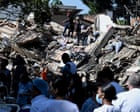
The ground starts rolling before you even hear the roar. Monday morning in western Colombia turned catastrophic when a powerful 7.4-magnitude earthquake struck near San José del Palmar, leaving at least 70 people dead, dozens of buildings collapsed, and entire communities scrambling through thick gray dust to find survivors.
This is the strongest seismic event to hit the country in a decade. It caught millions off guard just after 7:30 local time, sending panicked residents running into the streets of Cali, Pereira, and Manizales—some still wearing their pajamas. Building on this topic, you can also read: Why Blaming Gun Control For Tragedies Misses The Entire Point Of Human Violence.
The Epicenter and Immediate Devastation
The United States Geological Survey and the Colombian Geological Service pinpointed the epicenter at an intermediate depth of roughly 66 to 70 miles in the Chocó region. While Chocó's capital, Quibdó, suffered heavy structural damage, the shockwaves radiated outward with devastating force.
In Cali, Colombia's third-largest city, Mayor Alejandro Eder confirmed that at least 20 buildings pancaked or suffered catastrophic structural failures. Rescue crews and civilians immediately rushed to dig through mounds of shattered masonry where residents remained trapped. Plumes of dust choked the air across neighborhoods as secondary tremors and aftershocks kept emergency responders on high alert. Analysts at The Guardian have shared their thoughts on this trend.
Further north in the coffee-growing heartland, Pereira absorbed an immense blow. Local officials reported dozens of fatalities, and terrifying footage from Matecaña International Airport showed sections of the terminal roof crashing down onto terrified travelers. In nearby Manizales—a city built precariously along steep Andean ridges—a tower of the landmark neo-Gothic cathedral collapsed directly onto the nave, adding cultural tragedy to human loss.
Regional Shockwaves and Infrastructure Strains
The tremor didn't stop in the west. Millions felt violent shaking hundreds of miles away in Bogotá, where office workers and apartment dwellers evacuated high-rises. Though the capital reported mostly superficial cracks rather than total structural failures, the psychological toll was immediate. The quake's reach stretched across borders, sending rolling tremors into neighboring Ecuador and parts of Venezuela, a nation already reeling from deadly twin earthquakes earlier in the summer.
Transportation networks fractured almost instantly. Colombia's civil aviation authority suspended operations at multiple regional airports—including Pereira, Manizales, Quibdó, Armenia, Cartago, and Buenaventura—while engineers scrambled to inspect runways and terminal integrity.
The Road to Recovery
Newly inaugurated President Abelardo de la Espriella stepped straight into a massive national crisis, announcing a state of national disaster and moving to establish a unified command post directly in San José del Palmar. Emergency services from unaffected regions like Bogotá and Medellín were deployed to assist overwhelmed local teams in Cali and Risaralda.
Heavy rainfall risks, unstable aftershocks, and remote geography continue to complicate rescue efforts in the worst-hit zones. As emergency crews work against the clock to clear heavy debris, the focus shifts entirely to saving those still trapped beneath the rubble and bracing the Andean region for the long rebuilding process ahead.
/i.s3.glbimg.com/v1/AUTH_a0b7e59562ef42049f4e191fe476fe7d/internal_photos/bs/2023/K/u/kqi7MqQ2SoRHOoMpnH5A/cozinha-aberta-bancada-banquetas-estudio-minke.jpg)