Hamas just announced it's dissolving its administrative government in the Gaza Strip. If you read the surface-level headlines, it sounds like a historic shift. The group says it's handing over the keys to the National Committee for the Administration of Gaza (NCAG), a United Nations-backed technical committee born out of a U.S.-brokered ceasefire plan.
But don't buy into the hype just yet.
While the move looks massive on paper, the reality on the ground is a complicated game of political chess. Hamas is stepping back from running ministries, but they aren't giving up their guns. Until the issue of weapons is solved, this announcement is mostly symbolic.
The Core of the Deal
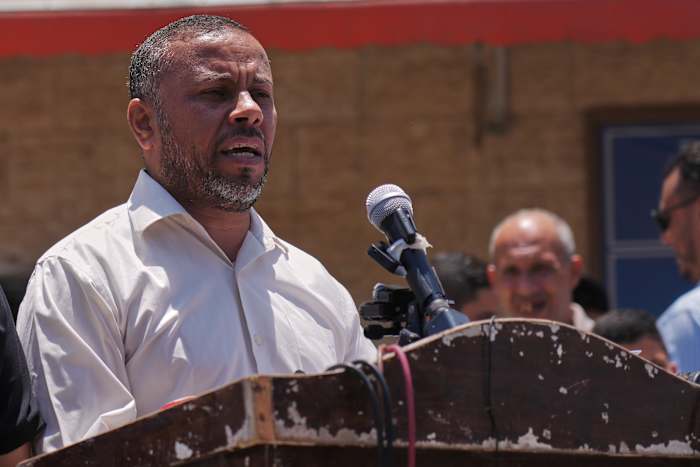
The announcement came from Ismail al-Thawabta, the general director of the Hamas-run Government Media Office. He confirmed that Mohammed al-Farra, head of the government's emergency committee, officially resigned. The idea is to clear a path for technocrats to take over civilian life, manage foreign aid, and kickstart the massive reconstruction efforts Gaza desperately needs.
The NCAG is chaired by Ali Shaath, a Gaza-born engineer and former Palestinian Authority official. Right now, his committee is sitting in Cairo, waiting for the green light to actually enter the strip.
Here's the problem. Hamas says its civil servants and localized police officers aren't going anywhere. They're just changing the logo on their paychecks. According to Hamas, these workers are "state employees" who will now take orders from the new UN-backed committee.
The Disarmament Deadlock
You can't talk about a new government without talking about who holds the weapons. That's where the whole plan hits a wall.
The Board of Peace, an international body tasked with overseeing the postwar roadmap, didn't hold back. They posted a statement on X making it clear that they'll judge this move by actions, not promises. Their core rule is simple: one authority, one law, and one weapon. They want the technocratic committee to have total control over every single firearm and rocket in Gaza.
Good luck with that.
Hamas is flatly refusing to disarm during this initial phase. They want the civilian government set up and humanitarian aid flowing long before they even discuss their arsenal. Meanwhile, Israeli Foreign Minister Gideon Saar dismissed the entire announcement as a PR spin. Israel's argument is tough to ignore: as long as Hamas keeps its weapons, any civilian committee will just end up doing what Hamas dictates anyway.
Why Hamas Is Making This Move Now
This isn't an act of surrender. It's a calculated strategy. By officially stepping down from governance, Hamas achieves a few things at once:
- Shifting Blame: They remove any excuse for foreign donors to withhold reconstruction funds. If the civilian population continues to suffer, Hamas can blame international red tape or Israeli restrictions rather than its own administration.
- Stalling for Time: Diplomats from Egypt, Qatar, and Turkey have noted that both sides are dragging their feet. With Israeli domestic politics in flux, Hamas believes delaying the hard decisions on disarmament works in its favor.
- Preserving the Militia: By letting technocrats handle the headache of sewage, electricity, and hospitals, Hamas can focus entirely on its underground military infrastructure.
Let's look at the actual numbers to understand the pressure cooker environment driving this. The destruction in Gaza is unprecedented. Since the war began following the October 7, 2023 attacks, Gaza's Health Ministry reports that over 73,000 Palestinians have been killed. While a fragile ceasefire has been in place since October 2025, low-level fighting and daily precision strikes still happen. Israeli forces have actually expanded their physical footprint inside the enclave, controlling roughly 70% of the territory. Hamas is cornered geographically, so changing its political strategy is its best survival mechanism.
What Needs to Happen Next
If this transition is ever going to become real, the international community has to bridge a massive trust gap. A toothless committee of engineers in Cairo cannot govern a war zone while an armed faction runs the streets.
First, mediators in Egypt and Qatar need to finalize the modified disarmament proposal currently on the table. One idea being floated involves rehabilitating around 10,000 members of the local Gaza police force to maintain basic law and order, while separate Israel-backed militias and Hamas fighters gradually phase out their heavy weaponry.
Second, Israel will have to allow Ali Shaath and his team physical access to Gaza. Right now, security objections are keeping the transition team locked out. Until those two pieces move, the dissolution of the Hamas government is just a corporate restructuring of an administration that barely has a building left to stand in. Expect more tense negotiations in Cairo before anyone actually packs a suitcase for Gaza City.