Delcy Rodriguez isn’t going to The Hague to win a legal argument. She’s going there to perform for a domestic audience and to stall a clock that has already run out.
The international community loves a tidy legal procedure. They see the International Court of Justice (ICJ) as the ultimate arbiter of truth, a place where maps from 1899 and 1966 can be laid out on mahogany tables to settle the fate of the Essequibo. This perspective is fundamentally flawed. It treats a high-stakes resource war like a property line dispute between neighbors over a picket fence.
The "lazy consensus" suggests that the ICJ’s eventual ruling will bring stability to the region. It won't. In fact, the obsession with the legal process is blinding analysts to the cold, hard reality: the border isn't being drawn in a courtroom; it’s being drawn by offshore drilling rigs and military posturing.
The Myth of Legal Finality
The 1899 Paris Arbitral Award settled this. Then the 1966 Geneva Agreement unsettled it. Now, we are told the ICJ will settle it once and for all. This is a fantasy. International law is only as strong as the enforcement behind it, and the ICJ has no police force.
When Rodriguez stands before the court, she represents a government that has already held a referendum to annex the territory in question. You don't hold a national vote to "create" a new state of Guayana Esequiba if you plan on abiding by a Dutch court's contrary opinion.
Venezuela’s strategy isn't legal victory; it’s strategic ambiguity. By challenging the court's jurisdiction while simultaneously participating in the hearings, Caracas maintains a foot in both camps. They can ignore a loss by claiming the process was rigged, or use a win to justify immediate escalation.
Oil is the Only Map That Matters
Let’s stop pretending this is about historical pride or colonial-era maps. This is about the Stabroek Block.
Since 2015, Guyana has gone from a backwater economy to a global oil powerhouse, thanks to massive discoveries by a consortium led by ExxonMobil. We are talking about reserves estimated at over 11 billion barrels of oil equivalent.
- Guyana's GDP growth: Often cited as the fastest in the world.
- Venezuela's Production: Crumbled by years of mismanagement and sanctions.
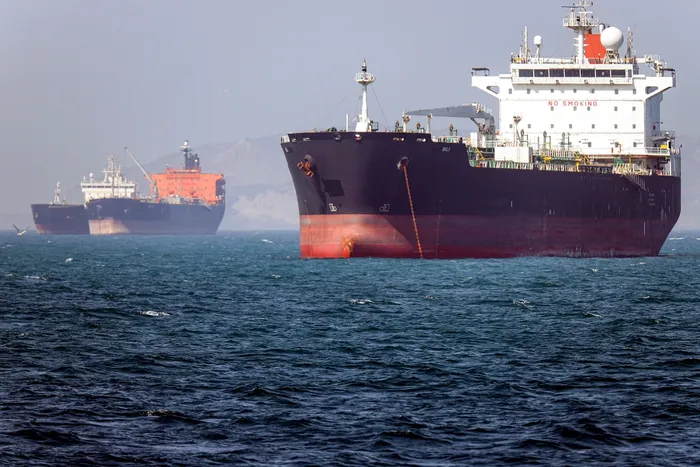
Caracas isn't looking for "justice." They are looking for a piece of the most lucrative oil play of the 21st century. The ICJ is a distraction from the real conflict: the intersection of corporate interests and state survival. If you want to know where the border actually lies, look at where the floating production storage and offloading (FPSO) vessels are anchored.
The Sovereignty Trap
Mainstream media outlets focus on the "land dispute." That is the wrong question. The real question is: Who can actually defend the claim?
Guyana has the law. Venezuela has the Su-30MK2 fighters.
For years, I’ve watched diplomatic missions try to "de-escalate" by suggesting joint development zones or bilateral committees. These are graveyard ideas where sovereignty goes to die. Guyana knows that any concession on joint management is a de facto admission that their current border is illegitimate. Venezuela knows that as long as they keep the "dispute" active, they can spook potential investors away from Guyana’s future licensing rounds.
The ICJ process actually hurts Guyana in the short term. It provides a veneer of "unsettled status" to a territory that Guyana has administered peacefully for over a century. By dragging this through The Hague, Venezuela has successfully turned a settled fact into a "case."
Why the ICJ is Powerless
Imagine a scenario where the ICJ rules entirely in favor of Guyana, affirming the 1899 boundary. What changes on the ground?
- Venezuela rejects the ruling. They have already laid the groundwork by calling the court biased and colonial.
- Military presence increases. Caracas moves more troops to the border to "protect" their perceived sovereignty.
- The UN Security Council stalls. With Russia as a permanent member and a close ally of Maduro, any resolution to enforce the ICJ ruling with peacekeepers or sanctions is dead on arrival.
The court is a theater for those who believe in a rules-based order that the primary actors in this play have already abandoned. Rodriguez is there to buy time, gather intelligence on Guyana's legal posture, and maintain the narrative of the "aggrieved nation" to fuel nationalist sentiment back home.
The Failed Logic of "Historical Rights"
The argument often heard from Caracas—and echoed by some regional sympathizers—is that the 1899 award was a "fraud" perpetrated by the British and the Americans.
Even if that were true, international relations cannot function if every border is subject to a 125-year reset button. If we used that logic, half the world's maps would need to be shredded by noon tomorrow. The "historical rights" argument is a populist tool used to distract from the 7.7 million people who have fled Venezuela's economic collapse.
It is easier to talk about the "theft" of the Essequibo than it is to talk about the theft of the Venezuelan treasury by its own elite.
The Investor’s Reality Check
If you are an energy executive or a sovereign wealth fund manager, the ICJ proceedings are noise. The signal is the U.S. Southern Command.
The only thing keeping the peace isn't a judge in a robe; it’s the threat of U.S. intervention and the presence of multi-billion dollar American assets in Guyanese waters. The moment the U.S. looks distracted—perhaps by conflicts in Europe or the Middle East—is the moment the "legal dispute" turns into a kinetic one.
Stop asking when the court will rule. Start asking how long the U.S. will continue to guarantee Guyana’s maritime security. That is the only metric that determines the survival of the Guyanese state.
The Hague is a Waiting Room
Delcy Rodriguez’s trip to the Netherlands is a formality of the highest order. She is there to fulfill a procedural requirement while the Maduro administration prepares for its next move—which will likely be an increase in hybrid warfare, including cyber attacks, disinformation campaigns in the Essequibo region, and naval provocations.
The "experts" who tell you to watch the court are giving you a front-row seat to a pantomime. The real action is happening in the jungle and on the high seas, where the law of the land is being replaced by the law of the strongest.
The ICJ cannot save Guyana, and it cannot satisfy Venezuela. It is a 20th-century solution to a 21st-century resource grab. Expecting a legal brief to stop a desperate regime from chasing a multi-billion dollar oil lifeline isn't just optimistic; it’s dangerous.
The maps are already being redrawn. Not with ink, but with steel.