South Africa is returning to the International Court of Justice. Pretoria is preparing an expanded legal filing to demonstrate that Israel continues to ignore provisional measures ordered by the United Nations high court regarding the conflict in Gaza. Months after the initial genocide case shocked international diplomacy, the substantive legal battle has shifted from the courtroom arguments to the brutal reality of enforcement on the ground.
Diplomatic channels are fracturing. International legal experts are divided. The central question is no longer whether the court issued binding orders, but whether a global judicial body possesses the teeth to enforce them against a sovereign state backed by major veto-holding powers.
The Weight of Provisional Measures
When the International Court of Justice hands down provisional measures, the legal intention is straightforward. The court acts to preserve rights while a comprehensive case is adjudicated. In January, the court directed Israel to take all measures within its power to prevent acts of genocide, punish public incitement, and ensure the unhindered flow of humanitarian aid into the enclave.
These orders were not mere suggestions. Under the United Nations Charter, decisions by the principal judicial organ carry binding weight. Yet, international law lacks a standing police force. Compliance relies almost entirely on state voluntary cooperation, diplomatic pressure, and the cost of isolation.
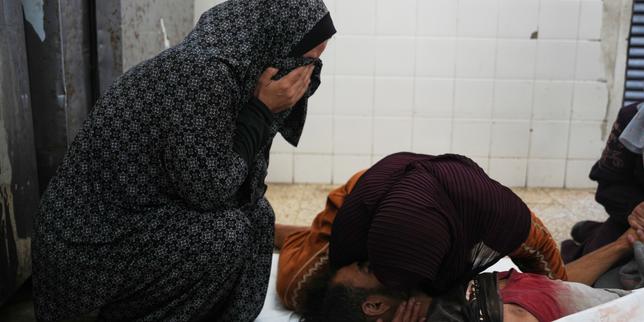
Pretoria argues that the humanitarian situation in Gaza has deteriorated far past the baseline established when the court first convened. Starvation, the collapse of medical infrastructure, and repeated mass displacement orders are cited as direct evidence of non-compliance. South African legal teams maintain that the continuation of military operations in specific zones directly violates the spirit and letter of the court's injunctions.
The Defense Strategy in Jerusalem
Israeli legal representatives reject the allegations with absolute firmness. Their counter-narrative frames the court application as a distortion of facts designed to shield militant factions operating within civilian populations.
From the perspective of Jerusalem, the state is acting in strict accordance with international humanitarian law while engaged in an existential war of self-defense. Officials argue that significant quantities of aid have entered the strip, pointing to newly opened crossing points, coordination desks with international relief agencies, and maritime corridors.
The core legal disagreement centers on the definition of obstruction. Israel contends that logistical bottlenecks stem from the breakdown of internal security, the hijacking of trucks by armed groups, and the operational hazards of an active combat zone, rather than a deliberate state policy of deprivation. Furthermore, Israeli advocates emphasize that provisional measures require balance, arguing that an unconditioned halt to military operations would leave the nation vulnerable to ongoing rocket fire and unreleased hostages.
The Mechanics of Enforcement
How does a state prove non-compliance before an international tribunal? The burden of proof rests heavily on the applicant. South Africa has relied on a mosaic of evidence compiled by United Nations agencies, international human rights organizations, field journalists, and satellite imagery analysis.
- Humanitarian Access Metrics: Tracking daily truck entries against pre-conflict baselines and estimated minimum nutritional needs.
- Infrastructure Assessments: Documenting the systematic damage to water treatment plants, hospitals, and electrical grids.
- Rhetorical Analysis: Compiling public statements from political and military figures to demonstrate intent or incitement prohibited by the court.
Gathering this intelligence requires navigating an information blackout. Independent foreign journalists remain largely barred from entering Gaza independently, forcing investigators to rely on local Palestinian reporters, international aid workers on rotation, and remote sensing data. Each piece of evidence is scrutinized, contested, and re-contested by opposing legal teams in public filings that play out in the court of global public opinion.
The Geopolitical Fallout
The legal maneuvers in The Hague do not occur in a vacuum. They echo through foreign ministries from Washington to Brussels, altering trade relationships, arms export policies, and political alliances.
Several European nations have expressed growing alarm over compliance failures, leading to quiet suspensions of specific military export licenses and heightened scrutiny on dual-use technology transfers. Meanwhile, the United States continues to provide diplomatic cover and military hardware, maintaining that the genocide accusation is unfounded while simultaneously pressuring Israeli leadership to moderate civilian casualties and expand aid delivery.
This divergence exposes a deep fracture in the international rules-based order. Critics of Western foreign policy argue that enforcement standards are applied selectively, pointing to swift sanctions enacted against other states for breaching international court orders compared to the hesitant, heavily qualified responses seen here. This double standard erodes the credibility of international institutions, leaving smaller nations to wonder if the laws governing armed conflict apply only to those without powerful allies.
What Happens When Judgments Go Unheeded
The ultimate resolution of the South African filing will take years. Genocide cases move at a glacial pace, requiring exhaustive archival research, expert witness testimony, and meticulous legal drafting. While the court deliberates the core question of state responsibility, the interim orders remain the primary battleground.
If the court eventually rules that Israel violated its provisional measures, the formal legal consequences will be severe, even if immediate physical enforcement remains impossible. A formal finding of non-compliance triggers mechanisms within the United Nations Security Council, where resolutions could theoretically impose diplomatic or economic sanctions. However, the shadow of the veto looms large. Any punitive measure brought before the Security Council faces the certainty of an American veto, rendering the council paralyzed.
This institutional gridlock forces a reckoning. When the mechanisms designed to prevent mass atrocities fail to halt them in real time, the authority of international law suffers a profound blow. The courtroom in The Hague becomes a theater of witness, documenting a catastrophe it lacks the physical power to stop.
South Africa’s return to the court is a high-stakes gamble. It asserts that silence in the face of perceived defiance is complicity. Whether this legal crusade alters the trajectory of the conflict on the ground remains deeply doubtful, but it ensures that the actions taken today will be permanently locked into the historical record, scrutinized by future generations of legal scholars and historians.