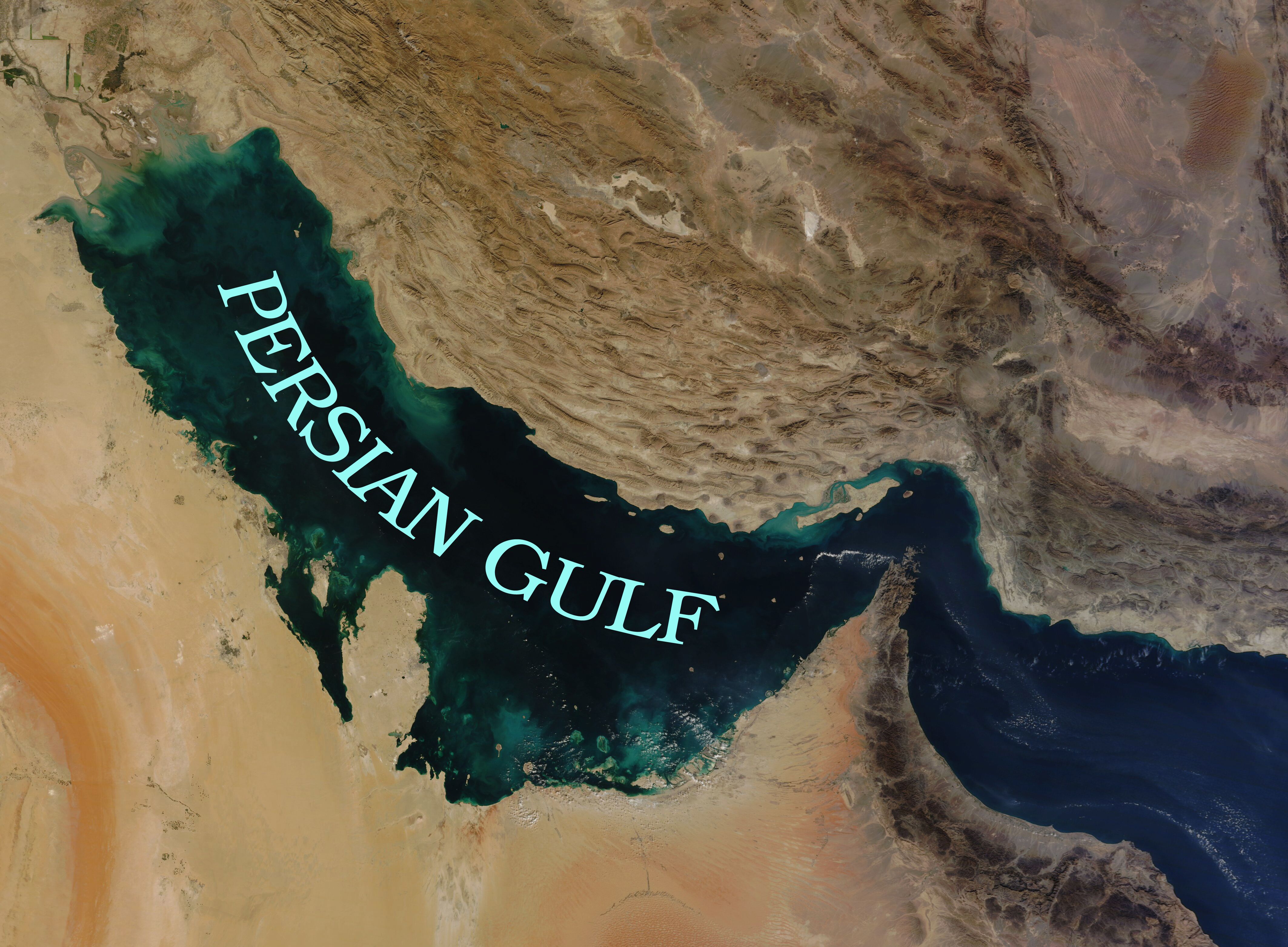
Threatening Gulf data centers and subsea cables is less about knocking the global internet offline and more about raising the cost of capital, insurance, and sovereign compute across the Persian Gulf. Surface coverage of Iranian threats against Gulf digital infrastructure usually treats a "cut cable" or "struck server hall" as a binary event—either the internet goes dark or it stays on. That framing gets the physics and economics backward. Most international internet bandwidth does not sit inside the Strait of Hormuz, and a high-density facility does not need a direct hit to fail. What matters for operators, lenders, and policymakers is the three-layer architecture of exposure—subsea and terrestrial transport, physical and thermal facility dependencies, and cascading financial and sovereign contagion—alongside the repair bottlenecks and geopolitical asymmetries that turn localized strikes into multi-quarter headwinds.
Deconstructing Surface Narratives vs. Structural Mechanics
Standard headlines around Gulf digital risk tend to flatten several distinct mechanisms into one alarmist picture. First, they often conflate regional service degradation with a global internet blackout. According to the International Cable Protection Committee (ICPC), five active submarine cable segments pass through the Strait of Hormuz, carrying less than 1% of global international bandwidth. Even if every cable threading Hormuz were severed simultaneously, global backbone traffic would reroute rather than collapse. If you liked this article, you might want to check out: this related article.
Second, conventional reporting treats kinetic threats to data centers as a binary question of physical destruction. Security analysts and infrastructure operators point out that large computing facilities depend on continuous external inputs—grid power, cooling water, and transit links—so a nearby strike or localized disruption can degrade operations without leveling a server hall. In 2026, direct drone and missile strikes against Gulf cloud facilities—including reported hits on Amazon Web Services sites in the UAE and Bahrain—marked a shift from primarily cyber-focused risk assessments to physical and kinetic exposure.
Third, surface coverage frequently overlooks asymmetry among Gulf Cooperation Council (GCC) states. Countries on the Arabian Peninsula do not share identical exposure profiles. Saudi Arabia routes much of its international subsea bandwidth via Red Sea landings rather than relying solely on Persian Gulf corridors, and larger economies possess different terrestrial and energy alternatives than smaller, geographically concentrated states. Treating "the Gulf" as a single homogeneous vulnerability masks where the real chokepoints sit. For another perspective on this development, refer to the latest update from TechCrunch.
The Three Pillars of Gulf Digital Exposure
To evaluate how exposed Gulf connectivity and cloud capacity actually are, analysts need to separate the system into three interdependent pillars rather than lumping cables and data centers together.
Pillar 1: Transport Corridors and Repair Asymmetry
Subsea fiber-optic cables face two distinct operational realities: route redundancy and repair friction. In normal operations, carriers use diverse subsea and terrestrial paths to shift traffic around faults. Where redundancy exists, packet loss and latency spikes may hurt real-time applications or financial trading without severing connectivity entirely.
The true vulnerability in maritime corridors lies in restoration timelines rather than initial severance. Cable-repair vessels require clearance, transit time, favorable sea conditions, and safe operating windows. Industry data cited by policy researchers indicates that dispatching a vessel, executing a repair, and reburying a damaged cable typically takes at least 40 days and costs between $1 million and $3 million per incident—and active conflict or maritime hazards near chokepoints such as the Red Sea and Bab al-Mandeb have stretched repair schedules even further. Furthermore, historical ICPC data shows that roughly three-quarters of cable faults stem from accidental commercial activity like fishing gear and anchors, which means hostile actors do not need exotic seabed weapons to mimic—or deliberately amplify—familiar maritime hazards.
Terrestrial overland routes across the Arabian Peninsula and neighboring states offer an alternative path for regional and intercontinental traffic, and hyperscalers and regional operators have committed substantial capital—including Microsoft's pledge of more than $400 million for subsea and terrestrial connectivity across the Middle East by 2030—to expand capacity. Yet terrestrial links carry their own border, right-of-way, and security constraints, making them a partial buffer rather than a frictionless substitute for subsea diversity.
Pillar 2: Facility Interdependencies and Compute Diplomacy
Data centers in the Gulf sit at the intersection of economic diversification and geopolitical alignment. GCC states have anchored ambitious AI and cloud strategies—such as the UAE's Stargate UAE campus alongside major cloud and capital commitments across the region—around partnerships with U.S. technology firms and semiconductor supply chains. That alignment has been described in policy analysis as "Compute Diplomacy," linking access to advanced compute and U.S. tech ecosystems with broader strategic commitments.
Once a hyperscale or AI facility is built in a conflict zone, its risk profile shifts from routine uptime engineering to multi-domain survivability:
- Perimeter and air-defense limits: Commercial data centers are high-value economic assets, yet national air-defense umbrellas prioritize military bases, leadership nodes, and critical national infrastructure first, leaving distributed commercial campuses exposed to low-cost drones or standoff munitions.
- Thermal and power coupling: High-density AI clusters draw massive electrical loads and require continuous cooling in hot climates. Any interruption to substations, fuel logistics, or water systems can force load shedding or thermal shutdowns even when server racks are intact.
- Data sovereignty vs. geographic redundancy: Placing backup compute outside the Gulf reduces localized physical risk, but strict data-residency laws and sovereign cloud mandates can restrict how much sensitive workload operators are permitted to move offshore.
- Hardware supply-chain drag: Regional conflict compounds broader hardware constraints—including tight markets for memory and high-performance components—slowing replacement cycles when equipment is damaged or delayed.
Pillar 3: Cross-Sector Contagion ("Kill-Web" Dynamics)
The sharpest analytical insight from recent Gulf infrastructure stress is that outages travel across sectors. Analysts studying the conflict have noted that vulnerabilities in the Gulf operate less like an isolated chain and more like an interlocking network—or "kill-web"—where pressure on cloud and telecom nodes spills into banking, logistics, and energy operations.
Modern oil, gas, and LNG operations rely on cloud analytics, industrial telemetry, and automated control systems alongside physical pipelines and maritime shipping. Simultaneously, financial institutions depend on low-latency connectivity and cloud availability for clearing, settlement, and customer access. Even without a catastrophic collapse, repeated strikes or credible threats drive up war-risk insurance premiums, complicate project finance, and force boards to price geopolitical risk premiums into regional expansion plans.
Known Facts vs. Educated Hypotheses
Rigorous strategy requires separating verified facts from analytical projections so decision-makers do not confuse plausible scenarios with confirmed events.
Known facts include:
- Senior Iranian security officials have publicly warned of plans to target undersea communications cables in the Gulf in retaliation for renewed U.S. or Israeli strikes.
- Kinetic strikes have hit Gulf cloud and data center infrastructure during the conflict, including reported drone attacks affecting AWS facilities in the UAE and Bahrain, prompting heightened scrutiny of physical security and regional investments.
- Five active submarine cable segments transit the Strait of Hormuz, representing less than 1% of global international bandwidth, while Saudi Arabia relies heavily on Red Sea cable landings for much of its international capacity.
- Subsea cable repairs typically require roughly 40 days or more and cost $1 million to $3 million per event under standard conditions, with active regional conflict capable of prolonging vessel access and restoration.
Educated hypotheses include:
- Sustained kinetic pressure on Gulf data centers and maritime corridors will likely raise financing and insurance costs for new regional AI campuses faster than it halts existing operations.
- If strikes persist against commercial tech sites, cloud providers and sovereign funds will accelerate hybrid architectures—pairing hardened local zones with non-Gulf failover regions—subject to regulatory exceptions for sovereign data.
- Adversarial actors may favor asymmetric disruption of energy, shipping, or port logistics to generate economic leverage rather than relying solely on cable cuts that have limited global bandwidth share.
Operational Playbook for Infrastructure Leaders and Investors
Mitigating this exposure requires treating physical resilience, network routing, and financial risk as a single engineering and governance problem.
- Map single points of failure across power, cooling, and fiber. Audit every critical workload to see whether its primary and backup availability zones share the same regional power grid, water supply, or subsea/terrestrial transit corridor.
- Design for graceful degradation, not zero-outage perfection. Architect applications with asynchronous queues, regional read-replicas, and pre-tested failover runbooks so transient latency spikes or zonal brownouts do not corrupt financial or operational state.
- Negotiate sovereign-safe cross-border failover. Work with regulators and enterprise customers to establish clear carve-outs allowing emergency compute or backup replication outside the immediate conflict zone during declared security events.
- Hard-code multi-week repair buffers into SLAs and budgets. Align capital reserves, insurance coverage, and vendor contracts with realistic 40-plus-day maritime repair and hardware lead times rather than peacetime restoration assumptions.
Every mitigation carries trade-offs and limits. Cross-region failover increases latency and faces data-sovereignty friction; on-site power generation and physical hardening raise CapEx and operating complexity; and no commercial facility or subsea cable network can achieve absolute immunity against determined state-level missile, drone, or maritime escalation.
Strategic Action
Cloud operators, enterprise risk teams, and institutional investors with Gulf exposure should immediately run a Geopolitical Continuity Stress Test across their top ten revenue- or mission-critical workloads—quantifying maximum tolerable downtime, verifying non-Gulf failover readiness, and repricing regional CapEx hurdle rates to account for sustained kinetic and insurance risk.