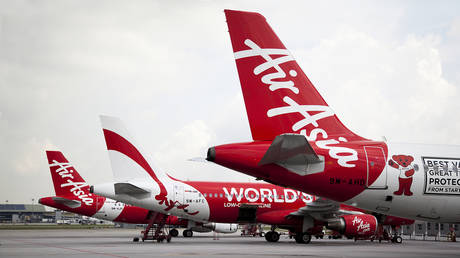
Tony Fernandes is not a man prone to quiet whispers. The founder of AirAsia, usually seen in a signature red cap and a grin that suggests he knows a secret the rest of the aviation world hasn't quite figured out, recently stood before a room of industry titans and dropped a lead weight into the conversation. He didn't just say the industry was struggling. He claimed the current crisis is worse than Covid-19.
Think about that for a second.
During the pandemic, the world stopped. Engines cooled. Tarmacs became expensive parking lots for billions of dollars in grounded metal. We thought that was the floor. We thought we had seen the absolute basement of what a global industry could endure. But Fernandes is pointing at the ceiling and telling us the foundation is actually rotting from within.
The Ghost in the Hangar
Imagine a technician named Elias. He’s been working on GE engines for twenty years. He knows the hum of a turbine like a parent knows the breathing of a sleeping child. In 2021, Elias spent his days wrapping engines in protective foil. Today, he spends his days staring at empty crates.
The problem isn't that people don't want to fly. They are practically screaming for seats. The problem is that the planes themselves are falling apart, and the parts to fix them don't exist. This is the supply chain "hangover," but the word hangover feels too polite. It’s a chronic, degenerative illness.
During the lockdowns, the intricate web of manufacturers that build everything from titanium bolts to sophisticated avionics chips didn't just slow down. It shattered. Skilled workers retired or found jobs in industries that don't involve being furloughed every time a virus mutates. Now, as the world tries to resume its frantic pace, the machinery is coughing.
Fernandes isn't just complaining about delays. He’s talking about a fundamental breakdown in the ability to keep a fleet in the air. When an aircraft sits on the ground (AOG), it isn't just a missed flight. It’s a bleeding wound on a balance sheet. During Covid, everyone was in the same boat. Governments provided lifelines. Today? You’re on your own.
The Invisible Tax on Your Ticket
You feel this crisis every time you open a booking app. You see a price for a short-haul flight and wonder if the app is accidentally showing you the price for a used car.
It isn't corporate greed alone driving those numbers. It’s physics and scarcity. If an airline has twenty planes but can only fly twelve because the other eight are waiting for engine components that are backordered for eighteen months, the cost of those twelve planes must cover the debt of all twenty.
The math is brutal.
Consider the "wet lease." This is a desperate move where an airline rents a plane, a crew, maintenance, and insurance from another company just to keep their schedule from collapsing. It is wildly expensive. It is the aviation equivalent of ordering every meal through a delivery app because your kitchen is broken—except the delivery fees are 400% of the meal price.
Airlines are cannibalizing their own futures to survive the present. They are paying premiums for parts, premiums for fuel, and premiums for labor. Every cent of that is baked into your seat in 24B.
A Perfect Storm of Quiet Disasters
While the supply chain is the primary villain in this narrative, it has accomplices. Currency volatility is tearing through Asian markets. Most airline costs—fuel, plane leases, engine parts—are priced in U.S. dollars. If your local currency loses value, your operating costs skyrocket even if you don't change a single thing about your business.
Then there is the labor. We lost a generation of pilots and engineers to the Great Resignation of the pandemic era. You cannot train a master mechanic in a weekend. You cannot "disrupt" the flight hours required to sit in the captain’s chair.
The result? A fragile system.
When a single thunderstorm hits a hub like Kuala Lumpur or Singapore, the system no longer has the "slack" to recover. In the old days, you’d just swap in a spare plane. Today, there are no spares. The spare is in a hangar in pieces, waiting for a ball bearing that’s currently stuck on a ship in the middle of the ocean.
The High Stakes of the "Low Cost" Dream
The genius of the low-cost carrier (LCC) model was its efficiency. It turned flying into a bus service. It democratized the sky. For a decade, the narrative was one of endless expansion. More routes. More frequencies. Lower prices.
That era is gasping for air.
Fernandes’ warning is a signal that the "bus service" model is under existential threat. If the cost of maintenance and parts continues to climb at this trajectory, the very idea of an affordable $50 flight across a continent might become a historical curiosity—a brief window of time between the exclusivity of the 20th century and the scarcity of the 21st.
We are witnessing a transition from a world of abundance to a world of constraints.
The Weight of the Red Cap
There is a specific kind of exhaustion that comes with fighting a war on two fronts. On one side, you have the customers, who are tired of delays and high prices. On the other, you have the reality of a global manufacturing sector that is no longer fit for purpose.
Airlines are being forced to become something other than transportation companies. They are becoming logistics firms, hedge funds, and training academies, all while trying to maintain a safety record that is, miraculously, still the envy of every other industry.
The stakes aren't just about whether AirAsia or any other carrier makes a profit this quarter. The stakes are about the connectivity of the modern world. When the sky becomes too expensive or too unreliable, the world gets bigger again. Distances that had shrunk to a few hours of reading in a pressurized cabin suddenly feel like the vast, impassable voids they were a century ago.
Fernandes knows that if he can’t fix the planes, he can’t fix the business. And right now, the tools to fix the planes are out of his hands.
The next time you sit on a tarmac, waiting for a "minor technical issue" to be resolved, listen to the silence. It isn't just the sound of a delayed holiday. It is the sound of an industry holding its breath, praying for a part that might not arrive for months, while the world moves on below.
The sky has never felt heavier.