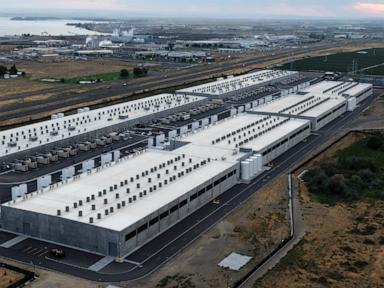
Silicon Valley has a dirty secret, and it isn't the content moderation queues or the data privacy scandals. It is the grid.
For the past decade, tech executives have paraded around sustainability conferences, waving certificates of 100% renewable energy matches. They bought wind credits in Iowa to offset peak server load in Virginia and called it a day. It was a neat marketing trick.
Then generative AI arrived, and the parlor trick stopped working.
The mainstream narrative is already locked in. You see it in every hand-wringing headline: Big Tech is abandoning its climate goals, resurrecting fossil fuels, and building natural gas plants to feed the insatiable maw of artificial intelligence. Environmental advocates are furious. They demand that cloud providers pause expansion or rely exclusively on solar, wind, and battery storage.
This demand is not just unrealistic. It is mathematically impossible.
The lazy consensus assumes that building more wind turbines and solar panels can power the AI boom. It cannot. By forcing intermittent energy sources onto a system that requires absolute constancy, the anti-gas crusade is actually jeopardizing both the grid and the transition to truly clean, baseline power.
The Baseload Fallacy: Why Net-Zero Accounting Failed
I have spent years advising infrastructure funds and grid operators on capacity planning. I have seen companies blow tens of millions of dollars on virtual power purchase agreements (VPPAs) that look fantastic on an ESG report but do absolutely nothing to keep the lights on when a data center actually pulls power.
To understand why the current panic over gas plants is wrongheaded, you have to understand how data centers consume electricity versus how renewables generate it.
An AI training cluster is not an office building. It does not turn off at 5:00 PM. It runs at a flat, unyielding load factor of 90% or higher, 24 hours a day, 365 days a year. If a cluster loses power mid-training run, millions of dollars in compute time vanish instantly.
Now look at the generation profile of solar and wind:
| Generation Source | Availability Profile | Capacity Factor | Grid Impact |
|---|---|---|---|
| Solar PV | Intermittent (Daylight only) | 20% – 30% | Requires massive storage or peaker backing |
| Onshore Wind | Volatile (Weather dependent) | 35% – 45% | Creates sudden supply drops |
| Natural Gas | Continuous (On-demand) | 85%+ | High reliability, provides frequency response |
When a tech giant claims they are "100% renewable," they mean they bought enough clean energy over the course of a year to match their total consumption. But on a Tuesday night at 2:00 AM, that Virginia data center is not running on solar. It is running on whatever is on the PJM interconnection grid—which usually means coal and natural gas.
AI exposes this accounting fraud. The sheer scale of compute required for next-generation frontier models means we can no longer rely on paper offsets. We need physical electrons, delivered in real-time, with 99.999% reliability.
Dismantling the Batteries Will Save Us Myth
The standard rebuttal from renewable purists is predictable: Just build massive battery storage.
This is where basic engineering destroys utopian idealism. Lithium-ion battery storage installations are designed for short-duration peaking. They excel at shifting solar energy by four hours to cover the evening peak. They are utterly useless for sustaining a multi-gigawatt data center cluster through a four-day weather doldrum where the wind does not blow and clouds cover the Southwest.
To back up a single 1,000-megawatt (GW) AI data center campus for 48 hours using current lithium-ion technology would require a battery bank so massive it would bankrupt the operator and consume a staggering percentage of the global supply of battery-grade lithium.
If you eliminate natural gas from the equation right now, you do not get a magical, pristine green grid. You get rolling blackouts, or worse, you force grid operators to keep ancient, highly polluting coal plants online because they have no other choice for baseline reliability. Natural gas emits roughly half the carbon dioxide of coal. In the real world, swapping coal for gas while we scale true baseline alternatives is the fastest way to drop emissions. Gas is not the enemy of decarbonization; it is the scaffolding holding it up.
The Real Bottleneck is PJM, Not the Fuel
People ask: "Why can't tech companies just fund massive new geothermal or nuclear projects instead of buying gas?"
They are asking the wrong question. The bottleneck is not a lack of capital or desire for clean energy. Microsoft, Google, and Amazon would happily write multi-billion-dollar checks tomorrow for 24/7 clean energy if they could actually get it hooked up.
The real disaster is the interconnection queue.
Right now, across the United States, thousands of gigawatts of energy projects are sitting in bureaucratic purgatory waiting for approval to connect to the grid. In regional transmission organizations like PJM (which serves the data center hub of Northern Virginia), the wait time to get a new energy project approved and connected can stretch past five years.
Consider the mechanics of trying to deploy a new energy source today:
- Permitting Deadlocks: A new nuclear reactor requires a decade of regulatory hurdles through the NRC.
- Transmission Scarcity: Wind farms are built where the wind blows (the Great Plains), but data centers are built where the fiber optic lines cross (Virginia, Ohio, Texas). We do not have the high-voltage transmission lines to move that power, and building interstate transmission lines is a political nightmare.
- The Instant Alternative: A natural gas pipeline is often already there. A gas turbine can be permitted, built, and plugged into the grid in a fraction of the time it takes to build a major new transmission line across state borders.
If you are an executive trying to spin up clusters to train a model before your competitors beat you to market, you cannot wait seven years for a transmission line approval. You build where the power exists today.
Stop Trying to Fix the Grid with Subsidies
The Inflation Reduction Act poured billions into subsidizing production, but it did nothing to fix the structural rot of our regulatory framework. We are subsidizing the creation of power generation that the grid physically cannot accept.
If we want to power the future of computing without turning the planet into a furnace, we have to stop fetishizing the type of generation and start focusing on firmness.
True contrarian structural reform requires three steps:
1. Mandate 24/7 Hourly Matching
The federal government must end the fiction of annual renewable energy certificates. Force data center operators to prove they are using clean energy every single hour of the day. This single regulatory shift would instantly kill the market for useless daytime solar surpluses and force massive capital allocation into advanced nuclear, deep-well geothermal, and long-duration hydrogen storage.
2. Bypass the Interconnection Queue via Behind-the-Meter Co-location
Stop trying to plug everything into a broken, centralized grid. The future of AI infrastructure belongs to behind-the-meter, isolated systems. We are already seeing the vanguard of this: companies buying data center sites directly adjacent to existing nuclear power stations. If you build your compute cluster inside the security perimeter of a nuclear plant, you do not need PJM's permission to turn it on.
3. Embrace Gas as the Bridge to SMRs
Small Modular Reactors (SMRs) are the ultimate solution for AI data centers. They offer high-density, zero-emission, 24/7 power. But they are not commercially viable at scale today. They will be by the early 2030s. Between now and then, natural gas is the only bridge that prevents the collapse of Western computing infrastructure.
The True Cost of Climate Purism
Let's be brutally honest about the alternative.
If environmental groups succeed in blocking natural gas infrastructure for data centers, the development of artificial intelligence will not stop. It will simply move.
Instead of building highly efficient, regulated data centers in Virginia or Ohio, tech companies will shift their capital to jurisdictions that do not care about Western climate metrics. They will build clusters in regions reliant on low-grade coal and heavy fuel oil. The global carbon footprint will increase, not decrease.
Worse, stalling computing infrastructure means stalling the very technology required to solve the climate crisis. We need massive computational power to simulate new materials for high-efficiency solar cells, model fusion reactions, and optimize global logistics grids. Strangling AI capacity today to protect a flawed definition of clean energy is eating our seed corn.
The choice is not between a fossil-fuel past and a pristine renewable future. The choice is between a functional grid backed by natural gas that allows us to build the next generation of energy technology, or an unstable grid that breaks under the weight of its own ideological contradictions.
Turn the gas plants on. We have models to train.