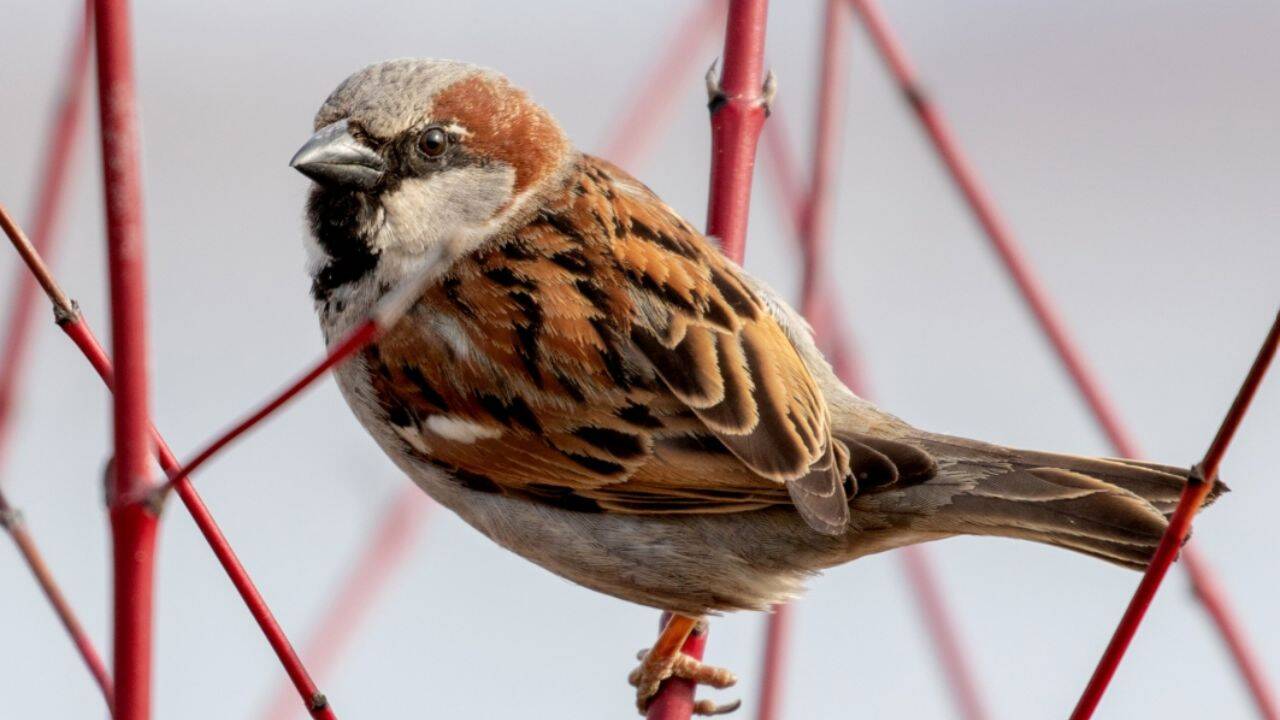
The Ecological Hubris of the Acclimatization Societies
In 1867, the Canterbury Acclimatization Society released forty house sparrows (Passer domesticus) into the damp, newly modified landscapes of New Zealand. Their explicit mission was pest control. Colonists arriving from Victorian Britain found themselves besieged by caterpillars, aphids, and loopers chewing through their imported cabbages and wheat fields. They believed the familiar bird of the English farmyard would restore the natural balance of home. Fifteen years later, the colony had multiplied into millions. Crops vanished faster than ever. Bounties were issued, arsenic was mixed into grain, and public poisoning campaigns turned the streets and fields of Canterbury into graveyards for the very birds settlers had welcomed with open arms.
This was not an isolated miscalculation. It was part of a global wave of ecological engineering driven by homesick bureaucrats who mistook familiarity for harmony.
Acclimatization societies operated across the British Empire with absolute conviction. They viewed the native flora and fauna of colonized lands as blank slates waiting to be improved. New Zealand, isolated for millions of years, possessed fragile ecosystems wholly unprepared for aggressive, generalist competitors from the Eurasian continent. The house sparrow arrived alongside blackbirds, thrushes, stoats, and rabbits, all drafted into an imperial project of biological homogenization.
The rationale seemed sound on paper. Why suffer crop failures when the machinery of British agriculture could simply be transplanted? But ecosystems do not function as static ledgers of pest and predator. They are complex webs of evolutionary relationships.
The Mechanics of an Explosion
House sparrows possess biological traits that make them peerless urban and agricultural opportunists. They are generalist omnivores, capable of shifting seamlessly from weed seeds to grain to human refuse. They breed multiple times a year, construct bulky nests in protected crevices, and exhibit remarkable behavioral plasticity.
When forty sparrows landed in Canterbury, they encountered an environment rich in newly plowed grain fields and entirely devoid of specialized predators. Native falcons and owls were unaccustomed to targeting small, flocking passerines adapted to human environments. Furthermore, the local insect populations offered a protein buffet for nestlings without the co-evolved defensive mechanisms found in European insect species.
Population growth did not follow a gentle curve. It exploded exponentially.
Within a decade, reports from farmers changed dramatically. The insects were still present, but the sparrows had discovered a far more abundant and reliable food source: ripening cereal crops. Flocks numbering in the thousands descended upon oat and wheat fields. Farmers watched entire harvests stripped bare before the scythe could touch them.
The irony was bitter. The organism imported to protect the harvest had become the primary threat to food security.
Settlers who once celebrated the familiar chirping of English birds in the morning air now cursed their persistence. Local newspapers shifted tone from pastoral poetry to frantic calls for eradication. The acclimatization societies, once lauded as visionaries, faced fierce backlash from the agrarian community.
From Protection to Poison
Public sentiment dissolved into outright warfare by the late 1870s. Local government bodies and agricultural associations abandoned restraint and turned to chemical warfare.
Poisoning campaigns became organized civic events. Municipalities purchased strychnine and arsenic in bulk, distributing treated wheat and pollard to farmers and urban householders alike. Municipal employees and volunteers scattered poisoned grain through public squares, farmyards, and hedgerows.
The collateral damage was severe. Native insectivores, ground-feeding birds, and domestic animals ingested the bait. Carcasses littered the Canterbury plains. Yet, despite the slaughter of millions of sparrows, the population barely dented. The surviving birds simply adjusted, developing behavioral aversions to poisoned baits while continuing their steady consumption of grain.
This desperate pivot from introduction to extermination exposes a fundamental flaw in historical resource management. Bureaucrats consistently underestimated the resilience of generalist species while overestimating their own capacity to control biological systems once unleashed.
The sparrow crisis forced a painful reckoning among colonial scientists. Pioneers of early conservation biology began to warn that altering an ecosystem was irreversible. Walter Lawry Buller, a prominent New Zealand ornithologist, documented the rapid displacement of native species as introduced birds claimed nesting sites and food sources. The warning came too late for many endemic species, which began their irreversible decline into rarity or extinction.
The Modern Echo of Victorian Hubris
We look back at the Victorian obsession with acclimatization with a sense of detached superiority. We chuckle at the naivety of men releasing sparrows to manage caterpillars. Yet, modern ecological management repeats these exact patterns with alarming frequency.
Consider the introduction of cane toads to Australia, Nile perch to Lake Victoria, or kudzu to the American South. Each instance stems from the same core failure: treating a complex living system as a mechanical problem with a single-variable solution.
The house sparrow remains a permanent fixture of the New Zealand landscape today. The poisoning campaigns failed to eradicate them, and the species successfully adapted to every corner of the islands, from urban alleyways to high-country sheep stations. They found their ecological level after decades of brutal attrition, settling into a tense coexistence with human agriculture.
We still struggle with the temptation of the silver bullet. When faced with invasive pests or failing yields, our first instinct remains intervention through introduction. We seek shortcuts through biology, deploying biological controls without accounting for unintended evolutionary pathways.
The story of Canterbury's sparrows is not merely an entertaining historical anecdote about misguided Victorians. It is a persistent warning. Nature does not yield to administrative decree. When we introduce organisms to fix a localized imbalance, we do not command the ecosystem. We merely unleash forces we cannot predict, cannot control, and ultimately cannot recall.