The wind off Lake Huron carries a specific kind of chill, even when May is supposed to be turning into summer. If you stand on the porch of the Grand Hotel on Mackinac Island, looking out over the water where the ferry boats churn the strait into a white foam, you can feel the isolation of the American Midwest. It is a place that feeds the country, builds its cars, and decides its presidents, yet it often feels entirely detached from the coastal rooms where power is brokered.
Inside the hotel, the air smells of old cedar and expensive coffee. Politicians, donors, and corporate strategy teams are crowded into the annual policy conference, their voices rising in a collective hum of ambition. They are searching for a savior. Specifically, they are looking for a fifty-four-year-old woman in a sharp blazer who knows how to talk to auto workers without sounding like she is reading from a focus-group script.
Then, she walks to a microphone and vanishes.
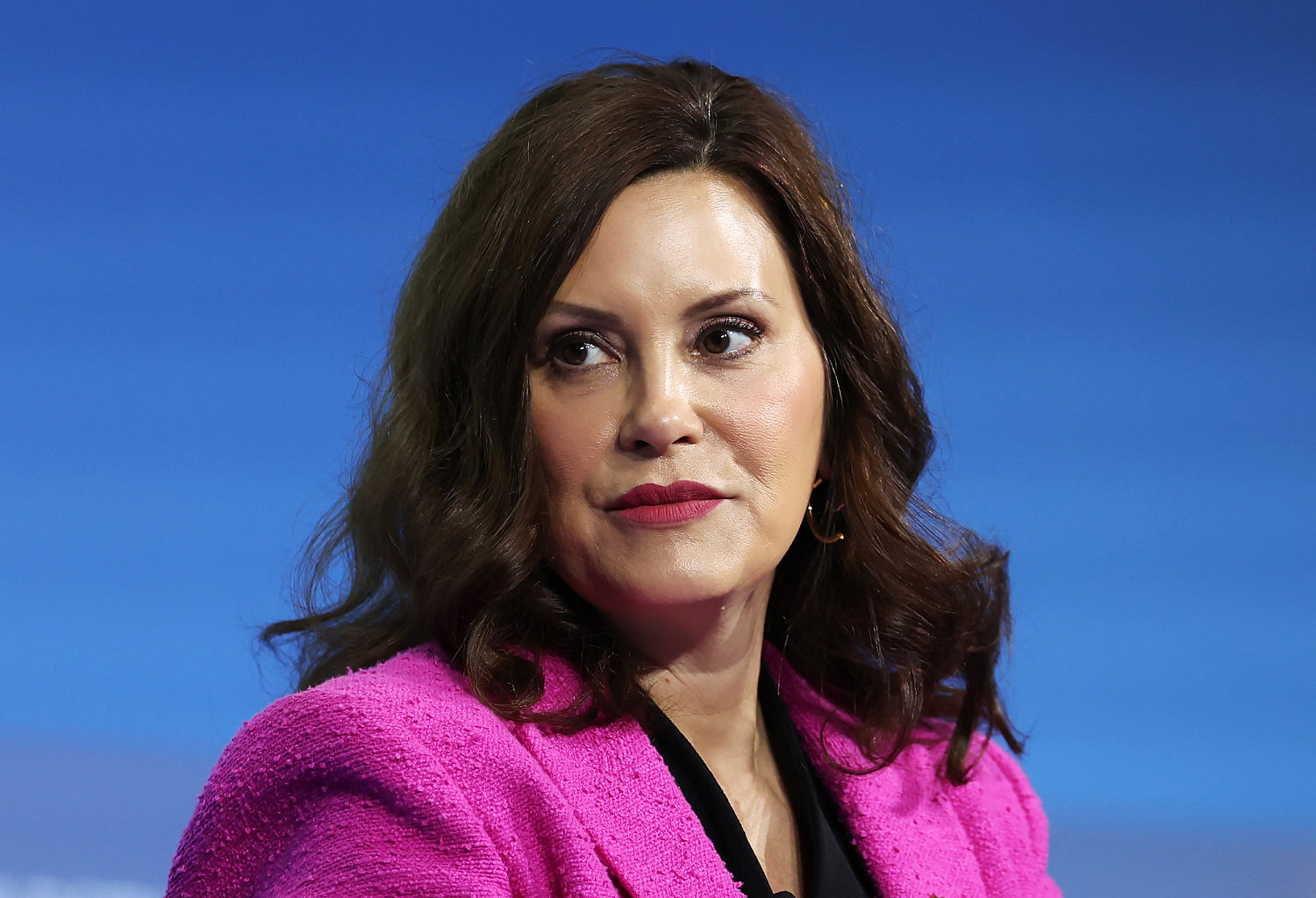
Gretchen Whitmer, the two-term governor of Michigan who became a household name by trading blows with Donald Trump and building a formidable political operation in one of America's fiercest swing states, has just broken a thousand hearts in a local television interview.
"There will be a group of people running for president," she tells a reporter from Fox 2 Detroit. Her expression is calm, almost breezy. "I will not be one of them in 2028. I can tell you that."
The reaction among the assembled Democrats in the room is not a loud gasp, but a quiet deflation. It is the sound of air escaping a balloon that had been carefully inflated over four years of strategic maneuvers, national speeches, and late-night organizing.
To understand why this matters, you have to look past the standard political theater. You have to look at the math of survival in modern America.
The political class is obsessed with a very specific archetype: the Midwestern consensus builder who can survive a red wave. For years, Whitmer was the living proof that a Democrat could not only survive in the Rust Belt but govern with an iron fist wrapped in a velvet glove. She won her elections by comfortable margins in a state that Donald Trump carried twice. She navigated a high-profile kidnapping plot against her own life, a pandemic that turned her into a national lightning rod, and a legislative body that often felt like a combat zone.
When she secured a Democratic "trifecta" in Michigan, she used it to codify abortion rights and expand union protections. Yet, just a year later, she was sitting in the Oval Office, finding common ground with Trump on industrial policy, hiding her face behind a stack of folders in a photo that launched a thousand memes. She understood that in Michigan, you do not get the luxury of pure ideological isolation. You have to live with your neighbors.
That is why her exit from the 2028 imaginary primary is a seismic event for voters who feel increasingly alienated by Washington's elite.
Consider the alternative. The 2028 Democratic primary is already shaping up to be an exhausting, multi-billion-dollar cage match featuring coastal titans like California’s Gavin Newsom, Pennsylvania’s Josh Shapiro, and Illinois’s JB Pritzker, alongside familiar Washington fixtures like Pete Buttigieg. These are candidates who speak the language of cable news. They understand the rhythm of the modern media cycle, where every tweet is an act of war and every interview is a calculated risk.
Whitmer offered something different: a lack of pretense that felt almost radical. She was "Big Gretch," the governor who wore a leather jacket and drank local beer while talking about "fixing the damn roads."
Now, that option is gone.
Her departure leaves a vacuum that exposes the deepest anxiety within her party: can a national campaign be run on practical, state-level results, or has the American presidency become an institution so toxic that the most qualified people simply refuse to touch it?
Back on Mackinac Island, the whispers begin almost immediately. Political junkies know the history. They remember a young senator named Barack Obama promising he wouldn't run in 2008, only to launch a campaign that changed history. They remember Elizabeth Warren swearing off a bid before diving into the primary waters. In American politics, a "no" is often just a "not right now," a tactical pause designed to lower a candidate's profile while the front-runners tear each other apart.
But listen closely to what Whitmer said next, away from the definitive headline. She admitted she had been seeking counsel from people who had left the arena. She talked to Gina Raimondo. She talked to Paul Ryan, the former Republican House Speaker who walked away from Washington at the height of his influence to reclaim his life.
"That's the advice everyone says," Whitmer mused, her voice dropping slightly. "Take a little bit of time, and so that's what I'm going to do."
There is a profound human exhaustion in that statement. Imagine spending a decade under the relentless glare of twenty-four-hour news cycles, receiving death threats that require a constant security detail, and carrying the weight of millions of citizens through an era of unprecedented national fracture. Whitmer is fifty-four. She has spent her adult life in the service of public institutions that are increasingly brittle and hostile.
Perhaps the real story here is not that a top-tier candidate is playing a clever game of political chess. Perhaps the story is that a sane, successful leader looked at the highest office in the world, weighed the cost to her soul, and decided that there are better ways to live a life.
As the ferry boat pulls away from the island, leaving the Grand Hotel behind in the mist, the water remains choppy and unpredictable. The race for 2028 will go on, louder and more expensive than ever before. But it will happen without the woman from Michigan, leaving an empty space where a different kind of politics used to be.