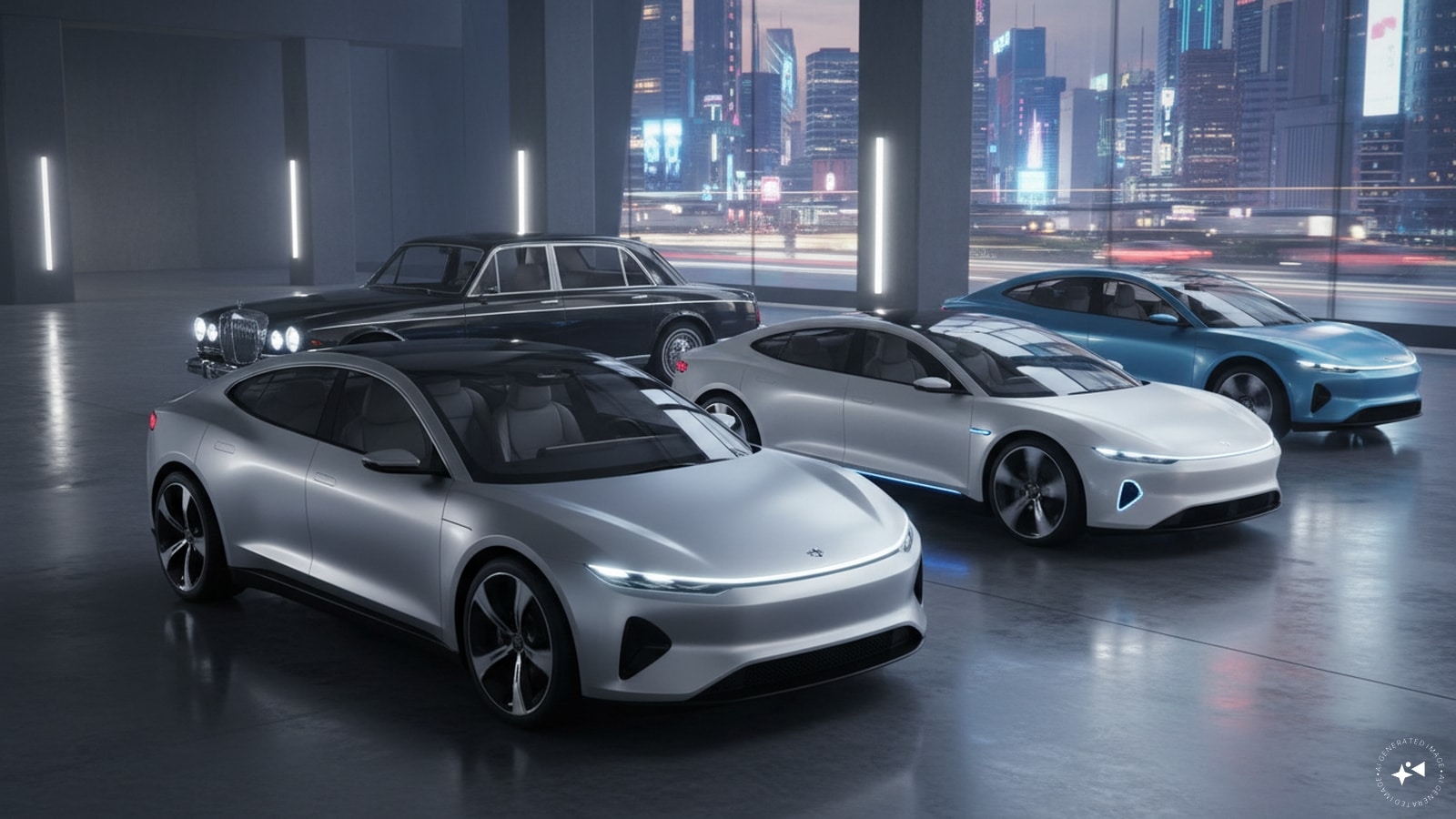
The Smell of Leather and the Hum of a New Era
In Wolfsburg, Germany, the air carries a distinct scent. It is a dry mixture of warm oil, fresh rubber, and polished steel that has defined the heart of European industry for nearly a century. For decades, this smell represented an unchallenged truth: if you wanted prestige, engineering perfection, and a status symbol that commanded respect from Munich to Beijing, you bought a German car.
Then came a single year that shattered the quiet confidence of the industrial heartland.
German vehicle exports to China plummeted by a staggering 25 percent. Quarter after quarter, shipping yards that once bustled with rows of freshly minted sedans and crossovers stood noticeably quieter. The sea lanes connecting the ports of Northern Europe to Shanghai used to carry the crown jewels of Western manufacturing. Now, those cargo ships return light, carrying a message that executives in Stuttgart and Munich were slow to read.
The era of German dominance in the world’s largest auto market has hit an unmistakable wall.
A Tale of Two Drivers
To understand how a quarter of an export market vanishes in the span of twelve months, consider two drivers sitting in traffic thousands of miles apart. (The following scenarios represent typical consumer experiences in both markets today).
In Frankfurt, Hans sits behind the wheel of a brand-new combustion sedan. He appreciates the heavy thud of the door as it shuts. He respects the tight suspension and the meticulous stitching on the leather dashboard. For Hans, the car is an engineering masterpiece designed to cruise at high speeds on the open highway. The dashboard features tactile buttons, a solid dial, and a modest digital display that tells him what he needs to know: speed, fuel, and route.
Now, shift perspective to Shanghai.
In Shanghai, Wei is thirty-two years old and standing in a well-lit showroom inside a bustling shopping mall. He is not looking at mechanical horsepower or cylinder count. He is looking at a high-tech sanctuary on wheels built by a local Chinese brand like BYD or NIO.
When Wei sits in the driver’s seat, the car recognizes his face. The dashboard is a sleek, glass panel running from door to door. With a simple voice command, the car adjusts the ambient lighting, sets the interior temperature, and pulls up his favorite streaming playlist. The car is fully integrated with his smartphone ecosystem, his home automation system, and his daily digital life.
When Wei looks at the German luxury sedan parked down the street, he does not see a status symbol. He sees an expensive, mechanical relic from his parents’ generation.
The Silent Shift Beneath the Hood
For decades, the competitive moat around German automakers was built on the internal combustion engine.
Designing a smooth, quiet, reliable V6 or V8 engine requires a century of metallurgical knowledge, precise tolerance engineering, and complex transmission tuning. You could not simply copy a Porsche engine overnight; it took generations of specialized craft. That technical wall kept competitors at bay for over fifty years.
Electric vehicles erased that wall overnight.
An electric drivetrain is fundamentally simpler than an internal combustion engine. The battleground shifted from mechanical complexity to software integration, battery chemistry, and digital user interface. Suddenly, the deep expertise that made German engineering legendary became less relevant to a new generation of buyers.
Chinese automakers realized this transition early. While European legacy brands were perfecting diesel efficiency and refining exhaust notes, domestic companies in Shenzhen and Hangzhou were pouring billions into lithium-ion battery supply chains, software architectures, and smart cockpit features.
When the electric transition gathered speed, Chinese domestic brands were not trying to catch up to German standards. They were playing a completely different sport.
       TRADITIONAL GERMAN VALUE            MODERN CHINESE VALUE
  ┌────────────────────────────────┐  ┌────────────────────────────────┐
  │  Mechanical Perfection         │  │  Digital Integration           │
  │  Precision Engine Tuning       │  │  Battery & Software Tech       │
  │  Status & Legacy Heritage      │  │  In-Cabin Entertainment        │
  │  High-Speed Highway Dynamics   │  │  Smart Ecosystem Connectivity  │
  └────────────────────────────────┘  └────────────────────────────────┘
Why the Deficit Is Real
The numbers tell a story that goes beyond simple market fluctuation.
- A 25 Percent Export Drop: The volume of vehicles shipped from Germany directly to Chinese ports fell by a quarter within a single calendar year, signaling a rapid shift in consumer demand.
- Domestic Market Dominance: Chinese brands now account for over half of all passenger vehicles sold within China, up from less than 40 percent just a few years ago.
- Price Parity and Value: Local automakers offer feature-rich electric vehicles at price points significantly lower than imported European alternatives, striking at the mid-tier and luxury segments simultaneously.
It is easy to blame global supply chain friction or shifting trade regulations for these figures. But doing so misses the point entirely. The drop in exports is not a temporary logistical hiccup. It is a structural shift in what consumers value.
Inside the Software Gap
Sitting inside a classic European luxury car, you feel the weight of history. The steering wheel offers feedback from the pavement. The brakes bite with confidence. But press a button on the infotainment system, and the illusion of perfection begins to wobble.
Menus can be slow to respond. Maps often feel clunky compared to the phone in your pocket. Updating the vehicle’s software used to require an appointment at a local dealership.
Now step inside a modern Chinese EV.
Over-the-air updates happen overnight while you sleep. New features, improved battery management algorithms, and fresh entertainment apps appear automatically on your screen, much like an update on a smartphone. The car feels alive, constantly improving rather than slowly aging from the day you drive it off the lot.
For a generation raised on instant digital feedback, the choice becomes remarkably simple.
"A vehicle is no longer just a tool to travel from point A to point B. It has become an extension of the personal digital environment, a living room on wheels where software experience matters as much as horsepower."
The Pressure Spills Over
The impact of this 25 percent drop extends far beyond corporate earnings calls in Europe.
In towns across Germany, sub-tier suppliers—the family-owned businesses that manufacture specialized valves, pistons, gearboxes, and exhaust systems—are feeling the chill. These smaller manufacturers form the backbone of the European industrial economy. When assembly lines in Germany slow down their output destined for East Asia, the ripple effect reaches deep into small communities that have relied on auto manufacturing for generations.
At the same time, Chinese automakers are no longer content with simply winning their home market. Armed with lower production costs, mature battery supply chains, and advanced software, brands like BYD, MG, and NIO are shipping their own vehicles to European shores.
The tables have turned completely. The teacher is now facing competition from the student on home turf.
What Happens When Heritage Isn't Enough?
There is a deep lesson in this industrial realignment.
Heritage is a powerful asset, but it can easily become a anchor if it prevents adaptation. For decades, the badge on the hood carried enough weight to close any sale. A three-pointed star or a blue-and-white propeller symbolized achievement across every continent.
Today, prestige is being redefined. For millions of buyers, a vehicle that cannot communicate with their smart home or update its software seamlessly is simply not modern, regardless of the brand legacy attached to the grille.
The German automotive industry is not standing still. Millions are being redirected into software research, battery factories, and fresh design languages. Massive investments are underway to bridge the gap and win back lost ground.
But speed is the ultimate currency in this new race. Building a great software architecture requires a totally different organizational rhythm than building a great mechanical engine.
The Road Ahead
The empty spaces on those cargo ships returning from Asian ports represent more than lost revenue. They represent a fundamental question hanging over the global economy: Can traditional industrial giants reinvent themselves fast enough to match the pace of modern software innovation?
Back in Wolfsburg, the factory lines continue to move. The smell of oil and steel remains. But the silence in the export yards speaks louder than any engine roar ever could.
The road ahead is no longer paved purely with iron and horsepower. It is written in code, powered by lithium, and driven by those who move fastest when the world changes direction.