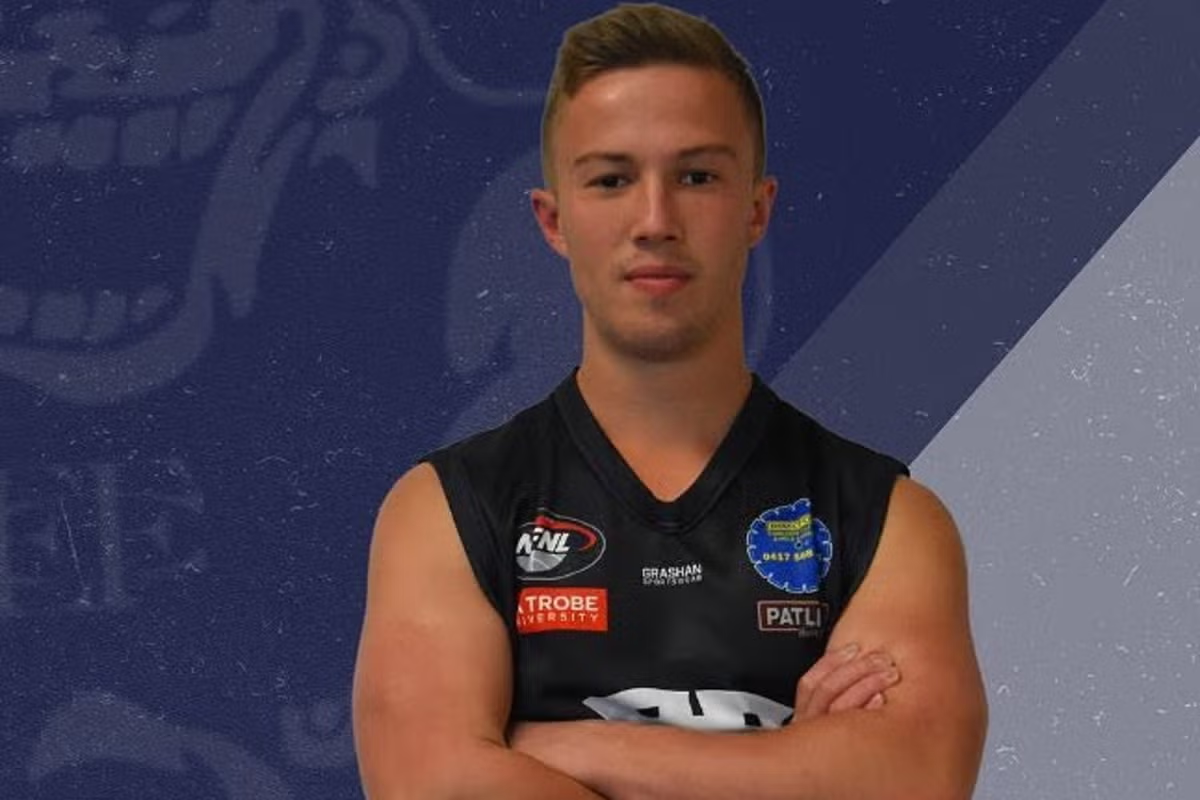
When a routine weekend head clash on a local football oval results in an amateur player fighting for their life in palliative care, the entire structure of community sport faces a profound moral reckoning. This is no longer an isolated tragedy or an unpredictable freak accident. It is the predictable consequence of an amateur sporting ecosystem that mimics the high-impact collision metrics of professional leagues without inheriting any of their medical safeguards. For decades, community clubs have operated under the assumption that severe brain trauma only happens to the elite, leaving local athletes dangerously exposed to catastrophic neurological outcomes.
The stark reality of grassroots contact sports is defined by a massive gap in resources. On any given Saturday, thousands of suburban and rural athletes take the field in leagues that lack independent medical spotters, baseline neurological testing, or mandatory on-site paramedics. While elite professional competitions like the AFL implement strict concussion protocols, digital tracking technology, and independent doctors in the grandstands, the amateur game relies on well-meaning volunteers, trainers with basic first-aid certificates, and a cultural mandate to shake off a hard hit.
This structural vulnerability turns an ordinary sporting accident into a life-threatening medical emergency.
The Lethal Disparity Between Professional and Community Care
The illusion that amateur sports are inherently safer because the players are moving slower or hitting with less force is a dangerous myth. Biomechanical studies of head impacts show that an amateur athlete can experience rotational acceleration forces just as severe as those seen in professional matches. The crucial difference lies entirely in the immediate post-injury response.
In a professional stadium, a player showing the slightest sign of motor incoordination or confusion is immediately removed from play by an independent medical officer. They enter a highly structured protocol involving cognitive testing, symptom checklists, and controlled return-to-play phases monitored by sports physicians.
At the community level, the situation is drastically different. A player suffers a heavy knock out on the boundary line, away from the referee's immediate field of vision. The club trainer, who may be a parent or a former player with minimal medical training, assesses the athlete on the sideline. Without access to objective diagnostic tools or independent oversight, the decision to let a player return to the field often relies on the athlete's own self-reporting.
Athletes are notoriously unreliable narrators of their own health. The desire to win, the pressure from teammates, and the adrenaline of competition frequently drive players to conceal their symptoms. When a brain that has already sustained an initial, undetected trauma is subjected to a secondary impact, the consequences can be fatal. This phenomenon, known as second-impact syndrome, causes rapid and catastrophic brain swelling. It can turn a seemingly normal head clash into a medical catastrophe within minutes.
The Financial and Legal Black Hole of Grassroots Insurance
Beyond the immediate medical crisis lies a devastating financial reality that few amateur players understand until it is too late. Most community sporting clubs operate under blanket insurance policies provided by their state governing bodies. These policies are designed to cover basic fractures, dental work, and minor physiotherapy. They are utterly unequipped to handle permanent neurological disability or long-term palliative care.
When an elite athlete suffers a career-ending injury, they are backed by worker's compensation, professional player association funds, and lucrative contracts that guarantee financial stability. An amateur player enjoys none of these protections. If a local footballer suffers an acute subdural hematoma or permanent cognitive impairment, they are suddenly cut off from their livelihood.
The financial burden shifts entirely to the player's family and the public healthcare system.
- Income Protection Gaps: Most amateur sports insurance policies offer capped weekly income benefits that expire after a matter of months, leaving families unable to pay mortgages or cover basic living expenses during long-term rehabilitation.
- Capital Sum Limitations: The lump-sum payouts for permanent total disablement in community leagues are frequently a tiny fraction of the actual lifetime cost of specialized neurological care.
- The Legal Liability Trap: As awareness of brain trauma grows, local club committees made up of volunteers face growing legal exposure. If a club fails to enforce basic safety guidelines or permits a concussed player to return to the field, individual volunteers could find themselves entangled in catastrophic personal injury lawsuits.
This financial fragility creates a secondary crisis for families who must navigate the complex, exhausting world of modern neurological rehabilitation without the benefit of institutional backing.
The Cultural Normalization of Brain Damage
To truly understand why these tragedies keep happening, one must examine the entrenched cultural attitudes that govern community sports clubs. For generations, local football clubs have been celebrated as bastions of physical toughness, resilience, and community pride. In these environments, playing through pain is not just encouraged; it is romanticized.
The language used around head injuries in amateur sports reflects this dangerous normalization. Phrases like getting your bell rung, seeing stars, or copping a good knock serve to minimize what is, in reality, a traumatic brain injury. When a community celebrates a player who gets knocked unconscious, wakes up on the sideline, and demands to go back out for the final quarter, it creates a toxic environment where self-preservation is viewed as a weakness.
This cultural pressure is particularly intense in rural and regional towns, where the local football club is the primary social hub and a major source of community identity. In these close-knit environments, a player's social standing is directly tied to their performance and their willingness to sacrifice their body for the team. Overcoming this cultural momentum requires more than just rewriting a rulebook. It demands a fundamental shift in how communities value the long-term cognitive health of their young people over weekend sporting glory.
The Regulatory Failure of Sports Governing Bodies
While national sporting organizations frequently release glossy policy documents outlining their commitment to concussion management, the implementation of these directives at the grassroots level remains fundamentally flawed. There is a vast gulf between a policy written in a corporate boardroom and the chaotic reality of a muddy suburban sports field.
Governing bodies have largely avoided mandating strict, enforceable penalties for community clubs that violate concussion protocols. The enforcement mechanism is virtually nonexistent. Without random audits, mandatory independent medical presence, or severe competitive sanctions for non-compliance, safety guidelines remain largely optional recommendations.
Furthermore, the research funding generated by major sporting codes remains heavily skewed toward elite athletes. Massive grants are poured into studying the brains of retired professionals, while the millions of amateur participants who form the financial backbone of these sports are left out of the equation. This lack of localized data allows administrators to downplay the frequency and severity of brain trauma in community competitions, treating each catastrophic outcome as an unfortunate anomaly rather than a systemic trend.
The current strategy of relying on education campaigns is insufficient. Expecting a volunteer coach or a distracted referee to accurately identify the subtle signs of a minor concussion during a high-stakes match is a recipe for continued failure.
Community sport requires systemic structural reform. This means implementing mandatory, independent medical personnel at every sanctioned match, regardless of the division or age group. If a local league cannot afford to provide adequate medical oversight for a high-contact sport, then that match should not be permitted to take place. The physical and neurological safety of a human being must take precedence over the preservation of an underfunded local sporting tradition.
The era of treating amateur brain trauma as a minor risk of the game is over. Every time a local player is carried off an oval and into an intensive care unit, it exposes the hollow promises of a sporting culture that loves the spectacle of collision but abandons the collateral damage. The path forward requires a brutal acknowledgment of the true cost of contact sports. If the community game is to survive, it must stop treating its players as expendable commodities in pursuit of a weekend win.