The lights under the big top are never just lights. They are suns built by men, focused to a blinding diamond point, designed to strip away the shadows where doubt might hide. When you look up from the front row, you see silhouettes defying physics. You see silk ribbons twisting through the air like liquid smoke. You see bodies that appear to belong to another species, creatures built of pure momentum and absolute control.
Then the music stops.
Gravity does not care about your training. Gravity does not respect the thousands of hours spent hanging by your teeth, the calloused palms, the years of silent sacrifice in gymnasiums smelling of chalk and sweat. Gravity is a patient creditor, and eventually, it collects.
Consider Yannick Rochon. Or rather, consider what happens when a name on a legal filing suddenly turns into a shattered body on a concrete stage.
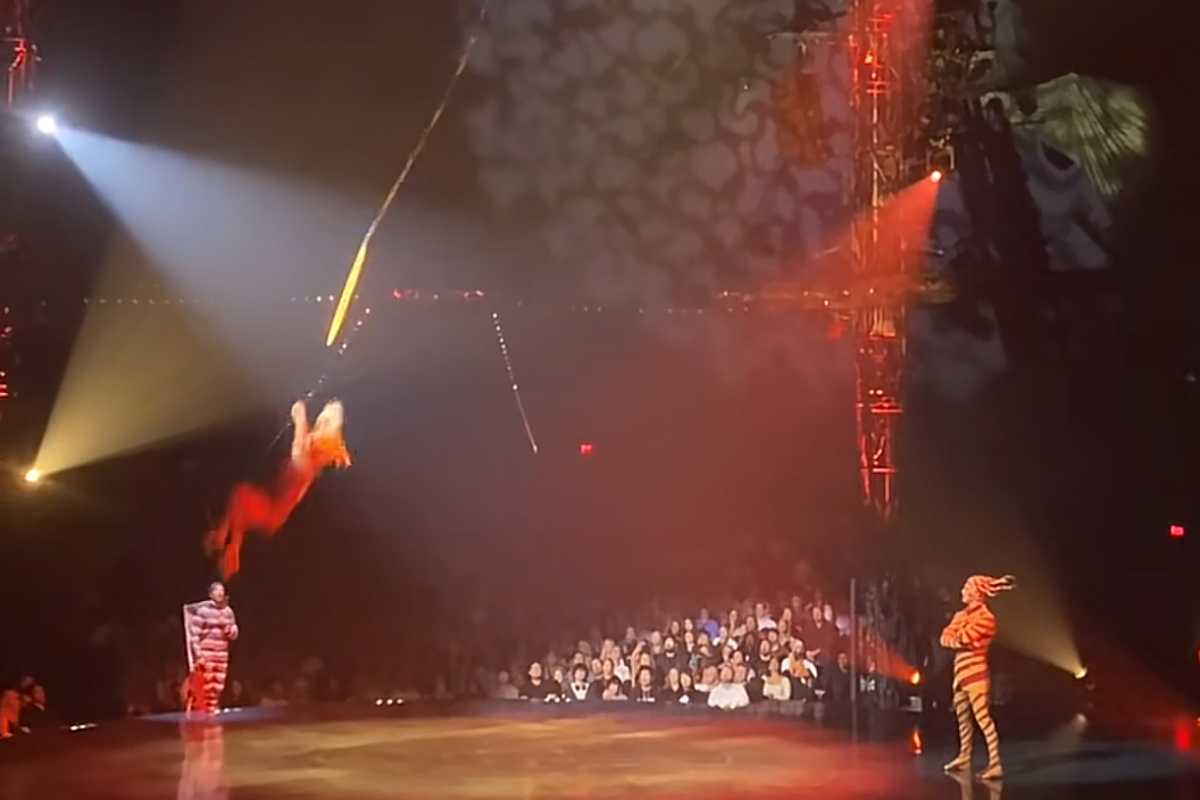
In mathematics, a fall is just an equation of mass and acceleration. But under the dome of a touring spectacle, a fall is a fracture of trust. It is the sudden, violent collision between the poetry of high art and the crude mechanics of a workplace. When Yannick plummeted during a performance of Zarkana in Las Vegas, he did not just drop twenty-five feet through the air. He fell past the illusions of safety that audiences pay to believe in.
Eleven bones. Read that number again. Eleven.
Your collarbone, your ribs, your pelvis, your limbs—they are not mere structural beams. They are the architecture of identity for an acrobat. To break eleven of them simultaneously is to experience a dismantling of the self.
I remember standing backstage at a regional circus years ago, watching a flyer tape her ankles. The ritual was religious in its precision. Pre-wrap, athletic tape, diagonal strips for stability, vertical anchors for security. She looked at me with eyes hollowed out by chronic pain and whispered something that stayed with me ever since: "The audience wants to see the danger, but they never want to see the bill."
The bill arrived in a courtroom, stamped with a sixteen-million-dollar demand.
We look at lawsuits like this through the cold lens of corporate liability. We talk about negligence, safety harnesses, OSHA regulations, and risk assessment waivers. We treat it as a spreadsheet dispute between an injured worker and a multinational entertainment conglomerate. But numbers like sixteen million dollars are just proxy wars for something deeper. They are attempts to quantify the unquantifiable.
How do you price the end of a dream? How do you calculate the exact financial equivalent of an artist looking up at a rig they can no longer touch, knowing the body that betrayed them is the only home they will ever have?
In the official reports, the incident is dry. A malfunction. A rope that failed or a grip that slipped. The legal briefs mention equipment failure and inadequate safety protocols. But behind the legal prose lies a starker truth about the modern entertainment machine. These productions run like industrial assembly lines disguised as bohemian wonderlands. The show must go on is not just a catchy slogan; it is an economic imperative that treats human flesh as a replaceable spare part.
When you commercialize wonder, you institutionalize risk.
For decades, the public has consumed high-risk physical performance the way Romans consumed the arena. We cheer for the near-miss. We hold our breath during the triple salto, secretly hungry for the thrill of catastrophe, even while our conscious minds pray for safety. Performers know this unspoken bargain better than anyone. They step into the ring knowing that their brilliance is measured by the thinness of the margin between a triumphant landing and a catastrophic impact.
Yet, safety is not supposed to be optional.
The lawsuit filed against Cirque du Soleil is more than a grievance over a broken frame. It is an indictment of an entire industry culture that normalized pain as part of the job description. Acrobats are conditioned from childhood to ignore warning signs. A tweak is just a strain. A strain is just a bad day. You wrap it in tape, swallow an anti-inflammatory, and climb back up the ladder because the alternative is being labeled weak, being replaced by someone younger, hungrier, and just as willing to gamble their spine for applause.
When Yannick hit the stage, that culture of silence cracked wide open.
The sixteen million dollars is not about greed. It is about a structural reckoning. It is a demand that the people who build castles in the air be guaranteed a soft landing when the architecture fails. It says that no amount of artistic grandeur justifies treating human beings like disposable stunt dummies.
Think about the silence that follows a sudden accident under the big top. For a fraction of a second, the orchestra cuts out. The popcorn machine stops humming in the concourse. Ten thousand people hold their breath in unison, suddenly forced to remember that the magic trick relies entirely on mortal bone and sinew.
That silence is where we live now. It is the sound of an industry being forced to look down from the trapeze and reckon with the ground beneath it.
The lights will come up again tonight. The music will swell. Another artist will chalk their hands, look up into the blinding glare of the spotlights, and push off into the empty air. But somewhere beneath the sequins and the greasepaint, the weight of the fall remains, heavy and unyielding, waiting to see who pays next.