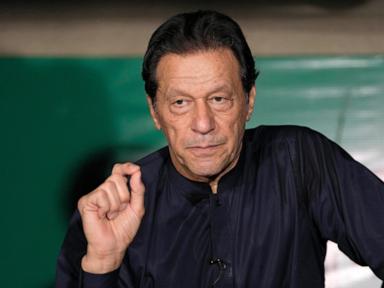
The cell block smells of cold iron and unyielding stone.
In a country where history is written in the shifting loyalties of generals and the roar of restless millions, Adiala Prison stands as a monolithic monument to political gravity. Behind its heavy steel doors sits Imran Khan. Once hailed by a hundred thousand voices echoing across Lahore and Islamabad, he now inhabits a silence broken only by the heavy boots of guards and the quiet ticking of a solitary clock. In similar news, we also covered: The Anatomy of Institutional Failure A Postmortem on the Jason Arday Collapse.
Outside those walls, a nation holds its breath.
To understand what happened when Pakistan’s Supreme Court finally broke its silence and ordered the imprisoned former prime minister rushed to a hospital while granting his family unhindered access, you have to look past the dry language of legal briefs. You have to look at the human cost of polarization. You have to look at what happens when a state corners its most popular icon. The New York Times has analyzed this fascinating topic in great detail.
Rumors are a currency in Rawalpindi. They travel through tea stalls, flicker across encrypted chat groups, and bounce off satellite dishes. In the weeks leading up to the court's directive, the whispers grew frantic. He was fading. He was cut off from the world. His health, tested by months of solitary confinement and the crushing weight of legal battles ranging from corruption charges to state secrets, was deteriorating behind a veil of bureaucratic secrecy.
Imagine sitting in a modest apartment in Karachi or a brick-lined courtyard in Peshawar, watching the evening news. To millions, Khan is not merely a politician who fell from grace. He is an idea. He is the embodiment of an ongoing rebellion against hereditary politics and entrenched dynasties. When word trickled out that his family—his sisters, his loyal aides—were being denied visits, the anxiety curdled into palpable anger. The streets remember. The streets always remember.
Then came the intervention.
The Supreme Court of Pakistan, navigating a labyrinthine political landscape fraught with tension between the judiciary, the military establishment, and the civilian government, issued a directive that pierced the bureaucratic fog. The instruction was clear: move the former prime minister to a properly equipped medical facility. Let his family see him.
It was a legal maneuver, yes. But morally, it was an acknowledgment of a terrifying reality. Dead martyrs are infinitely more dangerous to an establishment than living prisoners.
Let me be clear about what this means. This is not a sudden dawn of mercy or a grand reconciliation. Pakistan’s political theater rarely operates on sentimentality. It is a calculated exercise in pressure management. The state apparatus knows that letting a prominent political prisoner slip into severe medical distress under their watch would detonate a powder keg. The judiciary, often accused of bending to the winds of power, stepped in to draw a hard red line.
Consider what happens next. The hospital room becomes a new arena.
When Imran Khan crosses that threshold into a clinical ward—surrounded by monitors, IV drips, and sterile white lights—the dynamics shift entirely. Guards will still stand outside the door. Intelligence officers will vet every visitor. But the optics change. The image of a solitary figure locked away in the dark is replaced by the stark reality of a man enduring the physical toll of a relentless state machinery.
For his supporters, known colloquially as the youth club of digital activists and street-level loyalists, this victory is bittersweet. They cheered the court order, yet their hearts remain heavy. They know that a hospital visit does not equal freedom. It does not erase the dozens of convictions, the disqualified candidacy, or the chilling atmosphere of a clampdown on dissent.
Yet, human nature clings to small mercies. The right of a sister to hold her brother's hand, to check the color of his skin, to hear his voice unfiltered through a lawyer's brief—these are revolutionary acts in a system designed to isolate.
To the outside observer, the saga of Imran Khan can look like a Shakespearean drama played out on a distant stage. But for anyone who has lived through the volatile cycles of Pakistani democracy, it feels intimately familiar. We have seen this script before. We have watched populist leaders rise on waves of nationalist fervor, only to crash against the jagged rocks of the deep state. We have watched constitutions stretched to their breaking points and courts transformed into battlefields.
The danger of our current moment is not just political; it is psychological. When a population loses faith in the neutrality of its institutions, governance ceases to be a social contract. It becomes a permanent state of siege. Every court ruling is scrutinized for hidden motives. Every medical bulletin is dissected for signs of poison or foul play. Trust evaporates.
And that is why the Supreme Court’s order matters. It is a tiny wedge driven into an atmosphere of total distrust. It proves, if only for a fleeting moment, that the system can still be forced to blink.
As the convoy prepares to move him from the grim corridors of Adiala to the antiseptic halls of the hospital, the stakes could not be higher. The nation watches through smartphone screens and television broadcasts, waiting to catch a glimpse of a familiar face behind tinted glass. They want to see if he still has that defiant tilt of the head. They want to know if the fire is still there.
The stone walls of the prison are formidable. The laws are rigid. But history is driven forward by flesh and blood, by the stubborn refusal of human beings to remain silent, and by the fragile, enduring hope that justice—however delayed, however compromised—might still find a way through the door.