Silence has a specific weight. In the deeper recesses of our national repositories, away from the tourists staring at the glass cases, the air grows cold and smells faintly of vinegar and dried glue. It is the scent of paper breaking down over generations.
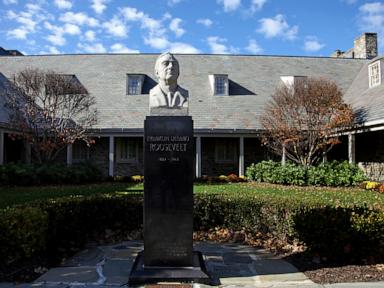
I have spent months chasing the trails left by the people who once held the nuclear codes. I sat in the sun-drenched mountain sanctuary of Ronald Reagan in Simi Valley, watching retirees brush away tears next to the polished hull of a decommissioned Air Force One. I stood in the heavy, damp air of Hyde Park, where Franklin Roosevelt essentially invented the modern American memory industry. We treat these places as civic cathedrals. We flock to them on summer road trips, buying replica campaign buttons and marveling at the jewel-encrusted swords or bizarre porcelain busts that foreign heads of state exchanged like tokens in a high-stakes game. Discover more on a connected topic: this related article.
We assume these structures exist to show us the unvarnished truth of leadership.
We are wrong. They exist to manage it. Additional journalism by TIME explores similar views on this issue.
The traditional presidential library is an uneasy marriage between a public relations firm and a sacred vault. It is an architectural performance designed to make the messy, compromising reality of raw power look inevitable, noble, and clean. But beneath the stone plazas and the carefully scripted exhibitions lies a quiet, perpetual war over who gets to own American history. And right now, that war is changing forever.
The Scrap of Paper in the Barn
To understand why we build these temples, you have to understand how terrified early American leaders were of their own ghosts.
Before the mid-twentieth century, there was no system. When a president left the White House, his files were treated like his personal furniture. They were packed into trunks and hauled away. George Washington hauled his back to Mount Vernon. Some families, desperate to protect a grandfather’s reputation from the prying eyes of muckraking journalists, threw decades of sensitive correspondence straight into the fireplace. Other collections were left to rot in leaky barns, devoured by mice, or chopped up and sold off piece by piece to autograph collectors by cash-strapped heirs.
History was treated as private property.
Consider a hypothetical citizen named Clara. Let us say she is writing a history of her small town, trying to find out why a federal dam project displaced her family in the 1930s. In the old world, Clara would have to beg a former president’s grandson for permission to look through old leather trunks stored in a private cellar. If the grandson didn't like Clara's tone, or if the letters revealed a backroom deal that made the family look bad, the trunk remained locked.
Franklin Roosevelt saw the danger in this, but he also saw an opportunity. In 1939, as the shadows of a second global conflict lengthened, he struck a deal with the public. He would raise private money to build a beautiful stone library on his family estate in New York, and then he would hand the keys and the papers over to the federal government.
The bargain was simple: the president gets to pick the location and build his own monument, and the public gets the raw material of history.
Congress liked the idea so much they turned it into law with the Presidential Libraries Act of 1955. It created a network of archives scattered across the country, run by the National Archives and Records Administration. It is why Herbert Hoover’s records sit in a quiet Iowa town and why Lyndon Johnson’s papers rest inside an imposing, brutalist stone monolith in Austin.
But the true shift did not happen because of a grand vision of openness. It happened because of a crime.
The Vault and the Filter
When Richard Nixon resigned in 1974, he wanted to take his tapes and papers with him. He wanted to retain the right to destroy the very evidence that had brought down his presidency. The public revolted.
Congress stepped in with the Presidential Records Act of 1978, drawing a hard line in the sand. From the moment a president takes the oath of office, every memo, every casual scribble on a legal pad, and every electronic message belongs to the American people. The second the next president is sworn in, the National Archives takes physical and legal custody of those files.
This is where the friction begins.
When you walk through the museum portion of a presidential library, you are walking through a curated autobiography. You see the childhood photos, the triumph of election night, the pen used to sign a historic treaty. You are meant to feel a sense of awe. But if you walk through a separate security door, past the gift shop selling presidential china replicas, you find the reading room.
This is where the real work happens. Here, researchers sit under fluorescent lights, waiting for archivists to wheel out gray, acid-free cardboard boxes.
The documents inside those boxes are not polished. They are chaotic. They contain the frantic, handwritten notes taken during a midnight economic collapse, the arguments between cabinet members who loathed each other, and the intelligence briefings that turned out to be tragically wrong.
Yet, accessing them is an exercise in immense patience. A lone researcher might file a Freedom of Information Act request for files on a decades-old foreign policy decision. Because a small, underfunded staff of federal archivists must read every single page line by line to redact classified secrets or private personal data, that request can sit in a queue for years. The tension is constant: the public has a legal right to know, but the machinery of government moves with agonizing deliberation.
Legacy, you realize quickly, is a deliberate construction project.
The Digital Dissolve
On June 19, 2026, the gates open to the Obama Presidential Center in Chicago.
The physical structure itself is staggering. Rising above Jackson Park on the city’s South Side, it features a soaring museum tower, public plazas, and a branch of the city's public library. But its true significance lies in what is missing.
For the last eighty years, a presidential library meant a building that contained both the public museum and the physical stacks of paper archives. The Obama Center breaks that model entirely.
There are no miles of underground shelves holding paper files here. The millions of emails, digital documents, and physical records from his administration are not coming to Chicago. Instead, the National Archives is keeping the physical papers in an existing federal facility in Maryland, while working to create the first entirely digital presidential library.
The center in Chicago is a private museum operated by a foundation, dedicated to leadership and community action.
This changes the physical experience of history. When everything moves into the cloud, the connection between a specific place and the paper trail of power dissolves. On one hand, it democratization of information means a student in Tokyo or an independent researcher in Montana can theoretically access a digitized memo without buying a plane ticket to Illinois. On the other hand, it separates the monument from the raw evidence.
The physical library becomes pure theater. The museum can tell the story exactly how the authors want it told, untethered from the heavy, dusty presence of the actual boxes downstairs.
The Mirror in the Glass
We go to these places because we want to look power in the eye. We want to see if the people we elected were bigger than us, or if they were just as frightened, small, and compromised as the rest of humanity.
I remember sitting in the Lyndon B. Johnson Library, listening to the audio installations where you can hear his actual phone conversations. You hear him badgering a senator, his voice dropping to a low, menacing growl, using every ounce of leverage he possessed to force a vote on civil rights legislation. It is intimate. It is uncomfortable. It makes your skin crawl, and it makes you understand how the world actually moves.
That is what we lose if we allow these institutions to become mere monuments of celebration.
The true value of a presidential library is not the inspiration it sells in the gift shop. It is the accountability it preserves in the dark. It is the reminder that these leaders were not gods carved into marble; they were temporary employees of a republic, and they left a receipt for every single thing they did.
As the sun sets over the stone plazas of our newest presidential centers, the glass towers reflect the neighborhoods around them. They look beautiful, sleek, and permanent. But the true heart of our history remains buried in the gray cardboard boxes, waiting for someone to clear the dust away and read the words exactly as they were written.