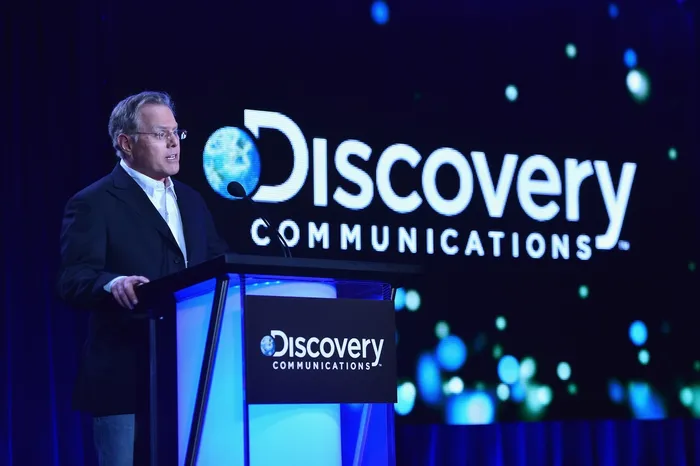
David Zaslav sits at the center of a storm that costs nine figures to navigate.
Most people see a number like $667 million and their brains simply stop processing the data. It is a mathematical abstraction. It is the cost of a fleet of private jets, or the annual GDP of a small island nation, or enough money to fund every public library in a mid-sized state for a decade. But in the hushed, high-ceilinged rooms of Manhattan and Burbank, that number isn't an abstraction. It is a barrier. It is a price tag on a legacy.
This is the story of how the merger of two Hollywood titans—Warner Bros. Discovery and Paramount Global—became less about the future of cinema and more about the staggering cost of saying goodbye to one man.
The Architecture of a Paycheck
To understand how a human being becomes worth two-thirds of a billion dollars in a single transaction, you have to look at the fine print of a contract signed years ago. When Discovery swallowed WarnerMedia, the resulting entity, Warner Bros. Discovery (WBD), wasn't just a collection of Batman movies and Shark Week episodes. It was a vehicle for Zaslav’s specific brand of aggressive consolidation.
His compensation package was built like a fortress. It wasn't just salary. It was a complex web of stock options, performance benchmarks, and "change-of-control" provisions. These provisions are the "break glass in case of emergency" clauses of the corporate world. They ensure that if the company is sold or merged again, the CEO doesn't just walk away—he floats away on a cloud of liquid gold.
Consider a hypothetical mid-level editor at CNN or a lighting technician on a Warner lot. To them, a "bonus" might mean a few thousand dollars and a steady shift. To Zaslav, a "bonus" is triggered by the tectonic shift of multibillion-dollar corporations grinding against one another. If Paramount and WBD finally shake hands, the "change of control" clause in Zaslav's contract ignites.
The $667 million figure isn't a gift. It is a contractual obligation. It is the gravity of a massive object affecting everything around it.
The Ghost of Pipelines Past
Hollywood used to be about the "Greenlight." A mogul would sit in a chair, chew on a cigar—metaphorically or literally—and decide if a story was worth telling. Today, the Greenlight has been replaced by the Spreadsheet.
The industry is currently haunted by the "Streaming Wars," a period of frantic spending where every studio tried to build its own version of Netflix. They spent billions. They went into debt. Now, the bill is due. The proposed merger between WBD and Paramount is an act of survival, a huddling together for warmth in a winter of declining cable subscribers and thinning ad revenue.
But there is a bitter irony at play. While the companies talk about "synergy" and "streamlining," which are polite corporate synonyms for laying off thousands of workers, the man at the top stands to receive a payout that could cover the salaries of those same workers for years.
The optics are not just bad. They are radioactive.
Imagine a ship taking on water. The captain suggests that the best way to save the vessel is to merge it with another sinking ship. But, as part of the deal, the captain requires a life raft made of solid mahogany and stocked with vintage champagne, even if it means throwing more cargo—and crew—overboard to make weight. That is the narrative currently playing out in the trades.
The Invisible Stakes of Consolidation
When we talk about $667 million, we often forget what is being traded for that capital. This isn't just money moving from one bank account to another. This is the consolidation of culture.
If WBD and Paramount merge, a massive chunk of American storytelling falls under a single roof. HBO, CNN, Warner Bros., Paramount Pictures, CBS, MTV, and Nickelodeon—all managed by one philosophy. If that philosophy is driven by the need to service the debt created by these massive payouts and mergers, the "art" side of the business inevitably suffers.
We see it already. Movies are shelved for tax write-offs. Classic archives are scrubbed from streaming services to save on residual payments. The creative blood of the industry is being thinned to pay for the massive skeletal structures of the corporations themselves.
Zaslav has become the face of this tension. He is the man who "saved" Discovery by turning it into a reality TV powerhouse, and he is now the man tasked with "saving" the legacy of the silver screen. But can you save a forest if you are also the one selling the lumber?
The Psychology of the Mega-Deal
Why does the board of directors allow this? Why does any system create a $667 million exit ramp?
The answer lies in the "Indispensable Man" myth. Corporate boards become convinced that a single executive holds the secret sauce, the specific vision required to navigate a crisis. They tie that executive to the company with golden chains. The problem is that those chains are just as heavy for the company as they are for the man.
Once the contract is signed, the board is locked in. If they want to pivot, if they want to merge, if they want to change direction, they have to pay the toll. Zaslav is the toll collector on the road to the future of media.
The $667 million isn't just a reward for success. In many ways, it is a penalty for the company's own desire for a savior. They wanted a leader who could make the hard choices, and now they are discovering that the hardest choice might be paying him to leave.
The Quiet Room in Burbank
Picture the scene. It’s late. The janitorial staff is moving through the lower floors of the Warner Bros. water tower office. On the top floor, lawyers are squinting at Paragraph 14, Subsection C. They are calculating the strike price of options. They are looking at the 2026 horizon.
They aren't talking about the next Succession or the next Top Gun. They are talking about "accelerated vesting."
The disparity between the people who make the content—the writers, the directors, the actors—and the people who move the pieces on the board has never been wider. The recent strikes in Hollywood were a tremor; the $667 million payout is the earthquake that follows. It validates every fear held by the creative class: that the business of show business has finally eaten the "show" part.
There is a specific kind of silence that follows a number that large. It’s the sound of a system reaching its absolute limit. When one person can extract the value of thousands of careers in a single deal, the "team" aspect of filmmaking vanishes. It becomes a hierarchy of one.
The merger may or may not happen. Regulators are watching. Shareholders are grumbling. But the fact that the number exists—that it was even calculated and put into a filing—changes the atmosphere in Hollywood. It turns the "Dream Factory" into a "Debt Factory."
David Zaslav will be fine. Whether he runs a combined Paramount-WBD empire or retires to a private estate with a bank balance that looks like a high score in a video game, his story has a guaranteed happy ending. The rest of the industry—the people who actually turn on the lights and write the lines—are still waiting to see if they’re even in the credits.
The light is fading on the old studio system, and as the sun sets, it casts a very long, very expensive shadow.
Everything is for sale, but only a few people are getting rich off the liquidations. The cost of doing business has become the cost of ending it.
The mahogany life raft is ready. The ship is still taking on water. And the captain is checking his watch, waiting for the precisely calculated moment to jump.