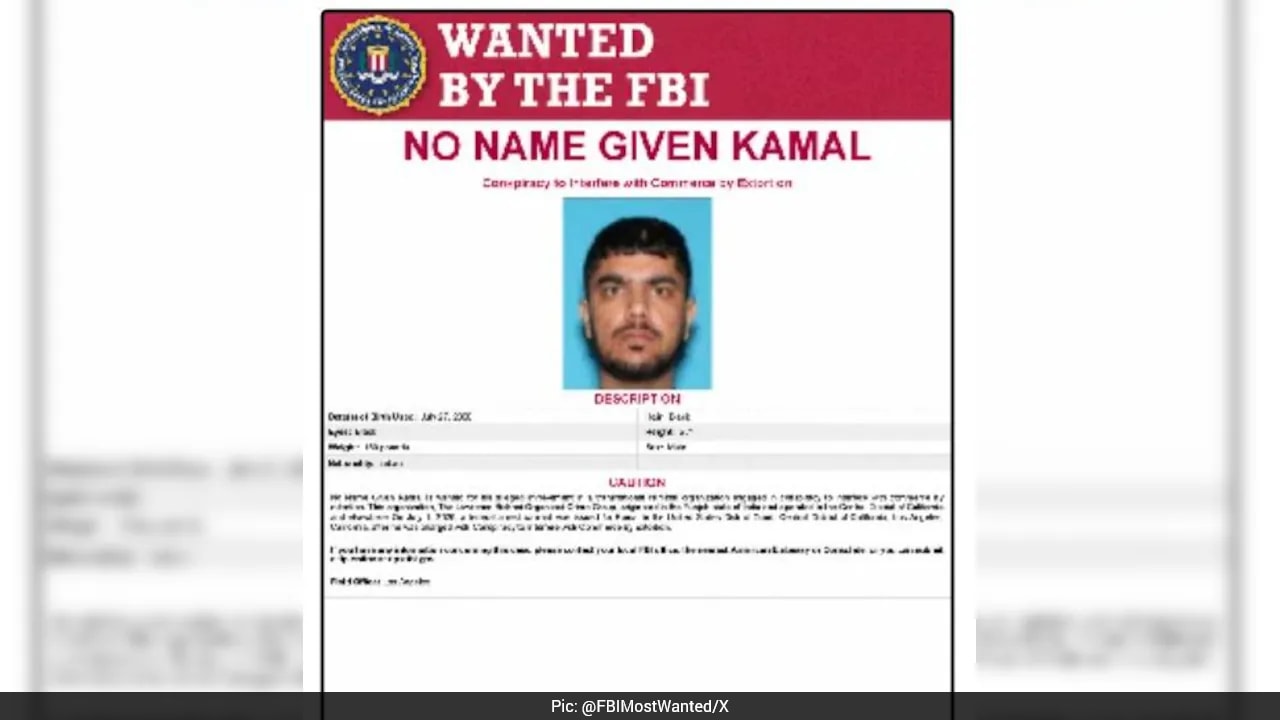
The screen flickers in a quiet office in Washington, casting a pale blue glow across desks stacked with case files. To the casual observer, it is just another notice on a federal database. A face. A name. A set of charges that bridge continents in the blink of an eye.
Anmol Bishnoi.
The name sounds ordinary enough to anyone unacquainted with the heavy machinery of modern transnational crime. But drop that name into the humid air of northern India, or whisper it through the encrypted chat rooms of international syndicates, and the temperature changes. Federal authorities did not place an Indian national on the FBI most wanted list by accident. They did it because the modern mafia does not wear pinstripes or operate out of smoky back rooms in Chicago. It works via Wi-Fi routers, burner phones, and loyalty forged in the crucible of local prison yards, stretching its long arms across oceans with terrifying ease.
Consider what happens next. A shot rings out in a quiet suburban neighborhood thousands of miles away from the dusty roads of Punjab. A celebrity's home is peppered with bullets. Extortion demands follow, sent not by a messenger dropped in the night, but through digital pings that bounce from Mumbai to North America. The borders on our maps suggest that what happens in one country stays in that country. The underworld laughs at our maps.
To understand how a domestic gang from a small town in India commands the attention of global law enforcement, we have to look past the sensational headlines and examine the architecture of fear.
The Blueprint of an Empire
For years, local law enforcement treated criminal organizations like the Lawrence Bishnoi gang as localized nuisances—extortionists shaking off shopkeepers, muscle-for-hire in regional turf wars. That was a fatal miscalculation. Criminal syndicates evolve the way invasive species do, adapting to the local climate until they dominate the entire ecosystem.
Take a hypothetical small-business owner in a bustling Punjabi market. He receives a phone call. The voice on the other end is calm, almost conversational. The caller does not need to raise his voice because he rattles off the exact daily routine of the owner's children. He knows the name of the school. He knows the color of the uniform. That is not just extortion. That is psychological dominance.
Now, multiply that by thousands. Money flows in. Not in heavy sacks of cash, but through a complex web of cryptocurrency, hawala networks, and front companies registered in tax havens. The capital feeds a sprawling network that stretches from the cell blocks of Indian prisons to the leafy suburbs of Western democracies.
When the Lawrence Bishnoi syndicate allegedly ordered high-profile hits and orchestrated brazen daytime shootings targeting actors, politicians, and businessmen, they were not just settling local scores. They were broadcasting a message. They were proving that distance is no longer a shield.
The Transnational Web
Federal investigators in the United States and Canada did not wake up one morning and decide to target figures connected to this network on a whim. They were forced to look up because the violence had crossed their borders.
The mechanics of this expansion are chillingly modern. A young man sits in a rental car in a Western metropolis, carrying out a contract issued by a boss sitting thousands of miles away, who in turn is directing operations from behind high-security prison walls using smuggled smartphones. The prison cell is no longer a cage; it is a command center.
This is the terrifying reality of modern organized crime. It is decentralized, fluid, and entirely unbound by geography. When an individual like Anmol Bishnoi finds himself hunted by global agencies, it marks a turning point. It signifies that the net is tightening around the financial pipelines that keep these syndicates alive. Law enforcement is no longer just chasing the trigger-puller in the alleyway. They are hunting the architects of the supply chain.
The Cost of Silence
We like to think that criminal syndicates operate in a vacuum, that their wars affect only those who choose to dance with them. History proves us wrong every single time.
When extortion becomes a routine tax levied on ordinary commerce, the price of everything goes up. When public safety is bartered for silence, the civic fabric tears just a little bit more. The gangster sitting in a distant safehouse relies entirely on one human failing: our collective willingness to look away until the smoke reaches our own doorstep.
The blue-lit office in Washington will keep processing the files. The servers will hum. Somewhere in the world, another encrypted message will ping across a screen. But behind every pixelated mugshot on a federal database is a human trail of broken lives, terrified families, and a system desperately racing to catch up to criminals who learned how to weaponize the modern world before the world even realized it was at war.
The phone rings in the dark. Someone has to answer.