The ink on a treaty is surprisingly fragile. It sits on parchment, shielded by glass cases in climate-controlled rooms, looking permanent. But in the drafty corridors of Washington and the sterile, modern offices of the Netherlands, that ink is currently being subjected to a severe chemical burn.
For decades, the International Criminal Court stood as a secular temple. Built of glass and light on the windswept coast of The Hague, its creators designed it to be transparent. The architecture itself was a promise: no more secret deals, no more sovereign immunity for the worst atrocities known to humanity. It was supposed to be the ultimate safety net for a fractured world.
Now, a powerful political storm is gathering across the Atlantic, aiming directly at those glass walls.
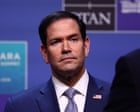
Senator Marco Rubio has stepped to the podium with a hammer. By launching a aggressive legislative campaign to dismantle the influence of the court, he has reopened a foundational debate about who actually rules the world. It is not just a policy dispute. It is a fundamental clash between two entirely different ideas of human survival.
The Clerk and the Senator
Consider a hypothetical young lawyer named Elena. She sits in a small, windowless office in The Hague, surrounded by thousands of pages of testimonies translated from Dari, Ukrainian, and Acholi. Her eyes ache. For her, the court is not an abstract concept. It is a slow, agonizing process of transcribing the voices of people who have been erased by history. She believes, with a quiet and desperate fervor, that if the world does not have a single, universal bench of justice, then power is the only law that matters.
Three thousand miles away, the view is entirely different.
To Marco Rubio, looking out over the manicured lawns of Capitol Hill, the view from Elena's window is not a temple of justice. It is a trap. It is an unaccountable committee of foreign judges, answers to no electorate, claiming the right to put American soldiers, commanders, and allies in the dock. To Rubio, the ultimate defender of human rights is not a multinational panel in Europe; it is the sovereign power of the United States.
The spark that lit this current fire was the court's decision to pursue arrest warrants for leaders of nations allied with the West. For Washington, this was the crossing of a red line. It transformed the court from a distant, somewhat ineffective body into an active threat to national sovereignty.
Rubio’s legislative push aims to cut off the oxygen. The proposed measures do not just criticize the court; they seek to isolate it. Under the proposed framework, any foreign national assisting the court in investigating US personnel or allies would face severe financial sanctions and travel bans. The goal is simple: make the cost of cooperating with international justice so high that the machinery of the court grinds to a halt.
The Ghost of Nuremberg
To understand how we arrived at this cliff, we have to look backward.
In 1945, amidst the smoking ruins of Germany, the victorious Allies did something unprecedented. Instead of lining up the defeated leaders against a wall, they built a courtroom. The Nuremberg trials established a terrifying, beautiful principle: individuals can be held accountable for crimes against humanity, even if those crimes were legal under their own national laws at the time.
For fifty years, that principle floated as a moral ideal. Then, in 1998, a group of diplomats gathered in Italy to sign the Rome Statute, officially creating the International Criminal Court.
But the United States always hesitated.
Washington watched the birth of the court with a mixture of hope and deep anxiety. President Bill Clinton signed the treaty but never sent it to the Senate for ratification. President George W. Bush went a step further, actively unsigning it. The American objection has always been rooted in a deep-seated constitutional belief: no American citizen should ever be subjected to a court that does not answer to the US Constitution.
This is the tension at the heart of Rubio's campaign. It is an old American skepticism, refined and weaponized for a new era of global instability.
The Friction of Sovereignty
How do you explain the concept of jurisdiction to someone whose life has been upended by conflict?
Let us use a simple analogy. Imagine a neighborhood where every homeowner agrees to keep their property clean. One day, a homeowner begins dumping toxic waste in their backyard, poisoning the shared groundwater. The neighbors want to intervene, but the homeowner locks their gate and claims absolute right over their own soil.
The International Criminal Court was designed to be the neighborhood association with the power to break the lock.
But Rubio and his supporters argue that the association has become corrupt, targeting specific neighbors while ignoring the massive industrial polluters down the street. They point out that the court has historically struggled to prosecute leaders of major world powers, often focusing its energy on smaller, less influential nations. This selective enforcement, in their eyes, delegitimizes the entire enterprise.
If the US successfully isolates the court, the ripple effects will be felt far beyond Washington and The Hague.
Without American cooperation, the court loses its teeth. It relies on national police forces to execute its warrants. It has no army of its own. It cannot send bailiffs to arrest a head of state. If the world’s superpower actively punishes those who assist the court, the institution risks becoming a ghost ship—perfectly preserved, entirely empty.
The Human Ledger
At the end of the day, this political maneuvering is not about legal theory. It is about the people whose names are written in the margins of history.
For a survivor of a forgotten conflict in a remote corner of the globe, the existence of the court is a fragile thread of hope. They do not care about the fine print of the Rome Statute. They do not care about the geopolitical balance of power in the US Senate. They only know that local authorities will never prosecute the men who burned their village, because those men are currently running the government. For them, the distant courtroom in the Netherlands is the only place where their suffering might be acknowledged.
But the counterargument is equally human.
Consider an American soldier deploying to a complex, chaotic peacekeeping mission. Under Rubio's view, that soldier should not have to worry about a foreign prosecutor, operating under different legal standards, analyzing their split-second decisions years later. The soldier's safety and legal protection must be absolute, guaranteed by the nation that sent them into harm's way.
This is the tragedy of the debate. Both sides are arguing for a version of safety. One wants to protect the global community from unchecked tyrants; the other wants to protect the citizen-soldier from unchecked international bureaucrats.
The conflict is irreconcilable.
As the legislation moves through the committees and the debates rage on cable news, the glass house in The Hague looks increasingly vulnerable. The wind off the North Sea is cold, but the chill coming from Washington is far sharper. If Rubio’s campaign succeeds, the grand experiment of universal justice will not end with a dramatic trial. It will end quietly, with empty benches, unanswered warrants, and a slow return to a world where the only law is the strength of your borders.