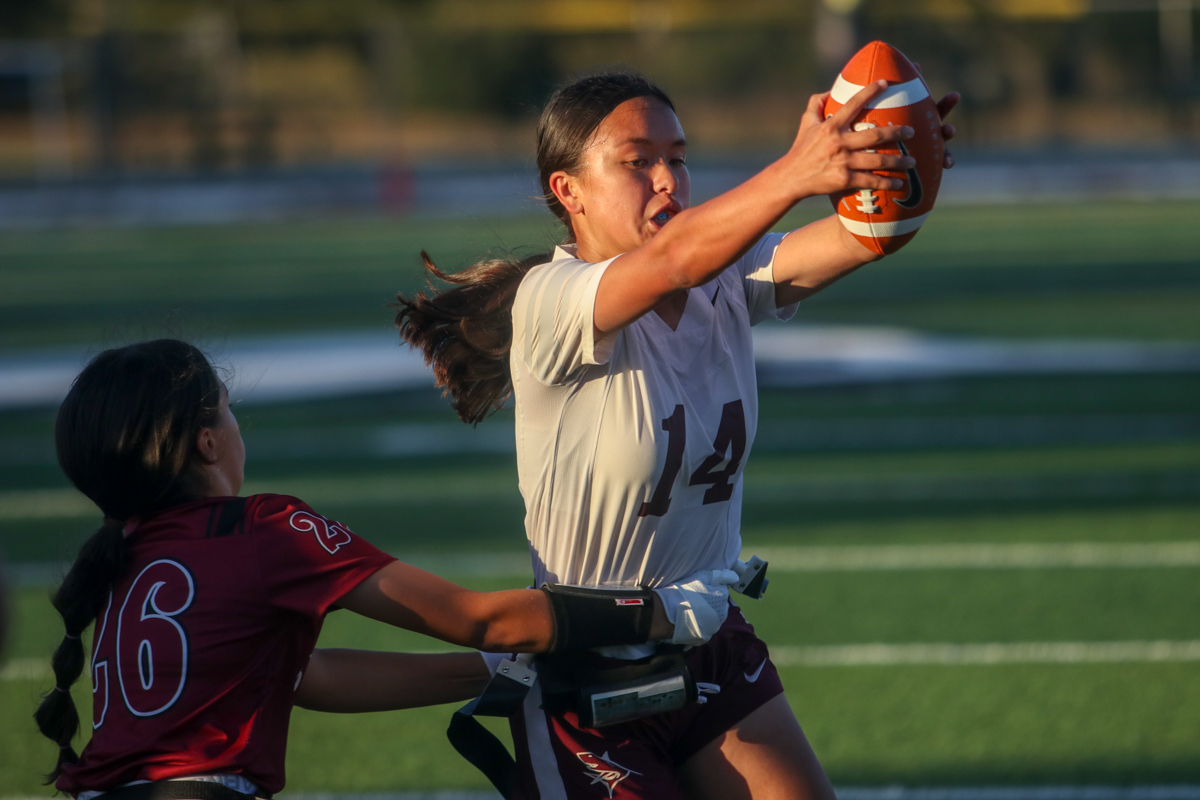
The era of girls flag football being a "nice little side project" for high school athletic departments is officially over. If you've been paying attention to the sidelines lately, you'll notice something shifted. The game isn't just growing. It’s exploding into a year-round, high-stakes travel circuit that mirrors the intensity of elite volleyball or travel softball.
Parents are no longer just looking for a fun extracurricular. They’re looking for scoutable film, specialized coaching, and a path to college scholarships. With the International Olympic Committee adding flag football to the 2028 Los Angeles Games, the "hobby" label has been stripped away. This is a legitimate athletic career path.
Why the Travel Circuit is Replacing the School Season
High school seasons are great for building a local fan base, but they’re limited by geography and short schedules. Travel ball is where the real development happens. When a girl joins an elite travel team, she’s playing against the best talent in the country, not just the best girls in her zip code.
The intensity of these tournaments is a different beast. You’ll see teams flying from Florida to Texas or California just to compete in two-day blitzes. Organizations like USA Football and various independent operators are seeing record registrations. These events aren’t just games. They are showcases.
Think about the physical demand. These athletes are sprinters with the hands of a wide receiver and the tactical mind of a quarterback. In a travel setting, they might play five or six games in a single weekend. That kind of repetition builds a level of "game IQ" that a standard ten-game high school season simply can't touch.
The Scholarship Reality Most Parents Miss
Let’s talk about the money. For a long time, the biggest argument against specializing in flag football was the lack of a "next level." That argument is dead. The NAIA (National Association of Intercollegiate Athletics) has been leading the charge, officially recognizing women’s flag football as a varsity sport.
Schools like Ottawa University, Keiser, and St. Thomas are already handing out real scholarship dollars. The NCAA is lagging behind, but the momentum is undeniable. They’re watching the participation numbers skyrocket. When the NCAA eventually moves from "emerging sport" status to full championship status, the girls who spent three years on the travel circuit will be the ones getting the first phone calls.
I’ve seen parents sink thousands into specialized quarterback trainers. They’re hiring speed coaches. Why? Because they’ve done the math. If a $2,000 investment in a travel season leads to a $20,000 a year scholarship, that’s a win. It’s the same logic that has fueled the travel baseball and soccer industries for decades.
Breaking Down the Costs
It’s not cheap to play at this level. You’ve got tournament entry fees, which can run a team $500 to $1,000 per event. Then there’s the gear. We aren't talking about cheap plastic flags from a PE class. These girls are wearing high-end cleats, custom-fitted jerseys, and specialized soft-shell helmets for safety.
- Tournament Fees: $400 - $1,200 per team
- Uniform Packages: $150 - $300 per player
- Travel and Lodging: $500 - $1,500 per weekend
- Private Coaching: $50 - $100 per hour
If you’re a parent, you need to be honest about the commitment. This isn't a "show up when you can" type of sport anymore. If you miss practice, you don't play. If you don't play, you don't get filmed.
The Skill Gap is Widening Fast
There’s a massive divide forming between the casual players and the "circuit" players. If you watch a high-level 17U girls travel game, the complexity of the play-calling is staggering. You’ll see RPOs (Run-Pass Options), sophisticated zone blitzes, and complex route trees that would confuse a middle-school tackle football coach.
The speed of the game is the biggest shock for newcomers. In flag, there’s no line play to slow things down. It’s all about space, angles, and closing speed. A defender has a fraction of a second to read a hip movement and snatch a flag. It’s a game of inches and split-second decisions.
Girls who play travel ball develop a "football tongue." They talk about "cover 3 shells" and "trips right" with total fluency. This isn't just about running fast. It’s about understanding the geometry of the field. Coaches are looking for that mental sharpness just as much as they're looking for a 40-yard dash time.
Safety and the Evolution of the Game
One of the main drivers behind this surge is the perception of safety. Let’s be blunt. Parents are increasingly wary of the long-term effects of concussions in tackle football. Flag football offers the strategic depth of the sport without the head-to-head collisions.
But don't call it "soft." These games are physical. There’s incidental contact, diving catches, and high-speed collisions. The introduction of soft-shell headgear has become standard in many travel leagues. It’s a proactive move to keep the sport growing while acknowledging the risks of any high-speed athletic activity.
This safety factor is why we see so many multi-sport athletes crossing over. A point guard in basketball makes an incredible defensive back. A center fielder in softball has the perfect tracking skills for a deep-threat wide receiver. They can bring those skills to the football field without the same level of injury risk found in tackle leagues.
The Road to 2028 and Beyond
The Olympic announcement was the gasoline on the fire. Every elite athlete wants to represent their country. Now, for the first time, a girl can pick up a football and actually dream of a gold medal.
This has forced the hand of major sports brands. Nike and Under Armour are pouring money into girls' flag initiatives. NFL teams are sponsoring regional tournaments. They aren't doing this out of the goodness of their hearts. They’re doing it because this is the fastest-growing demographic in sports.
If you’re a coach or a parent, the time to "wait and see" is over. The infrastructure is already built. The tournaments are scheduled. The scouts are showing up with iPads and stopwatches.
Getting Started on the Competition Circuit
If you want to move from local leagues to the travel scene, you need a plan. Don't just join the first team you find on Instagram.
Look for organizations with a track record of player development. Ask about their coaching staff’s experience. Do they actually know football, or are they just "enthusiastic parents"? You want coaches who understand the nuances of the flag-specific rules, which vary between different tournament organizers like AFFL or USA Football.
Start by attending a regional combine. Get your numbers recorded—your shuttle run, your vertical, and your 40. Use that data to find where you stand. If your local area doesn't have a dedicated travel team, look into "free agent" lists for major tournaments. Often, teams from other states need an extra pair of hands or a fast set of legs to fill a roster spot.
Film everything. Every game, every highlight. In the current recruiting environment, if it’s not on video, it didn't happen. Build a dedicated social media presence for your athletic highlights. This is the new resume.
The momentum isn't slowing down. Whether the goal is a college scholarship or just competing at the highest possible level, the travel circuit is where the future of the sport is being written. Don't get left on the sidelines while the rest of the world moves the chains.